
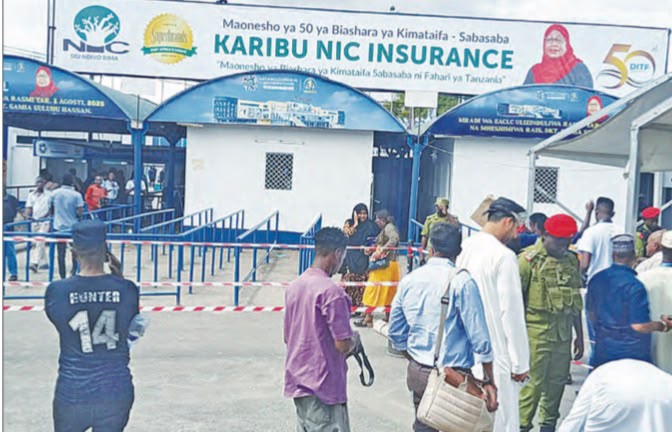
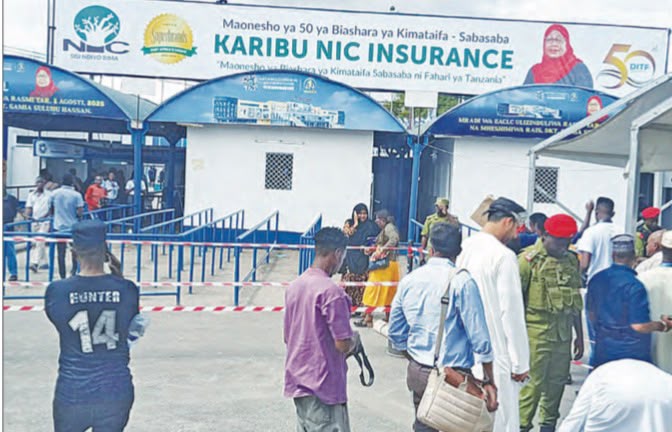
DAR ES SALAAM: THE Dar es Salaam International Trade Fair (DITF), Sabasaba, is marking its 50th anniversary as the country’s flagship trade and investment platform, evolving from a domestic exhibition into a regional business hub linking Africa with global markets.
The 50th edition opened last Saturday night with a “Flash Flash Night” ceremony ahead of the public exhibition, as officials sought to leverage the milestone to attract investment, expand exports and strengthen commercial partnerships in support of private sector-led growth.
Organisers expect about 600,000 visitors, alongside 3,891 local exhibitors and 430 international exhibitors from 23 countries, including more than 400 companies from the provenance of China, making this year’s event one of the largest in its history.
The Tanzania Trade Development Authority (TanTrade) said the exhibition now spans about 44,000 square metres of space and hosts more than 3,000 exhibitors annually over a two-week period, typically from late June to mid-July at the Mwalimu Julius Nyerere trade fairgrounds in Dar es Salaam. The event is estimated to generate over 22,800 direct and indirect jobs through logistics, hospitality, trade services and related activities.
Established in 1976, the fair was designed as a structured platform to showcase goods, services and investment opportunities as the country built its post-independence industrial base. Over five decades, it has expanded into a major commercial meeting point for manufacturers, investors, service providers, government agencies and development partners from Africa, Asia, Europe and the Middle East.
TanTrade Director General, Dr Latifa Khamis said the scale of participation reflects growing regional significance, with DITF now recognised as the largest exhibition of its kind in East and Central Africa. She said the 50th edition underscores rising investor confidence and the country’s improving business environment.
“This platform continues to expand in size, diversity and influence, bringing together stakeholders across the value chain,” she said.
The fair has historically served a dual function promoting domestic industry while positioning Tanzania as a gateway for foreign investment. Regular international participants include firms from China, India, Turkey, the United Arab Emirates and South Africa, Russia and so forth.
TanTrade Board Chairman Ulingeta Mbamba said the exhibition remains a critical platform for strengthening business linkages and expanding opportunities for local firms. He said associated activities, including promotional runs and public engagement campaigns, are designed to increase visibility and broaden participation ahead of the main exhibition period.
Small and medium-sized enterprises (SMEs) continue to use the fair as an entry point into formal markets, with many leveraging the platform to access new customers, attract investors and scale operations. Exporters, in particular, use DITF to diversify markets as Tanzania pushes to expand nontraditional exports and reduce reliance on a narrow commodity base.
Over time, the exhibition has mirrored structural shifts in the economy. In its early years, participation was dominated by state-owned enterprises and public institutions. As liberalisation deepened, private sector exhibitors increasingly took centre stage, reflecting broader industrial reform and economic diversification.
Today, DITF functions not only as a marketplace but also as a policy and innovation platform, showcasing industrial strategies, investment incentives and reforms targeting manufacturing, agriculture value addition, energy development, financial services and technology adoption.
It has also become an informal learning hub, attracting thousands of visitors annually who use the platform to explore new products, services and technologies. Organisers say this role has grown in importance as businesses and consumers seek greater exposure to modern practices and digital tools.
Digital transformation is now a defining feature of the fair. TanTrade has introduced online registration systems, electronic ticketing, mobile payments and digital navigation tools to improve efficiency. A mobile wayfinding system and the TanTrade Biashara App provide real-time exhibitor information and visitor services.
“These innovations align with the country’s broader push toward a digital economy,” Dr Khamis said, adding that efficiency and accessibility remain central priorities.
Government officials say the fair contributes to broader macroeconomic goals, including job creation, industrial expansion and investment promotion. Infrastructure upgrades at the grounds, including expanded parking, improved internal roads and upgraded water and electricity systems, have been implemented to accommodate rising attendance.
Beyond its commercial role, DITF has become a symbol of economic continuity and transformation, reflecting Tanzania’s shift from a state-led industrial model to a more diversified, private sector-driven economy integrated into global trade networks.
International participation has expanded steadily, strengthening economic diplomacy and positioning Dar es Salaam as a regional meeting point for trade and investment dialogue. Investors use the platform to assess market conditions, explore partnerships and evaluate opportunities across manufacturing, agriculture, services and infrastructure.
Minister for Industry and Trade, Judith Kapinga said the exhibition continues to play a central role in linking businesses, attracting investment and generating employment, noting that the fair has over time become a key driver of enterprise development across multiple sectors of the economy.
She said the growing participation reflects rising investor confidence and improvements in the business environment as the country seeks to expand industrial capacity and exports. A long-time exhibitor under the Vocational Education and Training Authority (VETA), Paulo Shiyo said participation in sabasaba has become a key platform for business growth.
“DITF has given me exposure and connections I could not get elsewhere. It is where ideas meet markets,” he said.
He noted that the fair has enabled him to build networks with buyers and partners both locally and internationally, creating opportunities that would otherwise be difficult to access.
TanTrade officials say the exhibition has evolved beyond a traditional trade showcase into a structured marketplace for innovation, investment and enterprise growth, particularly for small and mediumsized businesses seeking to scale up.
ALSO READ: Tanzania sees epic Sabasaba Trade Fair in 2026
Together, officials and participants say the fair continues to serve as a bridge between policy, industry and entrepreneurship, reinforcing its position as a cornerstone of the country’s economic development strategy.
For SMEs and youthled enterprises, the fair remains a critical launchpad for testing products, securing distribution deals and building cross-border networks.
Despite global headwinds including supply chain disruptions and shifting trade dynamics, the exhibition has remained resilient, adapting to technological and economic change.
As it enters its second half-century, stakeholders say the focus is shifting toward deeper digital integration, expanded international participation and stronger linkages between innovation, manufacturing and export growth.
TanTrade says its longterm ambition is to position DITF not only as a trade exhibition, but as a continental hub for investment facilitation, industrial networking and knowledge exchange.
After 50 years, DITF remains one of the country’s most enduring economic institutions, an evolving marketplace that continues to reflect the country’s industrial ambitions, trade aspirations and integration into the global economy.