
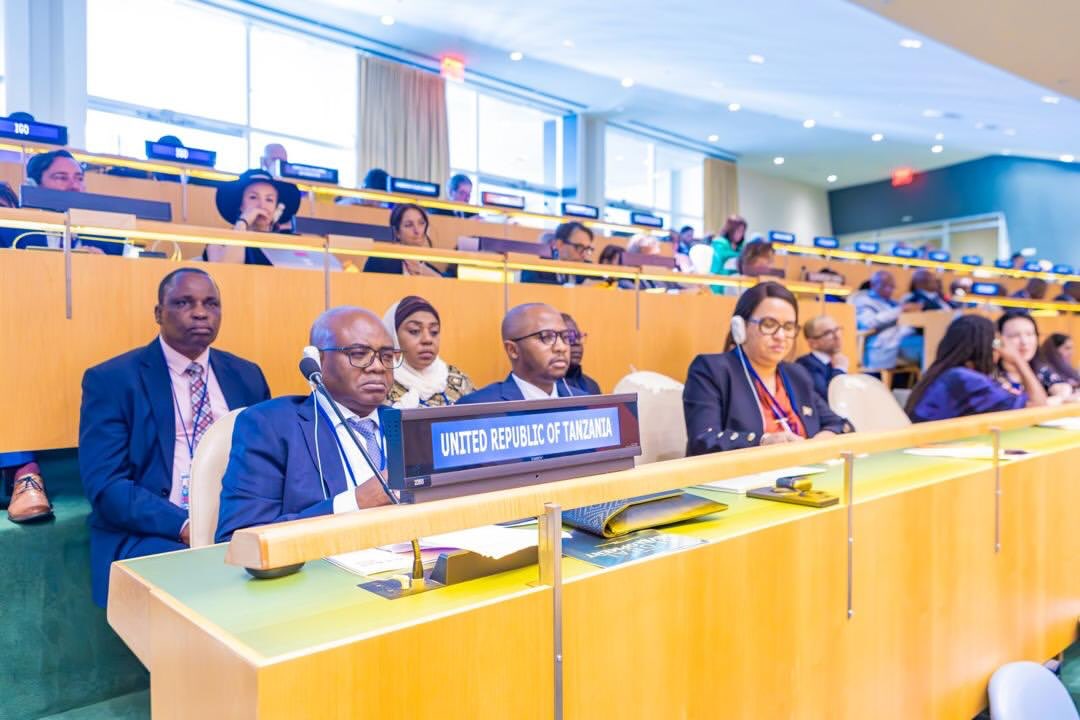
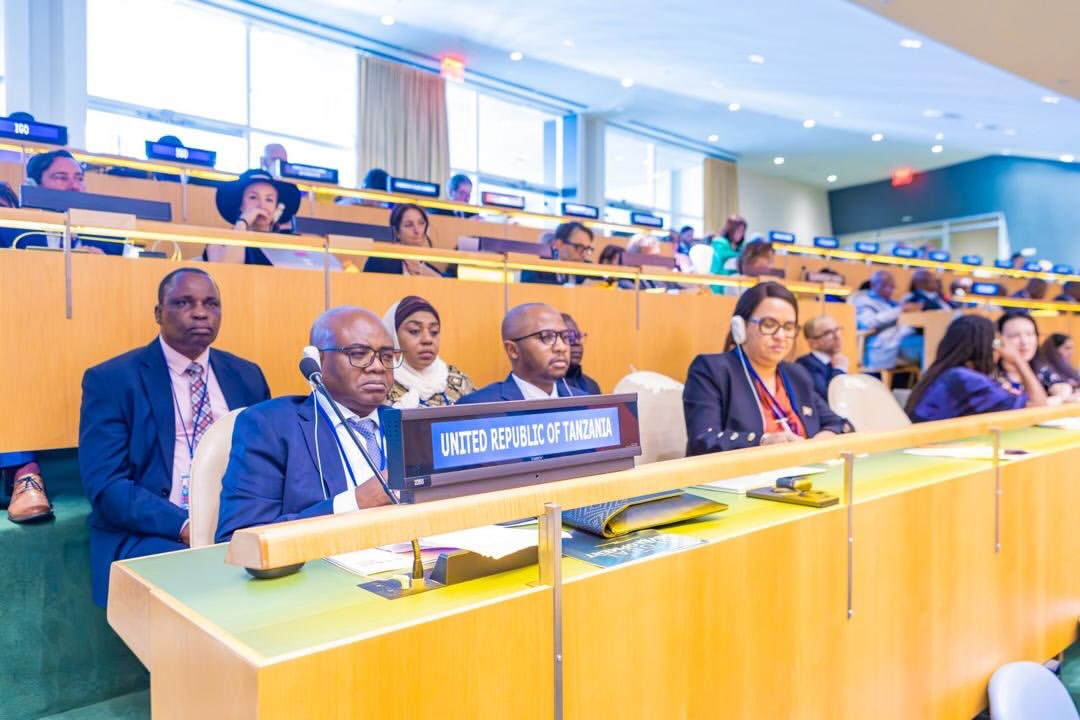
NEW YORK: TANZANIA has earned international recognition for its progress in implementing the Sustainable Development Goals (SDGs) after presenting its Third Voluntary National Review (VNR) at the United Nations High-Level Political Forum (HLPF) on Sustainable Development in New York.
Minister of State in the President’s Office (Planning and Investment), Prof Kitila Mkumbo, presented the report on Tuesday, highlighting the country’s achievements and its strategy for accelerating implementation of the 2030 Agenda.
Delegates from Cuba, India and Singapore commended Tanzania’s review, describing it as a valuable reference for countries seeking to strengthen policy implementation and accelerate sustainable development.
A Cuban delegate praised the report for its systematic use of localised indicators supported by sound policy analysis.
“We particularly appreciate the report’s systematic use of localised indicators, complemented by solid policy analysis. This approach is highly effective in identifying concrete, targeted pathways for accelerating the Sustainable Development Goals,” the delegate said.
ALSO READ: Tanzania eyes domestic resources in financing its nutrition goals as donor support declines
The delegate added that the review was forward-looking, integrating its findings into a streamlined framework for implementing the SDGs.
The forum also commended Tanzania for embedding sustainable development into its long-term Vision 2050, saying the review went beyond measuring progress towards the 2030 Agenda.
Prof Mkumbo said access to clean and safe water in rural areas increased from 72.3 per cent in 2020 to 85.3 per cent in 2025.
He also highlighted progress in the energy sector, noting that electricity access has reached 86.2 per cent of the population, while the country’s generation capacity has more than doubled.
The report further shows significant progress under SDG 9 on industry, innovation and infrastructure, with annual railway passenger numbers rising from 1.2 million to 4.1 million.
On SDG 17, Prof Mkumbo said implementation of the goals has been driven by strong partnerships involving government institutions, the private sector, civil society organisations and development partners.
More than 824 civil society organisations and 1,000 private sector institutions participated in preparing the report.
He also outlined seven priority areas that will accelerate SDG implementation through the National Development Vision 2050 and the Fourth Five-Year Development Plan (FYDP IV).
Prof Mkumbo said Tanzania remains committed to accelerating implementation of the SDGs during the remaining years before the 2030 global deadline.
The HLPF concluded on Wednesday under the theme: “Transformative, equitable, innovative and coordinated actions for the 2030 Agenda for Sustainable Development and its Sustainable Development Goals for a sustainable future for all.”
Delegates reviewed progress on SDG 6 (Clean Water and Sanitation), SDG 7 (Affordable and Clean Energy), SDG 9 (Industry, Innovation and Infrastructure), SDG 11 (Sustainable Cities and Communities) and SDG 17 (Partnerships for the Goals).
Besides Tanzania, 35 other countries, including Brazil, Egypt, Italy, Norway, Rwanda, Saudi Arabia, Switzerland, the United Arab Emirates and Uruguay, also presented their Voluntary National Reviews.