

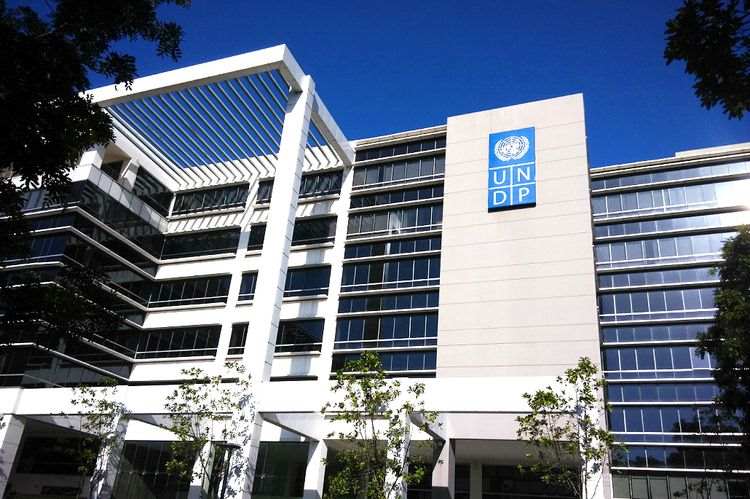
DAR ES SALAAM: THE United Nations Development Programme (UNDP) report issued in May 2026 examined the Gulf’s economic influence on Tanzania, emphasising risk, resilience, opportunities and strategies. It features the NPC logo correctly and provides an overview of Tanzania’s economic state.
Nevertheless, a thorough review reveals several shortcomings that we, as analysts, need to recognise. The recent UNDP-supported assessment of the Gulf crisis’s economic impacts on Tanzania offers an early, important insight into how regional geopolitical tensions can affect Tanzania’s economy, but as beautiful as it looks to an observer, it overlooks the experiences of ordinary citizens.
It identifies effects like fuel price fluctuations, trade disruptions, increased freight costs, inflationary pressures, and fiscal strain. The report correctly notes that external geopolitical shocks are now immediate concerns, directly affecting African economies through energy markets, logistics, exchange rates and public finances.
The report correctly identifies key macroeconomic transmission channels, including fuel import costs, freight and insurance costs, fiscal revenue pressures, development project risks, food price volatility, and foreign exchange exposure. It also recognises the vulnerability of Tanzania’s importdependent sectors and the potential impact on fiscal space and national development planning.
Despite its technical strengths, the assessment is still largely focused on macroeconomic and institutional aspects, and it underestimates the deeper social, household-level, and informal-sector hardships that ordinary Tanzanians are already facing because of the Gulf conflict and global energy instability. In many respects, the report explains the economy, but not fully the human experience of the economy.
A key strength of the report is its honest acknowledgment of significant data gaps. The assessment highlights missing details on household coping strategies, skipped meals, reduced mobility, stress on small traders’ working capital, Liquefied Petroleum Gas (LPG) affordability issues, reversals in clean-cooking adoption, and impacts on the informal sector.
This admission is important because it reveals that the actual social impact may be much deeper than the current assessment captures.
The report’s main weakness is its insufficient focus on the informal economy, which is vital for most Tanzanians’ survival. Tanzania’s economy is not controlled only by large corporations; millions of people sustain themselves through boda-boda transport, food vending, market trading, fishing, small-scale farming, retail kiosks, transport services, and various small informal businesses.
When fuel prices rise due to Gulf instability, these citizens feel the immediate pain long before macroeconomic indicators visibly deteriorate. For example, higher petrol and diesel prices immediately affect motorcycle transport costs, food distribution, fishing operations, commuter transport, irrigation pumping and small generator use.
This situation then causes food prices to rise in local markets, limits household mobility, and cuts into the daily profit margins of small traders. However, the report does not adequately estimate how many informal businesses might shut down, cut back operations, or go into debt due to ongoing energy shocks.
The report also fails to examine in depth the psychological and social stress experienced by low-income households during prolonged inflationary periods. Macroeconomic analysis typically quantifies inflation through statistics, yet everyday people feel its impact emotionally and socially.
When fuel prices increase, families cut back on meals, school transportation becomes unaffordable, healthcare visits are delayed, nutrition suffers and household tensions may rise because incomes no longer cover living expenses.
The report briefly mentions the need for data on “skipped meals” and “reduced mobility,” but this issue warrants far more thorough treatment, as these are not minor indicators—they are indicators of human distress. Another major gap concerns urban poverty.
The report discusses national economic exposure but insufficiently distinguishes between rural and urban vulnerability. Urban households are particularly exposed to Gulfrelated inflation because they rely heavily on purchased food, public transport, electricity, LPG and imported consumer goods.
Unlike some rural households that can rely on subsistence agriculture to some extent, low-income urban residents experience the direct impact of inflation almost immediately. The report, therefore, underestimates the vulnerability of urban youth, casual workers, tenants, and low-income salaried workers whose wages remain fixed while living costs continue to rise.
ALSO READ: AfDB urges bold financial reforms to unlock Africa’s potential
The assessment also neglects the wider secondary inflation impacts caused by fuel price shocks. Fuel inflation is not limited to transportation; it permeates the entire economy, affecting construction materials, cement, food supply chains, manufacturing, import expenses, logistics, telecommunications, and service prices. In reality, the Gulf crisis creates an economy-wide cycle of cost escalation.
Many small businesses may not close immediately, but their profitability steadily deteriorates. Over time, this reduces hiring, wage growth, investment confidence, and household purchasing power. The report would have been stronger if it had included a detailed analysis of second-round inflation effects on ordinary household consumption patterns.
An important issue that has not been adequately tackled is the debt vulnerability of households and SMEs. Currently, many Tanzanians depend on mobile lending, informal borrowing, SACCOs, supplier credit, and salary advances to make ends meet. From an economic perspective, persistent energy-related inflation sharply increases repayment stress.
Small traders may increasingly borrow merely to maintain working capital rather than to expand their businesses. This creates hidden financial fragility that macroeconomic indicators may not immediately detect. The report also underestimates the likely long-term employment implications of sustained Gulf-related instability.
Businesses facing rising operational costs often respond by reducing staff, freezing recruitment, cutting transport allowances, postponing expansion, or entering survival mode.
Youth employment becomes especially vulnerable under such conditions. Yet the assessment does not deeply explore how prolonged energy shocks may worsen unemployment and underemployment among urban youth and recent graduates.
Another overlooked dimension concerns the gendered economic impacts. Women dominate many low-income survival activities, including food vending, market trading, household energy management, and smallscale retail businesses.
When LPG prices increase, women often face the challenge of reverting to charcoal or firewood. The report accurately highlights the risk of shifting back from clean cooking fuels to traditional methods if LPG becomes too expensive.
However, it does not fully explore the wider implications of increased household air pollution, health complications, environmental degradation, time lost collecting fuel, and greater domestic labour burdens on women. Having read the report, I have realised that this omission weakens the social realism of the assessment. The report also underemphasises the vulnerability of transportation in secondary towns and rural regions.
Increasing fuel prices impact not just large cities but also agricultural supply chains that connect farmers to markets. When transport costs go up, farm-gate prices might decline, food wastage could rise, and rural incomes may suffer. This results in a paradox where consumers pay higher prices for food, yet farmers may earn less because of transport inefficiencies.
Another significant gap lies in institutional trust and public perception. Economic crises affect more than just prices; they also impact public confidence. As citizens observe rising costs, declining incomes, and growing uncertainty, their frustration tends to grow.
The report does not thoroughly examine how extended inflationary pressures could impact social stability, political trust, public morale, and confidence in economic institutions.
This is important because economic difficulties often lead to broader governance issues that go beyond mere fiscal data. The report appears overly conservative regarding future risk scenarios.
Although it marks several indicators as “requiring validation,” it could have expanded its analysis by stress-testing worst-case situations, like a prolonged shutdown of the Strait of Hormuz, major oil supply disruptions, a global recession, shipping blockages, or sharp currency devaluations.
Such scenarios may appear extreme, but modern geopolitical shocks are increasingly moving rapidly and unpredictably. The report also downplays Tanzania’s ongoing reliance on imports. The Gulf crisis reveals the country’s vulnerability to external energy and logistics disruptions, as its economy heavily depends on imported petroleum, industrial supplies, fertilisers, machinery and manufactured goods.
The report should have emphasised more strongly the urgent need for domestic industrialisation, energy diversification, fertiliser production, strategic fuel reserves, and productivesector investments. Without structural transformation, Tanzania will remain highly exposed to external geopolitical crises for decades.
Additionally, the report does not adequately address how exchange-rate pressure impacts ordinary people. When the Tanzanian shilling depreciates, it affects the cost of imported medicines, school supplies, electronics, transport spare parts, fertilisers and household essentials. This gradual loss of purchasing power occurs even if official inflation levels stay moderate.
A key strength of the report is its acknowledgment that data quality and validation are essential for informed policy-making. The way it classifies confidence levels across datasets shows careful methodology.
Nonetheless, this highlights a significant challenge: Tanzania still does not have effective real-time social vulnerability monitoring systems to promptly identify household distress amid external economic shocks. Ultimately, the UNDP assessment serves as a significant macroeconomic warning, but it lacks completeness in evaluating how Gulf-related instability impacts everyday Tanzanians’ social reality. The true impact of the Gulf crisis is not measured only in fuel import bills, freight costs, or fiscal deficits.
t is also measured in meals skipped, businesses shrinking, transport abandoned, school attendance affected, household stress rising, and survival becoming more expensive every week. That human dimension deserved much deeper attention. Because for ordinary Tanzanians, the Gulf crisis is no longer just a geopolitical event happening far away in the Middle East.
It has quietly entered the kitchen, the commuter bus, the market stall, the fishing boat, the boda boda, and the daily struggle to survive. In the future, to ensure reports like these effectively influence government actions and support appropriate policy decisions, organisers must plan more thoroughly and avoid rushing into endeavours that leave many questions unresolved.
These unresolved issues directly affect ordinary citizens who depend on government aid to better their lives, particularly during transitional periods when tough decisions are often necessary. To truly serve the interests of most Tanzanians, the report’s organisers should acknowledge the importance of gathering diverse perspectives and be open to seeking help when needed.