
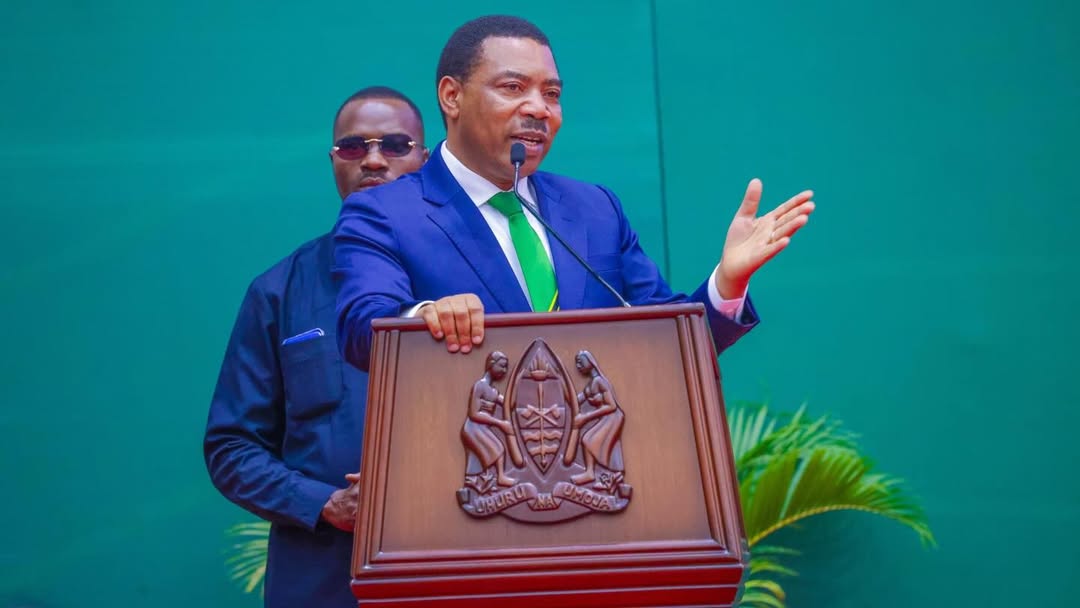
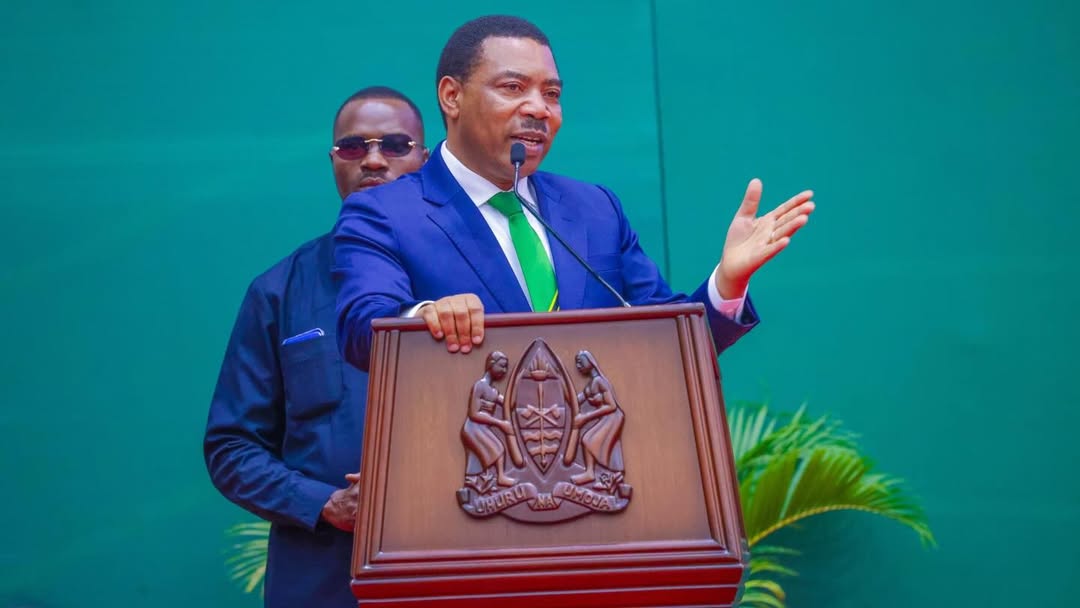
DAR ES SALAAM: PRIME Minister Dr Mwigulu Nchemba has called on Tanzanians to change their mindset towards environmental conservation by recognising it as a personal and collective responsibility rather than leaving it solely to environmental management institutions.
Dr Nchemba made the call on Thursday while officiating the opening of the National Environmental Stakeholders Conference and the 40th anniversary celebrations of the National Environment Management Council (NEMC) at the Julius Nyerere International Convention Centre (JNICC) in Dar es Salaam.
He urged citizens to regard environmental conservation as a shared national duty, tasking NEMC with strengthening environmental education from family and school levels to the wider community.
“The responsibility of environmental conservation belongs to all of us and should not be left in the hands of the National Environment Management Council (NEMC) alone,” he said.
Dr Nchemba noted that environmental conservation is not merely a matter of theory or slogans, but a critical issue for human survival, economic growth and national wellbeing.
“Tanzanians must transform their lifestyles and economic activities in ways that protect the environment for the benefit of present and future generations,” he said.
The Prime Minister said the effects of environmental degradation and climate change are increasingly evident in Tanzania and across the world, underscoring the need for communities to adopt sustainable land-use practices and responsible consumption of natural resources.
He noted that rapid population growth, expanding economic activities and unsustainable land use have intensified pressure on natural resources, making it necessary to adopt modern technologies and sustainable approaches in agriculture, livestock keeping, construction and industrial production.
Dr Nchemba also commended President Samia Suluhu Hassan for advancing environmental conservation and the clean cooking energy agenda, saying the government has continued investing in irrigation projects, clean energy and the Standard Gauge Railway (SGR) as part of efforts to reduce environmental degradation.
“The President has demonstrated strong leadership by transforming outdated approaches, increasing the irrigation budget and enabling farmers to harvest up to three times a year. She inherited 13 irrigation projects, but today there are more than 780. These are deliberate efforts aimed at improving the lives of Tanzanians,” he said.
The Premier added that the government will continue investing in the green economy, clean technologies, renewable energy, circular economy systems, as well as stronger waste management and pollution control mechanisms.
“As Tanzania moves towards the National Development Vision 2050, the country aims to build a competitive, inclusive and climate-resilient economy. We will continue strengthening the use of science, research and technology in environmental management decision-making,” he said.
During the conference, Dr Nchemba also launched the Tanzania Online Continuous Emission Monitoring System (TOCEMS), a digital platform designed to facilitate real-time monitoring of environmental pollution through modern technology.
ALSO READ: New plan to improve loan repayment
Earlier, Minister of State in the Vice-President’s Office (Union and Environment), Eng Hamad Masauni, said the government is in the final stages of legal reforms aimed at granting NEMC greater authority to enforce environmental laws and enhance its financial independence.
Meanwhile, United Nations Environment Programme (UNEP) Deputy Executive Director, Ms Elizabeth Mrema, said Tanzania continues to set a strong example in environmental management in Africa through international cooperation, sound policies and effective implementation systems.
“Tanzania has environmental conservation projects worth 54 million US dollars, making it the leading country in Africa and the fourth globally in securing such funding,” she said.
NEMC Director General, Dr Immaculate Semesi, said the institution’s 40th anniversary celebrations provide an opportunity to reflect on achievements made in environmental management while developing strategies to address emerging environmental and climate change challenges.