
DODOMA: THE government has launched an ambitious environmental transformation programme aimed at advancing the goals of Vision 2050, which seeks to position Tanzania among Africa’s top 10 environmentally sustainable and climate-resilient nations.
Dubbed the Strategic Environmental Management Transformation Programme towards Vision 2050, the initiative will be implemented over five years, from 2026 to 2030, focusing on ecosystem restoration, environmental resilience and enhanced ecological services that support key sectors of the economy.
Implementation of the programme is expected to cost about 7tri/-, with funding to be mobilised from the government, private sector, civil society organisations and development partners.
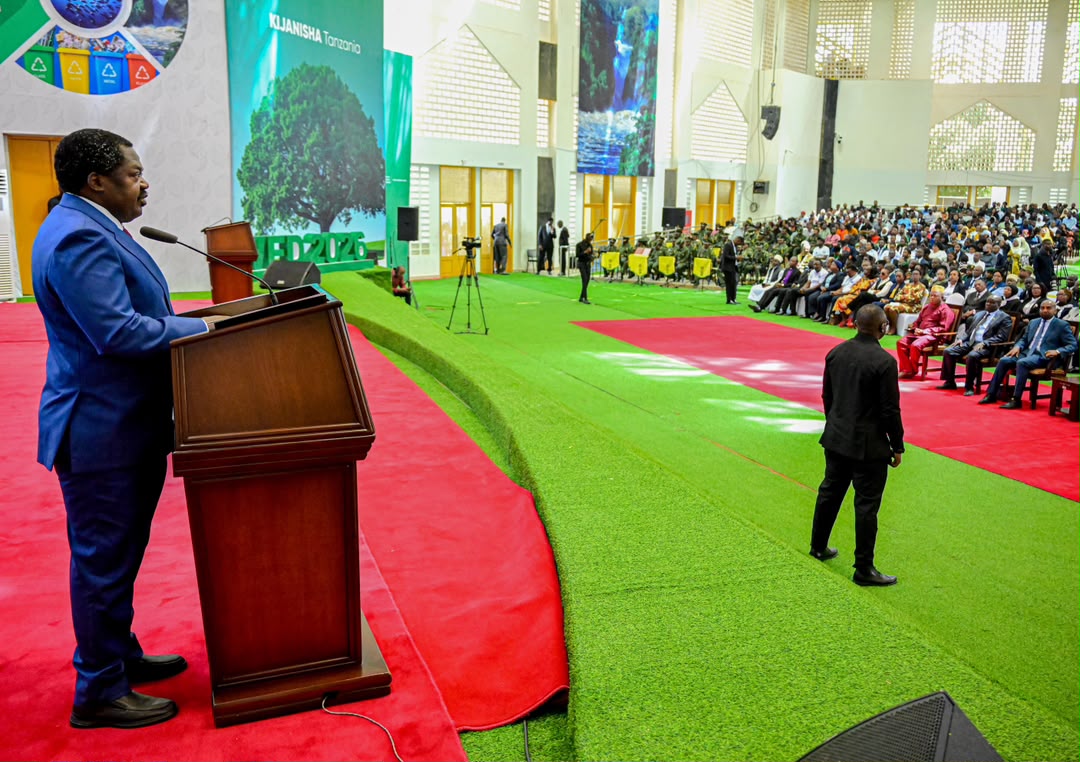
Vice-President Dr Emmanuel Nchimbi officially launched the programme yesterday during the national commemoration of World Environment Day at the Jakaya Kikwete Convention Centre in Dodoma.
The event, held under the theme “Vision 2050: Let Us Take Responsibility for Greening Tanzania,” brought together government leaders, private sector representatives, development partners, environmental stakeholders and members of the public.
The programme sets ambitious targets, including planting and sustainably managing two billion trees annually, restoring five million hectares of degraded forest land and expanding the use of clean cooking energy to reduce dependence on firewood and charcoal.
Other priorities include improving waste management and environmental sanitation, promoting carbon trading as a source of revenue and climate action, and increasing the participation of youth and women in green economy initiatives.
Speaking at the launch, Dr Nchimbi commended the VicePresident’s Office (Union and Environment) for spearheading environmental conservation efforts and developing the strategic programme that will guide the country’s environmental agenda over the next five years.
“I am particularly pleased that this programme will be implemented across both sides of the Union because environmental resources and challenges do not recognise administrative boundaries,” he said.
He noted that environmental management and climate change are cross-cutting issues that require coordinated action from all sectors and stakeholders.
Dr Nchimbi called on public institutions, development partners, civil society organisations, the private sector and citizens to support implementation of the programme and contribute to achieving its objectives.
He emphasised that environmental sustainability remains a critical pillar of economic growth and social wellbeing, noting that countries that effectively protect their natural resources are better placed to achieve sustainable development.
The Vice-President said environmental sustainability will become increasingly important as Tanzania’s population continues to grow, citing projections that the population could rise from the current 67 million to more than 118 million by 2050.
ALSO READ: PM warns lax public servants
According to him, the growing population will increase demand for water, food, fertile land, housing, energy and social services, all of which depend on a healthy and productive environment. Recognising this reality, he said, Vision 2050 has integrated environmental sustainability and climate resilience as key pillars of Tanzania’s long-term development agenda and its aspiration to attain upper-middleincome status by 2050.
Dr Nchimbi said World Environment Day should serve as a reminder of the collective responsibility of all Tanzanians to conserve the environment and ensure the sustainable use of the country’s natural resources.
To strengthen environmental protection efforts, he directed municipalities and city councils to establish and maintain green parks and urban green spaces.
Authorities responsible for issuing building permits were also instructed to make tree planting mandatory by ensuring that every construction permit is accompanied by a requirement to plant at least five trees.
Minister of State in the Vice-President’s Office (Union and Environment), Eng Hamad Masauni, said the programme provides a roadmap for achieving Tanzania’s environmental sustainability and climate resilience goals under Vision 2050.
He said the government envisions a greener Tanzania with expanded tree cover, where trees are not only planted but also properly nurtured and protected, alongside increased adoption of clean cooking energy to achieve the national target of 80 per cent usage by 2034.
Eng Masauni added that the programme will create economic opportunities in the environmental sector, help address youth unemployment and position carbon trading among the country’s top three sources of revenue.
“We expect Tanzania to fully harness opportunities in the environmental sector to create jobs for young people while positioning carbon trading among the country’s three leading sources of revenue,” he said.
He noted that the programme was informed by lessons from previous environmental strategies in Tanzania and other developing countries and was developed through extensive stakeholder consultations.
Eng Masauni assured stakeholders that the government will continue coordinating implementation with ministries, public institutions, local government authorities and development partners to ensure the programme achieves its intended objectives.