
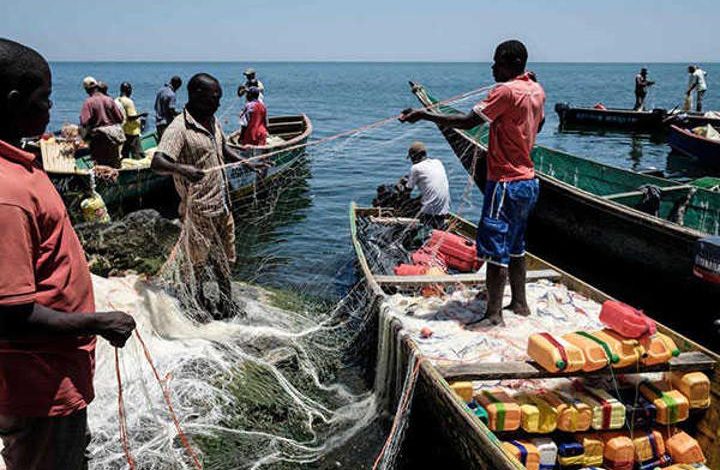

TANZANIA: THE fisheries sector remains one of the key pillars of Tanzania’s economy, contributing significantly to employment, food security, trade and foreign exchange earnings.
Tanzania is endowed with vast water resources, including Lake Victoria, Lake Tanganyika, Lake Nyasa, the Indian Ocean and numerous rivers and dams.
These natural assets place the country among Africa’s most resource-rich nations for fisheries and aquaculture development.
According to the Ministry of Livestock and Fisheries, the sector contributes more than 1.8 per cent to the country’s Gross Domestic Product (GDP) and supports the livelihoods of over four million Tanzanians engaged directly and indirectly in fishing, fish processing, transportation and trade.
Over recent years, the Sixth phase government under the leadership of President Dr Samia Suluhu Hassan has intensified efforts to strengthen the sector through measures aimed at combating illegal fishing, improving aquatic resource management, constructing fish market infrastructure and promoting investment in aquaculture.
These interventions have contributed to increased fish production and improved sustainability of fisheries resources.
However, despite such achievements, many small-scale fishers continue to face serious challenges that limit their ability to benefit fully from the country’s abundant aquatic resources.
One of the most pressing concerns is safety on lakes and at sea. Every year, fishermen lose their lives in drowning incidents caused by strong winds, rough waters, poorly equipped vessels and inadequate safety gear.
According to the World Health Organisation (WHO), drowning is the third leading cause of unintentional injury deaths worldwide, accounting for seven per cent of all injury-related fatalities.
WHO reports that 92 per cent of drownings occur in low- and middleincome countries, where drowning rates are significantly higher than in wealthier nations.
Many Tanzanian fishers cannot afford basic protective equipment such as life jackets, emergency communication devices and weathermonitoring tools.
The absence of comprehensive national data on fisher-related drowning incidents further complicates efforts to assess the scale of the problem and formulate effective interventions.
Fishing therefore remains one of the country’s most hazardous occupations.
Another major challenge is the lack of insurance coverage. Unlike workers in the formal sector who benefit from social security and health insurance schemes, most fishers operate without protection against accidents, disability, loss of equipment, or death.
When boats are damaged, fishing gear is lost, or fishers suffer injuries, families often fall into severe financial hardship due to the absence of compensation mechanisms or emergency support systems.
This highlights the urgent need for government institutions, financial service providers and insurance companies to develop affordable insurance products specifically tailored to the needs of small-scale fishers.
Market access remains another significant obstacle. Many fishers are forced to sell their catch at low prices because of inadequate storage and preservation facilities.
The shortage of cold rooms, fish processing centres and modern warehouses frequently leads to spoilage, particularly in remote fishing communities.
As a result, traders and middlemen often dictate prices, leaving fishers with limited bargaining power.
In many cases, a large share of the profits generated along the fisheries value chain ends up in the hands of intermediaries rather than the fishers who undertake the difficult and risky work of harvesting fish.
Although Tanzania’s fisheries policies seek to promote sustainable resource utilisation, increase production, strengthen food security and enhance the sector’s contribution to the economy, implementation gaps remain.
For many years, policy efforts have focused primarily on resource management and revenue generation, while comparatively less attention has been paid to improving the welfare and livelihoods of fishers.
The Executive Director of the Fisheries Union Organisation (FUO), Juvenali Matagiri, says that despite government efforts to develop the sector, many fishers continue to face persistent challenges that prevent fisheries from contributing fully to economic growth and public welfare.
He notes that illegal fishing remains a serious threat due to the continued use of prohibited gear, substandard nets and the harvesting of immature fish, all of which contribute to declining fish stocks and destruction of breeding grounds.
Mr Matagiri also points to environmental pollution in Lake Victoria caused by plastic waste, agricultural chemicals and urban sewage as a growing threat to fish production and the ecosystem.
He urges the government to ensure direct representation of fishers in high-level fisheries advisory bodies so their concerns can be effectively communicated to decisionmakers.
“A fisherman who works on the lake every day has firsthand knowledge of the challenges he faces. His voice should be heard at higher decision-making levels so that policies and strategies reflect realities on the ground,” he says.
Mr Matagiri further notes that many fishers continue to lose their lives because of inadequate life-saving equipment.
He proposes the establishment of a formal representation system involving fishers’ associations, retired fishers, fisheries development organisations and professionals from fishing communities.
According to him, such a structure would enable government authorities to obtain accurate information from stakeholders and develop more practical solutions to challenges facing fishers across the country.
The Director of Governance Link, Donald Kasongi, argues that while Tanzania’s fisheries sector is governed by various policies, laws and regulations, many of these frameworks are outdated.
“They no longer reflect the realities of today’s fisheries sector. We need policies that can be reviewed and redesigned to address current challenges,” he says.
According to Mr Kasongi, changes in water-use patterns, population growth, increasing competition over aquatic resources and expanding economic activities in lakes and marine waters require modern policy responses.
“We need policies that address climate change, environmental protection, economic development, resource management and biodiversity conservation,” he explains.
He adds that ecosystems in lakes, rivers and oceans have undergone significant changes, making it necessary for Tanzania to adopt laws capable of responding effectively to emerging challenges.
Mr Kasongi stresses that sustainable fisheries development requires an integrated approach that combines environmental conservation, resource management and economic production.
He also calls for improved infrastructure and stronger disastermanagement systems to ensure safe fishing operations across the country’s water bodies.
The Environmental Management and Economic Development Organisation (EMEDO) Programme Manager, Arthur Mugema, urges East African citizens to protect and conserve Lake Victoria’s environment to safeguard the economic activities that depend on its resources.
He says pollution caused by plastic waste remains a major environmental challenge affecting aquatic life and economic activities linked to the lake.
“When we talk about Lake Victoria, which provides employment and economic opportunities to more than four million people through the fishing sector alone, it becomes clear that the lake is a vital economic resource for communities throughout the region,” he explains.
The Chairman of the Tanzania Fishermen’s Association, Baraka Kadapi, has called for a comprehensive review of fisheries policies and laws to strengthen the safety and security of fishers and protect their property.
He says reforms should also address employment conditions and the welfare of workers and casual labourers employed by fishing vessel owners and investors, particularly regarding wages, healthcare services and insurance coverage.
According to Mr Kadapi, there is also a need to establish retirement savings mechanisms that would allow fishers and fishing workers to access pension benefits after retirement.
He further advocates for accident insurance schemes to protect fishers against occupational risks and urges the government to increase efforts to safeguard fish breeding grounds while intensifying the fight against illegal fishing.
Addressing these longstanding challenges is critical if Tanzania is to unlock the full economic potential of its fisheries sector.
There is a clear need for policy reforms that place fishers’ welfare at the centre of fisheries development. Strengthening safety measures, expanding insurance coverage, improving market infrastructure and empowering fishing communities would not only improve livelihoods but also contribute to sustainable economic growth and poverty reduction.
To economically empower fishers, the government could establish a dedicated Fisheries Development Fund to facilitate access to affordable loans for purchasing safe boats, engines, legal fishing nets and modern equipment.
Many fishers continue to rely on outdated tools that limit productivity and increase operating costs. Improved access to finance would enable them to modernise operations and increase production.
The government should also establish a national fishermen’s safety programme that provides affordable life jackets, water-safety training, and mandatory insurance coverage for registered fishers.
Investment in worker safety is an investment in national economic development. Sustainable growth cannot be achieved when those who produce wealth remain exposed to daily risks.
ALSO READ: Training drive targets growth in fisheries sector
Another priority should be the strengthening of fishermen’s cooperatives. Through cooperative societies, fishers can improve their bargaining power when purchasing equipment, accessing credit, negotiating better prices and exploring local and international markets.
Strong cooperatives would also reduce dependence on middlemen, enabling fishers to retain a larger share of the value generated from their labour.
In addition, increased investment in fish storage facilities, processing plants and modern transportation systems would help reduce postharvest losses and increase incomes.
Such investments would also create employment opportunities for youth and women along the fisheries value chain while contributing to poverty reduction. Tanzania possesses enormous fisheries potential.
However, the full benefits of the sector will remain unrealised unless the welfare of fishers is placed at the centre of development efforts.
By modernising policies, strengthening safety measures, expanding access to finance and insurance, improving infrastructure and ensuring fishers are represented in decision-making processes, Tanzania can build a more productive, sustainable and inclusive fisheries sector that contributes meaningfully to economic growth and improved livelihoods.