
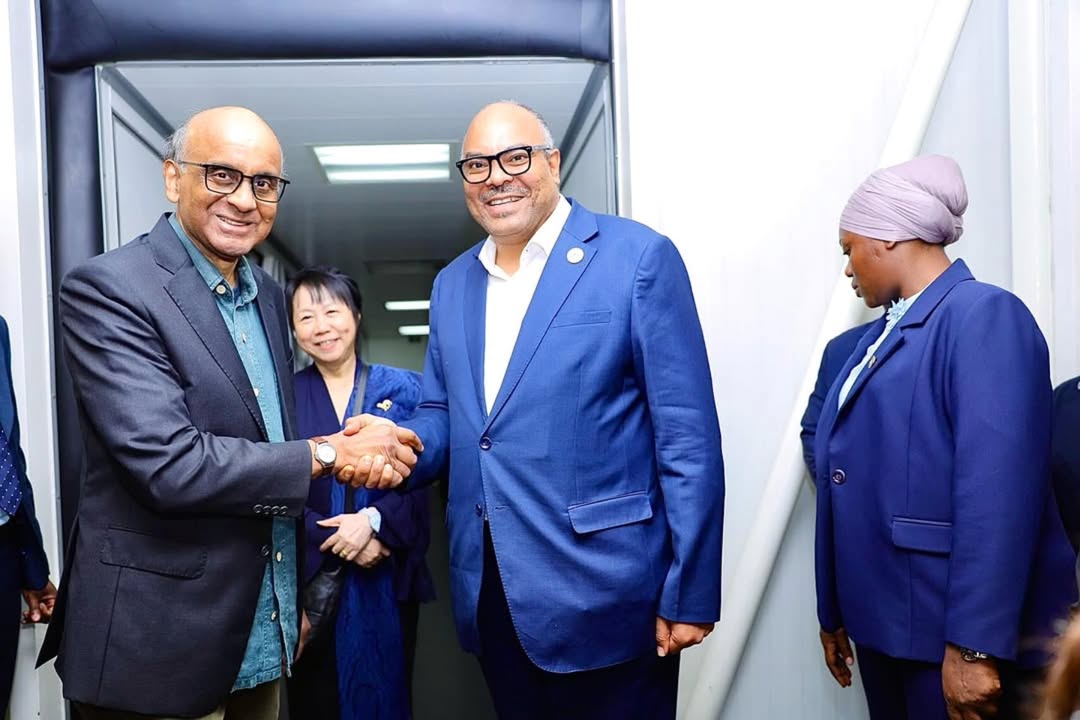
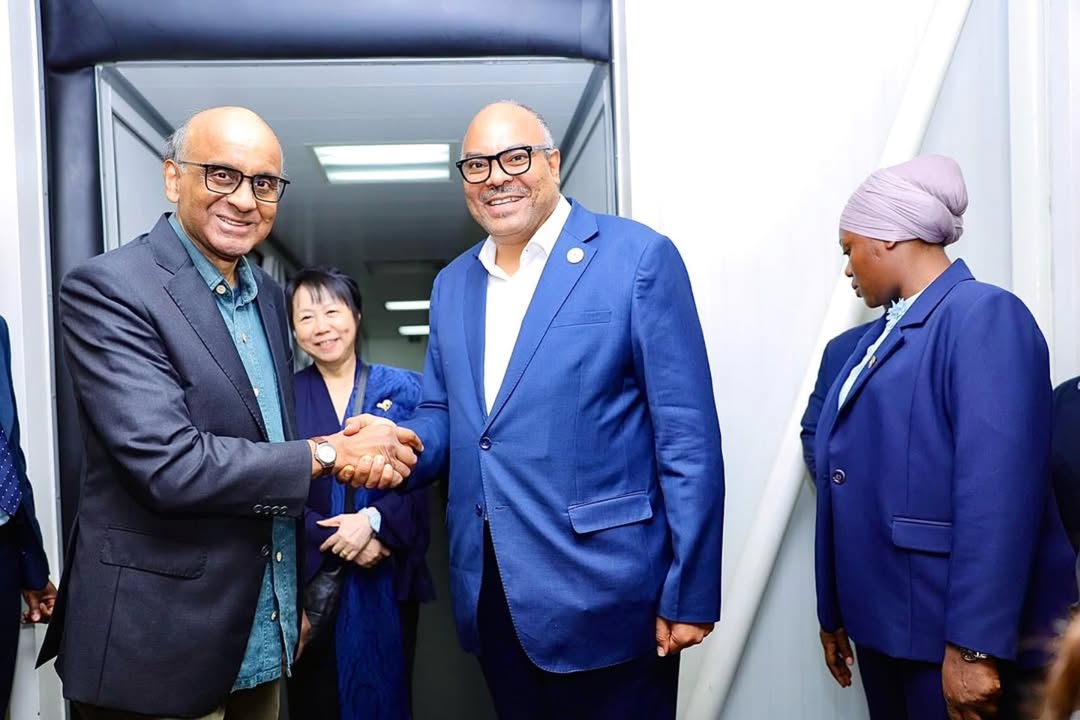
DAR ES SALAAM: ANALYSTS have said that the just-concluded three-day state visit by Singapore President Mr Tharman Shanmugaratnam has opened new avenues for Tanzania to enhance the skills of its youthful population, positioning them as key drivers of the country’s socio-economic transformation.
Young people account for more than 60 per cent of Tanzania’s population.
The analysts also noted that the historic visit has presented Tanzanians with high-potential opportunities in trade, agriculture, tourism, mining and renewable energy, highlighting the need for strategic partnerships and investment readiness.
Driven by their aspirations to see the two countries complement one another, the analysts encouraged Tanzanians to intensify agricultural production in order to supply food products to Singapore, which has limited agricultural land.
At the same time, they foresee Singaporean investors bringing agricultural machinery and technology to Tanzania to support mechanisation while transferring skills and practical experience that could accelerate growth in other sectors, including tourism and hospitality.
The state visit witnessed the signing of five Memoranda of Understanding (MoUs) and cooperation instruments covering human resource development, trade facilitation, avoidance of double taxation and tax evasion, and bilateral consultations aimed at further strengthening relations through enhanced institutional collaboration.
Speaking to local media on Tuesday after a busy day that featured a joint press conference by the two Heads of State and the Tanzania-Singapore Business and Investment Forum in Dar es Salaam, Tanzania’s Ambassador to Indonesia and High Commissioner to Singapore, Macocha Tembele, said the landmark visit would significantly boost workforce development in Tanzania.
“Considering Singapore’s remarkable achievements in human resource development, Tanzania has decided to enter into an agreement on specialised capacity-building programmes to equip its people with advanced skills and accelerate economic transformation,” Ambassador Tembele said.
Citing the World Bank’s Human Capital Index, he said Singapore ranks among the world’s highest-performing countries, with a score of 0.88, indicating that a child born there can expect to achieve 88 per cent of his or her productive potential by adulthood.
He attributed Singapore’s achievements in human resource development to its strong education and healthcare systems.
As a result, despite its limited natural resources, Singapore has diversified its economy through a highly skilled workforce that drives sectors such as high-value manufacturing and financial technology (fintech).
“Singapore may be a small country with limited natural resources, but it has successfully invested in human capital and attained high-income status,” Amb Tembele said.
He noted that Singapore has neither natural gas nor significant mineral resources.
Therefore, he said, the agreement seeks to strengthen Tanzania’s human capital through training opportunities for selected Tanzanian institutions.
Amb Tembele added that Singapore will support Tanzanian youth through entrepreneurship training programmes aimed at job creation and addressing contemporary global challenges.
He encouraged Tanzanians to take advantage of the opportunities created by the strengthened bilateral relations.
“Singapore does not have enough land. Agriculture is one of the key areas where we can collaborate. They are ready to bring technology and expertise, while we are ready to provide land,” Amb Tembele said.
Meanwhile, economist and founding Director of the Centre for Chinese Studies at the University of Dar es Salaam, Professor Humphrey Moshi, described the visit as a masterclass from which Tanzania can draw important lessons on economic growth while identifying new markets and sources of Foreign Direct Investment (FDI).
“We must acknowledge that Singapore is among the Asian countries that have achieved rapid economic transformation, surpassing many European countries and even the United States in certain areas. During the 1980s, Singapore and other high-performing Asian economies grew so rapidly that the World Bank described their performance as an ‘economic miracle’,” Prof Moshi said.
“In that light, Tanzania must learn from the strategies these countries used to attain such significant milestones and create employment opportunities for our youth,” he added.
Prof Moshi noted that Singapore’s rapid transformation was driven by visionary leadership committed to accelerating development and catching up with the industrialised economies of Europe and North America.
Furthermore, he said Singapore’s success was built on people-centred development policies, supported by selfless and accountable leadership, strong fiscal discipline and a robust work ethic.
“Let us cooperate more closely with Singapore so that we can learn from its transformative culture,” Prof Moshi said.
He also observed that Singapore has successfully promoted FDI and partnerships through a pro-business approach that ensures mutually beneficial outcomes for investors, citizens and the country.
“Like China, Singapore is an investment- and exportoriented economy,” Prof Moshi stressed.
He said Tanzania stands to benefit through increased exports and access to advanced technologies from Singaporean investors, particularly in electronics, solar power and wind energy technologies that can help diversify the country’s energy mix.
Prof Moshi added that Tanzania can leverage Singapore’s manufacturing expertise by attracting investors in areas such as irrigation while encouraging local producers to participate in Singapore’s value chains through the supply of valueadded agricultural products.
“Given that Tanzania is largely an agricultural economy, this is the right time to ensure that production is mechanised through collaboration with Singapore so that we can produce enough for export,” he said.
Business and entrepreneurship expert Dr Sylvester Jotta of Saint Augustine University of Tanzania (SAUT) urged the government to tap into Singapore’s vast expertise in tourism and hospitality.
He said that despite lacking abundant natural resources, Singapore has established itself as a leading global tourism destination.
Dr Jotta noted that the two countries share strategic geographical advantages. Tanzania serves as a gateway to Eastern and Southern Africa, while Singapore is a gateway to Southeast Asia and the wider Asia-Pacific region. These positions, he said, could be leveraged to expand trade and tourism.
“We can use our strategic geographical connectivity to cooperate with Singapore in strengthening the services sector, including accommodation, meetings, conferences and entertainment. Tanzania has a lot to learn from Singapore,” Dr Jotta said.
ALSO READ: Singapore President urges Africa to invest in inclusive growth
His emphasis on geographical advantages echoed President Dr Samia Suluhu Hassan’s recent call for the establishment of a Tanzania-Singapore trade corridor supported by integrated aviation and maritime transport links. She made the remarks while inaugurating the Tanzania-Singapore Business and Investment Forum in Dar es Salaam.
Dr Jotta further noted that tourism in Tanzania remains concentrated in only a few destinations—Dar es Salaam, Arusha and Zanzibar—and expressed optimism that stronger ties with Singapore would help expand tourism and hospitality activities across the country.
On exports, he said Tanzania could increase shipments of critical minerals such as graphite, lithium and nickel, which are essential for supporting Singapore’s manufacturing and digital economy.
He added that Tanzania could also expand exports of agricultural products, including cassava and potatoes, given Singapore’s limited land available for cultivation.
Mr Shanmugaratnam began his three-day state visit on Monday and concluded it on Wednesday