

DAR ES SALAAM: TANZANIA’S sporting sector has experienced notable growth in recent years, marked by a series of achievements across football, athletics and other disciplines.
These developments have placed the country on a stronger footing regionally and internationally, particularly in youth and women’s competitions. In football, several national teams have recently reached significant milestones.
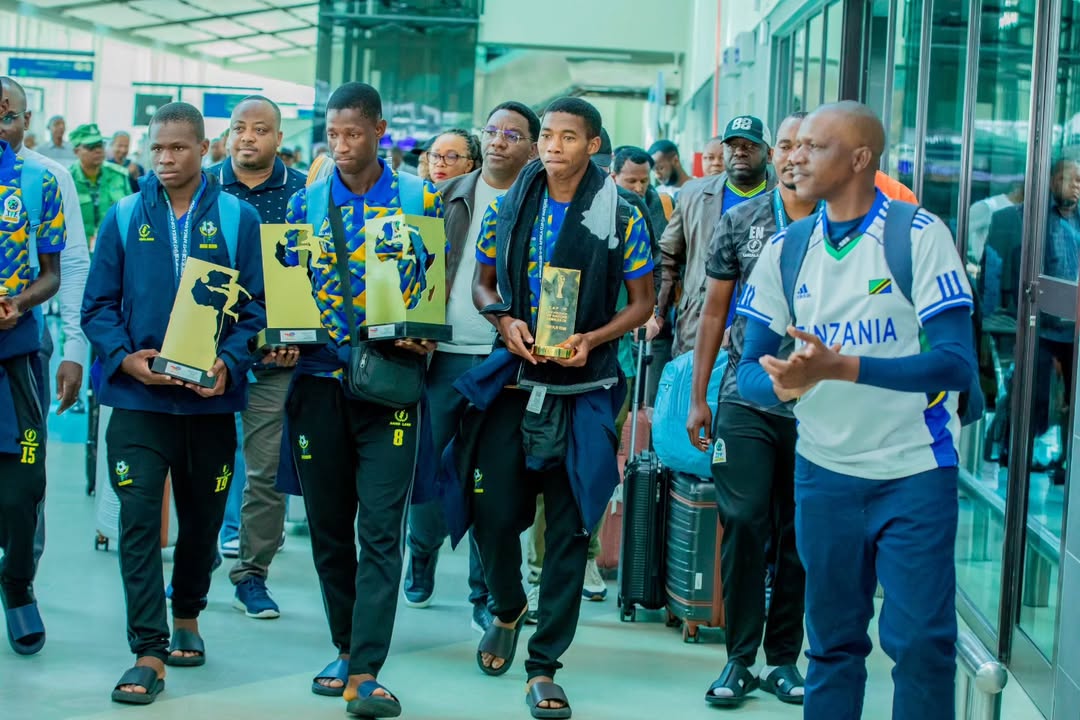
The Serengeti Boys qualified for the U-17 World Cup after finishing second in the AFCON U-17 finals in Rabat, Morocco. The achievement is widely regarded as one of the strongest performances by a Tanzanian youth side on the continental stage. The Under-20 women’s national team also secured qualification for the World Cup, joining established sides such as Nigeria and Ghana.
In recognition of these successes, President Samia Suluhu Hassan facilitated the team’s return from Morocco by arranging a Boeing 787-8 flight to bring the Boys back home after the finals. Financial rewards were also issued to the teams, with the Serengeti Boys receiving 500m/- and 50m/- to Tanzanite Queens. Similar incentives have been extended to national teams and clubs, including bonuses per goal scored and rewards for continental performance, which has been labelled in Swahili as ‘Goli la Mama’.
Club football has also seen progress. Simba SC and Young Africans SC have both reached CAF competition finals in recent years, with Young Africans finishing runners-up in the CAF Confederation Cup in 2022 and Simba repeating the feat in 2025. Azam FC and Singida Black Stars have also represented Tanzania in continental tournaments, reflecting increased competitiveness at the club level.
The national men’s team, Taifa Stars, has shown gradual improvement on the continental stage. After a long absence, the team returned to the Africa Cup of Nations in 2019 and has since qualified for subsequent editions, including 2023 and 2025.
For the first time, Tanzania progressed beyond the group stage, reaching the round of 16. In regional competition, Tanzania also co-hosted the African Nations Championship (CHAN) alongside Kenya and Uganda. The tournament was widely praised by CAF leadership for its organisation.
In recognition, President Samia Suluhu Hassan was honoured with the prestigious CAF President’s Outstanding Achievement Award for her significant contributions to the development and transformation of football in Tanzania and across Africa.
During the competition, Tanzania reached the knockout stage for the first time, further highlighting progress in the sport. Beyond football, athletics has also delivered success. Long-distance runner Alphonce Simbu won gold at the World Athletics Championships, adding to the country’s growing international recognition in the sport. These results have coincided with a significant increase in government investment in sport.
The budget for the Ministry responsible for sports has risen from 35.4bn/- in 2023 to 285.3bn/- in 2024, and further to 519.6bn/- in the most recent financial year, with a projected 525bn/- in the coming year. Part of this investment has gone towards infrastructure development ahead of Tanzania’s preparations to co-host the Africa Cup of Nations in 2027. Projects include the construction of the Samia Suluhu Hassan Stadium in Arusha, which is nearing completion, as well as upgrades to Benjamin Mkapa Stadium, including a new playing surface.
Additional training facilities have been developed at venues such as the Gymkhana Club, Law School grounds, Farasi grounds, and the Leaders Club. In Zanzibar, the New Amaan Complex has been completed, while work continues on the Fumba Sport City project. These developments are intended to strengthen the country’s readiness to host major international tournaments.
Taken together, recent performances and ongoing investment suggest a period of sustained growth for Tanzanian sport, particularly in football, where youth development and infrastructure are beginning to yield visible results. In light of these achievements, government officials and sports stakeholders have praised the progress made under President Samia Suluhu Hassan’s leadership.
They note that the journey has become historic, with a strong emphasis on investing in youth development as the foundation for the future of Tanzanian sport. A former Manchester United centre-back has praised the government’s investment in sports infrastructure during a recent visit in the country.
He noted that the level of development in sporting facilities reflects significant progress and positions Tanzania as an emerging force on the global football map.
“I have seen enough investment in the sports sector, from the venues to the overall development. Tanzania is clearly becoming a promising nation on the football map,” he said. He further emphasised the importance of youth development, urging young athletes to combine hard work, discipline and consistency as key pillars for success.
Former Ivory Coast striker Didier Drogba also weighed in, encouraging young people to balance sporting ambition with education.
“Football talent alone is not enough. Education must go hand in hand with sport if young people are to secure a successful future,” Drogba said.
The advice from football legends aligns with ongoing government efforts to strengthen grassroots development. The Tanzania Football Federation (TFF), through its President Wallace Karia, said inter-primary and secondary school competitions are used as a key scouting platform for identifying talent between the Under-15 and Under-17 levels.
“We use school games to identify talent from Under-15 to Under-17. When players reach 17, they graduate into our development pathway and are camped at the Tanga Technical Centre to continue their progression,” Karia explained. According to Karia, plans are underway to expand the number of development centres from two, including the one in Kigamboni, to three.
The Federation is also considering establishing an additional centre in Kahama, Shinyanga Region. Karia confirmed that about 100 boys and girls are based at the Tanga centre, where they undergo football training alongside formal education. He noted that the programme ensures young players develop both academically and in sport, allowing them to progress with a balanced foundation.
The government has also been supporting the programme through increased investment in school sports, with plans to establish 56 specialised sports schools across the country. In addition, efforts are underway to train more instructors and strengthen the country’s pool of qualified coaches, with institutions such as the Malya College of Sports Development playing a key role in this initiative. Minister for Information, Culture, Arts and Sports, Paul Makonda, highlighted the government commitment in strengthening sport in the country through sustained investment from grassroots to senior level.
Addressing supporters after the AFCON Under-17 final in Rabat recently, he said the progress being witnessed is only the beginning, noting that the President’s strong support for sport is not only improving performance but also creating employment opportunities and contributing to broader economic growth.
“President Samia Suluhu Hassan has placed sport at the centre of national development. Through consistent investment from the grassroots to the elite level, we are seeing not only improved performance but also job creation and economic growth through sport,” Makonda said.
ALSO READ: Analysts see investment gains from Tanzania-Singapore ties
According to the state minister in the President’s Office (Planning and Investment), Kitila Mkumbo, the arts and entertainment sector is among the highest growing sectors with 8.5 per cent growth, with other sectors including: Finance and Insurance (15.7 per cent), electricity and gas (11.8 per cent), mining and quarrying (9.4 per cent), information and communication (8.8 per cent), as well as transport and storage (8.0 per cent).
Of particular note is the performance of the arts and entertainment sector, which continues to show steady growth alongside other key areas of the economy, reflecting its increasing contribution to national development. Looking to the future, Minister Makonda said, such excellence has opened a new chapter for our football.
For the Serengeti Boys reaching the final, winning silver and competing with the best in Africa is something the country should celebrate. The minister urged Tanzanians to look beyond the final result and focus on the future standing before them.
“These boys are the future of our national team. Our responsibility now is to protect their development and give them the right environment to grow.” Makonda called on the Tanzania Football Federation and local clubs to ensure young players are not rushed into situations that limit their growth. “We must help them play regularly, continue learning and develop properly. Talent alone is not enough without support.
We already seen how much our boys can do, let’s inspire them. You can see Dismas Athanasi, only 14 years old, finished as the tournament’s top scorer with three goals to claim the Golden Boot award.” Serengeti Boys Head Coach Elieneza Nsanganzelu has attributed the team’s recent success to years of investment in grassroots football, saying the achievements demonstrate the value of developing young talent across the country. He noted these successes are the product of sustained efforts made by football development centres and youth programmes.
“The success is the result of longterm collective investment from the centres that have helped produce this competitive squad,” he said.
The coach noted that the team’s performances should serve as encouragement for stakeholders to continue supporting youth football, stressing that investment at the grassroots level ultimately delivers results on the national stage.
He called for increased support for young players and emphasised the importance of modernising football development in Tanzania. According to Nsanganzelu, the country must embrace the science of football, including modern training methods and player development systems, to compete with stronger football nations.
“This inspires us because it shows that investment in grassroots football pays off,” he said.
“We must continue investing in these children and modernising our football so that we can match the standards of bigger teams.” While acknowledging the progress already made, the coach said further investment remains necessary to strengthen Tanzanian football and sustain future success.
“We have made investments, but we need even more if we are to make our football stronger,” he added.