
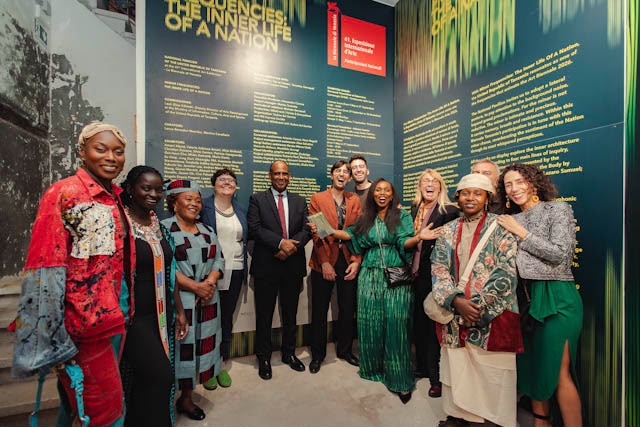
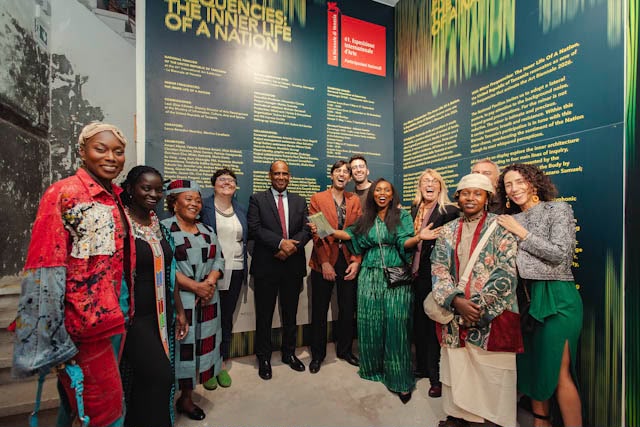
VENICE, ITALY: FOUR Tanzanian artists have taken centre stage at the 61st International Art Exhibition of the La Biennale di Venezia, marking a bold national statement in one of the world’s most prestigious cultural arenas through the pavilion Minor Frequencies: The Inner Life of a Nation.
Representing Tanzania, artists Turakella Editha Gyindo, Amani Abeid, Lazaro Samuel and Valerie Asiimwe Amani showcased works that positioned the country’s contemporary art scene as both confident and globally engaged.
The pavilion, Tanzania’s second participation at the Biennale, was officially opened in the presence of Ambassador Mbarouk Nassor, reflecting a moment of national pride and cultural visibility on the international stage. The delegation was led by Commissioner Leah Elias Kihimbi from the Ministry of Information, Culture, Arts and Sports, working alongside co-curators Lorna Benedict Mashiba and Italian curator Martina Cavallarin.
Developed under the guidance of the Ministry of Information, Culture, Arts and Sports and realised in collaboration with Rangi Gallery and the Gervasuti Foundation, the pavilion is anchored on a central curatorial idea: that “the minor is intimate and precious, carrying memory, breath and resistance.”
Each artist interpreted this framework through a distinct conceptual lens—Body, Gesture, Archive and Mind—forming a layered narrative of identity, memory and survival.
Gyindo’s Testimonials from the Body explored cleansing as ritual and resistance, using hand-treated loofah materials cultivated by women in Morogoro and infused with earth pigments, evoking histories written into skin and soil.
ALSO READ: Tanzania uses World Cup finals as a learning platform for co-hosting 2027 AFCON
Valerie Asiimwe Amani’s participatory installation transformed the pavilion into a living archive of abandoned dreams, inviting visitors to deposit forgotten aspirations, later reimagined as a collective soundscape of unrealised futures.
Lazaro Samuel delivered raw, instinct-driven canvases shaped by lived precarity and movement, where gesture becomes language and pigment becomes survival.
Amani Abeid’s works examined cultural tension and identity negotiation, placing Maasai references alongside symbols of Western influence to reflect shifting ideas of selfhood in a globalised world.
Presented at Venice from 9 May to 22 November 2026, Tanzania’s pavilion signals a growing international presence for the country’s contemporary art scene, with Rangi Gallery playing a key role in amplifying Tanzanian creative voices on the global stage.