
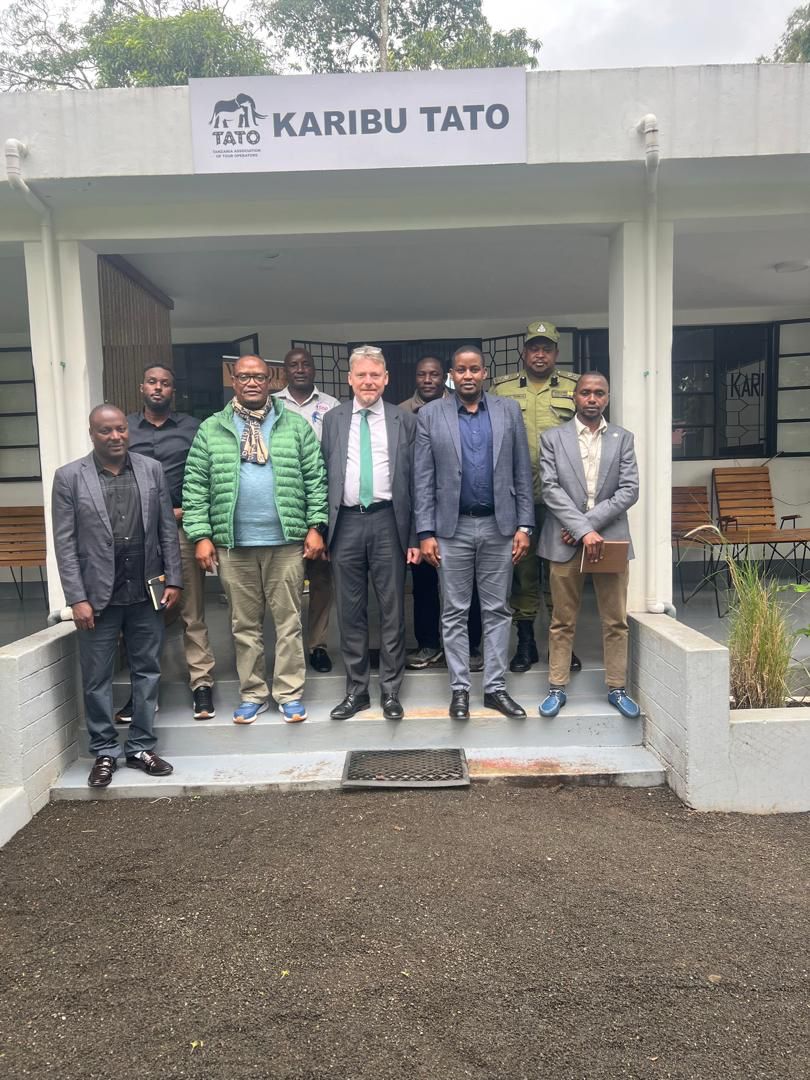
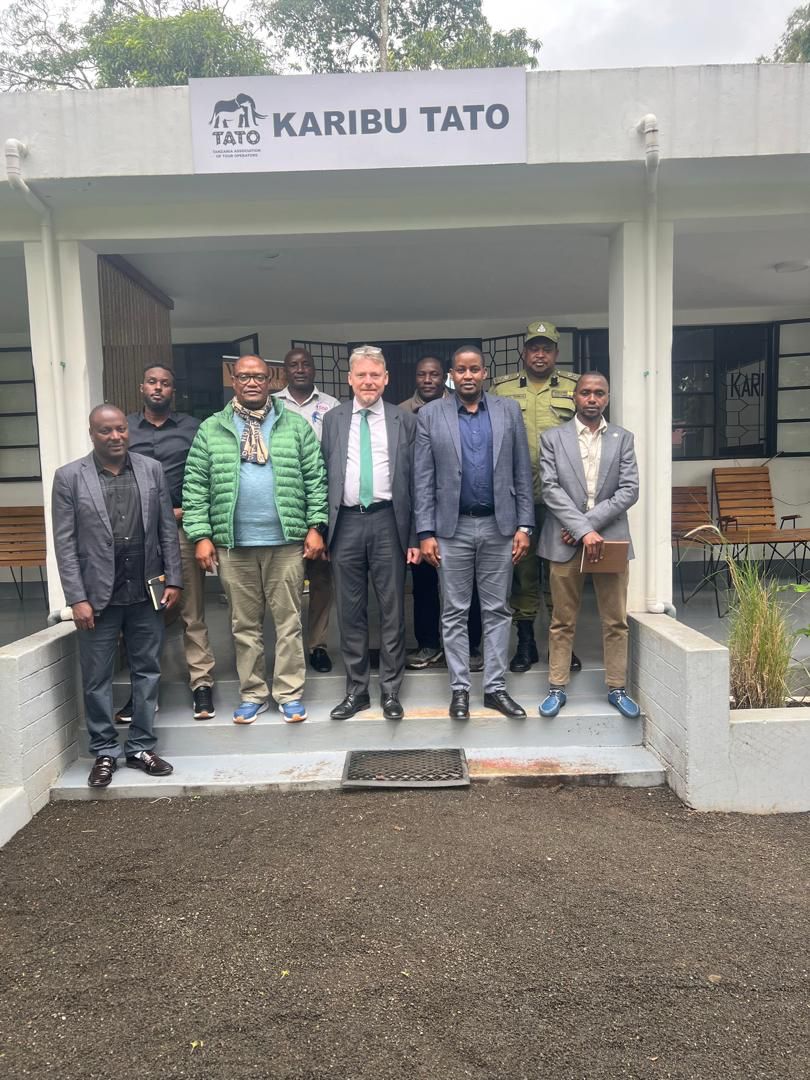
ARUSHA: GERMANY’S Chargé d’Affaires in Tanzania, Manuel Müller, has said the future growth of East Africa’s tourism industry will depend on stronger sustainability practices and deeper regional cooperation across the East African Community (EAC).
Speaking during discussions with tourism stakeholders in Arusha over the weekend, Müller welcomed Tanzania’s efforts to balance conservation with rising international visitor demand, as German tourist arrivals continue to increase.
The meeting brought together representatives from government, tourism associations and private sector operators, who highlighted the industry’s growing contribution to conservation, livelihoods and regional economic integration.
Arusha, northern Tanzania’s tourism hub and gateway to some of Africa’s most celebrated wildlife destinations, hosted the engagement at a time when long-haul travel demand is recovering and European interest in East African tourism is growing.
Sustainability at the forefront
Sustainability featured prominently throughout the discussions, reflecting Tanzania’s reliance on nature-based tourism, including wildlife safaris and mountain tourism.
Industry stakeholders highlighted conservation initiatives such as the de-snaring programme in the Serengeti ecosystem, implemented by the Tanzania Association of Tour Operators (TATO) in partnership with the Frankfurt Zoological Society (FZS), which aims to reduce illegal hunting and protect wildlife habitats.
Participants also pointed to environmental measures including the “trash in, trash out” policy in Kilimanjaro National Park, requiring climbers to remove all non-biodegradable waste from the mountain.
Müller said such initiatives are increasingly important to international travellers, particularly those seeking environmentally responsible destinations, while helping preserve the ecosystems that underpin Tanzania’s tourism economy.
Tourism as a tool for regional integration
Tourism operators stressed the growing importance of cross-border travel packages that enable visitors to explore multiple East African destinations within a single itinerary.
The approach reflects efforts by EAC member states to position their tourism offerings as complementary rather than competing products, allowing visitors to combine experiences such as wildlife safaris, gorilla trekking, beach holidays and cultural tourism.
Müller described tourism as a practical driver of regional integration, noting that East African countries collectively offer a diverse range of attractions that complement one another.
“Tanzania, Uganda, Rwanda and other EAC countries each offer unique experiences that together create a stronger regional tourism product,” he said.
Industry leaders cited several recent initiatives aimed at strengthening regional cooperation, including a familiarisation trip linking Tanzanian and Rwandan tour operators and the Tanzania-Uganda “UG-Arusha Connect” campaign, which promotes combined travel experiences featuring Uganda’s gorilla trekking attractions alongside Tanzania’s safari circuit and Indian Ocean coastline.
They also highlighted joint participation in regional tourism exhibitions, including Uganda’s Pearl of Africa Tourism Expo (POATE) and Tanzania’s Karibu-KiliFair, as platforms for strengthening business partnerships and destination marketing.
Inclusive growth and labour standards
Stakeholders also underscored the importance of ensuring tourism growth benefits workers and local communities.
Loishiye Mollel, representing the Tanzania Association of Porters, outlined efforts to improve working conditions for thousands of porters operating on Mount Kilimanjaro, Mount Meru and the Usambara Mountains.
He said the association continues to promote training, safety standards and fair working conditions, arguing that better welfare for workers ultimately enhances visitor experiences and strengthens the sector’s reputation.
Germany’s growing tourism connection
TATO Vice Chairman Henry Kimambo said Germany remains one of Tanzania’s most important long-haul tourism markets and welcomed continued engagement between German institutions and the tourism sector.
He argued that deeper regional integration could increase visitor spending and extend average lengths of stay by offering travellers a wider range of experiences across East Africa.
Kimambo also pointed to ongoing advocacy for one-stop border posts and other measures designed to simplify travel between EAC member states.
According to Tanzania’s Ministry of Natural Resources and Tourism, the number of German visitors to Tanzania has nearly doubled over the past eight years and now accounts for approximately 5% of international tourist arrivals.
In Zanzibar, Europeans represented more than 70% of international arrivals in 2024, with Germany ranking among the leading source markets.
Connectivity and investment
Müller said improved air connectivity is helping support tourism growth, citing expanded services by the Lufthansa Group and its affiliated carriers, including SWISS and Brussels Airlines, which connect major European hubs with Dar es Salaam, Kilimanjaro and Zanzibar.
He also highlighted Germany’s role as host of ITB Berlin, the world’s largest tourism trade fair, where Tanzania and other East African countries regularly promote destinations, build partnerships and attract investment.
Germany’s support extends beyond tourism promotion. Björn Richter, East African Community Cluster Coordinator for the German development agency GIZ, said Germany remains a longstanding partner in conservation, sustainable economic development and regional tourism cooperation.
“Through GIZ, Germany supports the regional tourism brand ‘Visit East Africa – Feel the Vibe’ to further position the EAC as a unified tourism destination and, through the ‘Invest East Africa’ initiative, attract more German private sector investment into sustainable tourism,” Richter said.
Looking ahead
Participants agreed that the long-term success of East Africa’s tourism sector will depend on balancing growth with conservation while strengthening cooperation across borders.
For stakeholders gathered in Arusha, the message was clear: the region’s competitive advantage lies in the diversity of its attractions from wildlife-rich savannahs and mountain landscapes to tropical islands and cultural heritage sites.
Harnessing those strengths through coordinated regional strategies, they argued, could help East Africa attract more visitors, encourage longer stays and ensure that tourism growth benefits both communities and the natural environments on which the industry depends.