
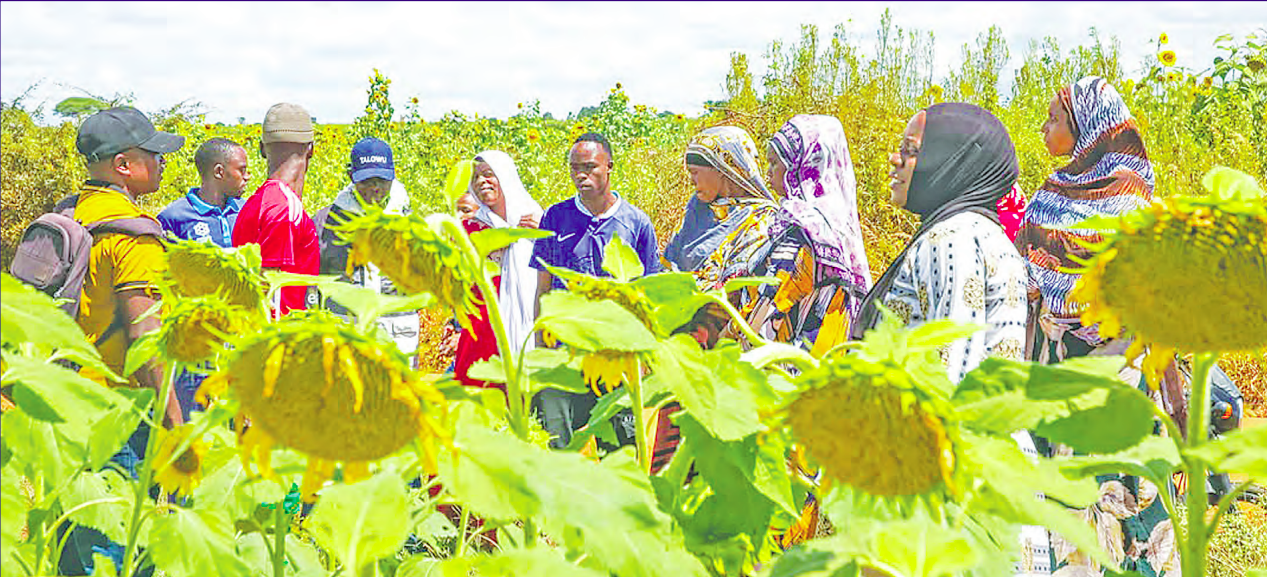
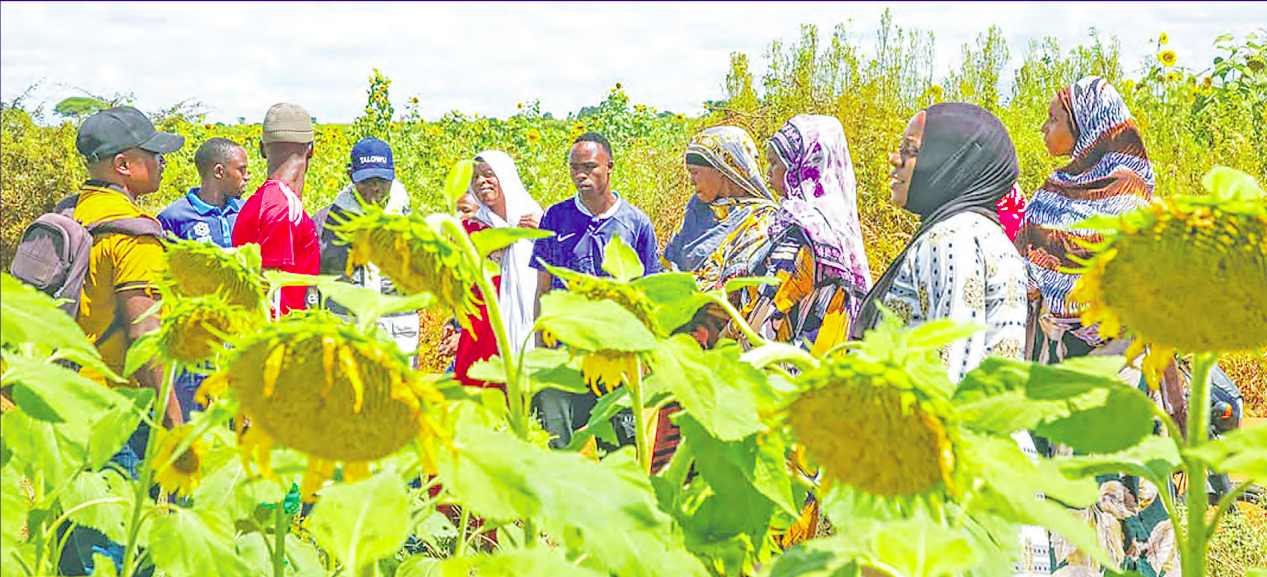
DAR ES SALAAM: FOR years, smallholder farmers have toiled individually, earning little despite feeding the nation. Today, through cooperative societies, they are gaining collective strength, accessing better markets, improving productivity and turning their efforts into meaningful and sustainable income growth.
Cooperative societies are increasingly empowering farmers by ensuring reliable markets, increasing production and recognising their contribution to national economic development.
The cooperative movement in Tanzania originated from conflicts of economic interest in the production and marketing of cash crops, leading to the enactment of early legislation and the formal recognition of cooperatives in the 1930s.
After independence, cooperatives were adopted by the government as instruments for promoting social and economic development under socialist policies, before later reforms restored them to voluntary, member-driven organisations.
When implementation of the Tanzania Development Vision 2025 was operationalised through the First Five-Year Development Plan (FYDP I) 2011/12–2015/16, the country remained largely dependent on agriculture and faced major infrastructure bottlenecks, low industrial capacity, limited value addition, skills shortages and a challenging business environment.
The plan was, therefore, designed to unlock the country’s growth potential by addressing these constraints and laying the foundation for industrialisation and economic transformation.
Its overarching goal was to shift Tanzania from a predominantly agriculture-based economy towards a more diversified and semi-industrialised economy capable of achieving middle-income status by 2025.
To strengthen the sector, the Tanzania Cooperative Development Commission (TCDC) was established under Act No. 6 of 2013, with the mandate to oversee cooperative development and promote the establishment of small-scale processing industries to add value to crops such as cashew nuts and milk.
The initiative supported the implementation of Tanzania Development Vision 2025 and FYDP I, which sought to address structural constraints to growth by promoting value addition, agro-processing, industrialisation and employment creation as part of the country’s transition to a semi-industrialised economy.
The establishment of TCDC in 2013 reflected government efforts under FYDP I to unlock Tanzania’s growth potential by strengthening cooperatives, enhancing agricultural productivity and promoting value addition through small-scale industries key pillars of Vision 2025.
During the Second Five-Year Development Plan (FYDP II) 2016/17–2020/21, cooperative societies were further strengthened, although they were not the plan’s central focus.
Their role was mainly linked to agricultural transformation, industrialisation, value addition and inclusive economic growth.
Key gains included improved cooperative governance and regulation, with the government strengthening oversight through the TCDC, enhancing supervision, registration, auditing and capacity-building.
This improved accountability and helped restore public confidence in the cooperative movement.
Another key area was the expansion of value addition initiatives. FYDP II encouraged cooperatives to move beyond crop collection and marketing into processing and value addition.
Agricultural Marketing Cooperative Societies (AMCOS) were encouraged to engage in cashew nut processing, dairy processing and other agro-industrial ventures aligned with the industrialisation agenda.
The plan also improved market access, as reforms in strategic crops such as cashew nuts, coffee, cotton and tobacco increased the role of cooperatives in crop marketing and aggregation, enabling farmers to access larger and more organised markets.
Cooperatives were also used as channels for distributing agricultural inputs, extension services and financial services, strengthening smallholder participation in commercial agriculture and value chains.
Savings and Credit Cooperative Societies (SACCOS) expanded significantly, improving access to credit for farmers, entrepreneurs and rural communities. Reforms were also introduced to strengthen regulation and sustainability.
Despite these gains, challenges persisted, including weak governance in some cooperatives, limited capital for investment in processing industries, inadequate business skills and technology, dependence on raw commodity marketing and cases of mismanagement and weak financial controls.
During FYDP II, cooperatives were strengthened through improved regulation, expanded market access and support for value addition, contributing to broader industrialisation and inclusive growth objectives.
The Third Five-Year Development Plan (FYDP III) 2021/22–2025/26 is still ongoing; therefore, its performance is best assessed as progress rather than final outcomes.
However, clear gains have emerged in line with its theme of “Realising Competitiveness and Industrialisation for Human Development.”
The plan has strengthened the role of cooperatives in agricultural value chains. Cooperatives continue to play a central role in handling strategic crops such as cashew nuts, coffee, cotton and tobacco, improving access to organised markets and better pricing systems.
Institutional strengthening has also continued through the TCDC, with emphasis on governance reforms, auditing systems, leadership training and enforcement of cooperative laws to address past weaknesses. A key focus of FYDP III has been expanding agro-processing and value addition.
ALSO READ: Tanzania’s agricultural transformation captivates Burundian envoys
AMCOS have increasingly been encouraged to invest in or partner with small-scale processing industries, particularly in cashew nut processing, dairy and other agrobased sectors.
The plan has also supported the growth of SACCOS, improving access to affordable credit for farmers, traders and small entrepreneurs, alongside reforms promoting transparency and financial inclusion.
Digitalisation of cooperative operations has also advanced, including payment systems, record-keeping and crop marketing platforms, improving efficiency and reducing governance challenges linked to manual systems.
Despite progress, challenges remain, including limited capital for large-scale processing, governance weaknesses, uneven capacity across regions, dependence on raw commodity exports and slow uptake of modern technology in rural cooperatives.
Overall, FYDP III is gradually transforming cooperatives into instruments of industrialisation and rural development, although the sector is still transitioning from a commodity-based model to a value-added, industrial and digitally driven system.
In summary, the performance of the cooperative movement across the three development plans shows a clear evolution: FYDP I (2011–2016) focused on laying the foundation for value addition and industrialisation; FYDP II (2016–2021) strengthened cooperatives as vehicles for agro-processing, marketing and rural transformation; while FYDP III (2021–2026) aims to enhance productivity, competitiveness and private-sector-led growth.
The government has also continued to create an enabling environment for smallholder farmers to access capital through financial institutions, including loans offered at concessional interest rates not exceeding 9 per cent.
In April 2025, the government launched the Co-operative Bank (Coop Bank Tanzania), which is 51 per cent owned by cooperative members, with a capital base of 55bn/-.
The bank operates branches in Dodoma, Kilimanjaro, Mtwara and Tabora, with more than 50 apex cooperative societies serving as agents.
The ruling party CCM’s 2020–2025 Election Manifesto directed the Ministry of Agriculture to implement voluntary cooperatives under government supervision to safeguard farmers’ interests and improve benefits.
According to the Ministry of Agriculture’s 2025/2026 budget speech, significant progress has been recorded under President Samia Suluhu Hassan’s administration in strengthening the cooperative sector.
Among key achievements is the procurement and distribution of 3,760 digital weighing scales worth 13.3bn/- to 992 cooperative societies to improve transparency in crop purchasing.
The number of cooperative owned factories has increased from 267 in 2021/22 to 331 in 2024/25, covering cotton ginning, rice milling, coffee processing, maize milling, milk processing, oil extraction and cashew nut processing.
Members’ savings in SACCOS rose from 576bn/- in 2021/22 to 966.9bn/- in 2023/24, while loans increased from 798bn/- to 1.1tri/- over the same period.
Governance has also improved, with clean audit reports rising from 339 to 631 cooperatives, while those with qualified and adverse opinions have declined significantly.
By April 2025, registered cooperative societies reached 7,820, up from 7,522 in 2024. Of these, 4,533 are Agricultural Marketing Cooperative Societies (AMCOS), while 1,075 operate in irrigation, horticulture, livestock, fisheries, industry and mining.
The TCDC has also provided market and financial literacy training to 88,951 cocoa farmers (88.95 per cent of the target), enabling improved access to credit.
Additionally, 6.47bn/- has been allocated for warehouses and storage facilities to reduce post-harvest losses, 2.2bn/- for irrigation systems, 2.1bn/- for farm implements and 139bn/- to cooperative societies to facilitate crop purchases including coffee, cotton, cashew nuts, sugarcane, avocados, maize and paddy.
In export markets, coffee cooperatives exported 15,851.561 tonnes of Arabica and Robusta coffee worth 73.7 million US dollars (about 184.25bn/-), while cotton cooperatives sold 29,161 bales worth 4.61bn/- to India and China.
Looking ahead, the Ministry of Agriculture is reviewing the Cooperative Societies Act No. 6 of 2013, finalising the Agricultural Transformation Master Plan 2050, promoting modern farming tools, strengthening contract farming and developing implementation compacts with development partners.
According to the TCDC Annual Performance Report for Non-Financial Cooperative Societies 2025, cooperatives continue to play a crucial role in input distribution.
Between 2022/23 and 2023/24, inputs worth nearly 978bn/- were distributed, including fertiliser worth over 240bn/- and pesticides exceeding 568bn/- .
For 2026/27, the Ministry of Agriculture has been allocated 1.105tri/-, targeting an increase in traditional cash crop production to 2,118,000 tonnes, up from 1,599,945.66 tonnes in 2025/26.
Cashew nuts led production with 617,683.77 tonnes, followed by sugar, cotton, tobacco, coffee, sisal, tea, cocoa and pyrethrum.
Beyond traditional crops, the Government is promoting avocado as a high-value export crop, targeting 235,000 tonnes in 2026/27, up from 201,354 tonnes in 2024/25, with exports projected at 40,000 tonnes. To support this, 1,727,400 subsidised seedlings will be distributed, targeting youth and women groups.