
DAR ES SALAAM: TANZANIA’S ambition to become a middle-income, industrialised economy is anchored on one critical foundation: reliable, affordable, and sustainable energy. Without sufficient electricity to power industries, support businesses, and meet household demand, economic transformation remains constrained.
As a result, energy development has become one of the country’s most strategic national priorities. Over the past decade, Tanzania has made significant progress in expanding its electricity generation capacity.
Investments in large hydropower projects, natural gas facilities, and renewable energy sources have strengthened national energy security and improved access in both urban and rural areas. However, the country’s rising population, rapid urbanisation, and growing industrial base continue to place increasing pressure on the power system.
To bridge this gap, both the government and private developers are mobilising substantial capital to finance new infrastructure. This has created an environment where financial institutions are becoming increasingly central to Africa’s energy transformation, not only as lenders but also as strategic partners in structuring, advising, and enabling large-scale investments.
Across the continent, energy infrastructure projects require billions of dollars in investment. Governments alone cannot meet this demand, making privatesector participation and innovative financing models essential. In this evolving landscape, banks and development finance institutions are playing a crucial role in bridging funding gaps and enabling long-term projects. Among the key financial institutions active in Africa’s energy sector is Standard Bank, which has positioned itself as a major enabler of infrastructure development.
ALSO READ: Z’bar revenue jumps 41pc to 1.2tri/-
The bank provides financing expertise, investment advisory services, and cross-border structuring support for energy and infrastructure projects across multiple African markets.
For Tanzania, where energy demand continues to grow alongside industrial expansion, such partnerships are increasingly important. Financial institutions bring not only capital but also technical expertise that supports project design, risk management, and sustainable implementation.
Tanzania’s energy progress and expanding capacity
In recent years, Tanzania has recorded notable achievements in the energy sector. Major investments in generation projects have significantly increased installed capacity, improving reliability and supporting economic activities across manufacturing, mining, agriculture, and services. These developments have strengthened energy security and reduced dependency on costly or unreliable sources of power.
However, experts caution that generation alone is not sufficient. A fully functional energy system also requires strong transmission and distribution networks capable of delivering electricity efficiently to end users. Without this balance, even large-scale investments may not deliver their full economic potential.
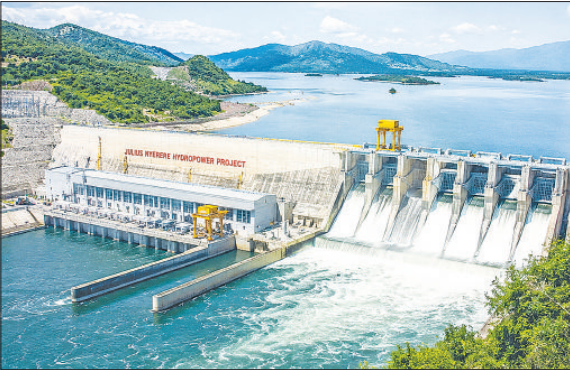
The Julius Nyerere Hydropower Project: A Landmark Investment One of the most significant symbols of Tanzania’s energy transformation is the Julius Nyerere Hydropower Station, a 2,115-megawatt project located on the Rufiji River.
The project represents one of the largest infrastructure investments in the country’s history and a cornerstone of its long-term energy strategy. Beyond its engineering scale, the project reflects the growing complexity of energy financing in Africa.
Large infrastructure developments of this magnitude typically require blended financing structures that combine government funding, multilateral support, and commercial banking participation.
While the Government of Tanzania and development finance institutions have provided the majority of funding for the project, commercial banks have also contributed through guarantees, financial structuring, and support across the project value chain.
Complex financing ecosystems for mega projects
Projects like the Julius Nyerere Hydropower Station highlight the evolving nature of infrastructure financing. Such developments are no longer financed through a single source but depend on sophisticated financial ecosystems that distribute risk and ensure long-term viability.
In this context, institutions such as Standard Bank play an important role in enabling Africa’s infrastructure ambitions.
Their involvement includes structuring deals, facilitating investment flows, and advising on cross-border financing arrangements that align with both investor expectations and national development priorities. This integrated financial approach is becoming increasingly important as African countries pursue industrialisation and regional economic integration.
Speaking in a special interview, the Executive Vice President for Power and Renewables at Standard Bank, Vincenzia Leitich, described the Julius Nyerere Hydropower Project as a landmark development in Tanzania’s energy journey.
She noted that large-scale infrastructure projects require close collaboration between governments, contractors, and financial institutions to ensure successful delivery and longterm impact. According to her, Standard Bank’s focus across Africa remains on supporting transformative energy projects that expand electricity access, strengthen national grids, and unlock economic potential.
She further emphasised that hydropower developments such as Julius Nyerere demonstrate how structured financing and strategic investment can accelerate national development goals and position Tanzania as a growing energy hub in the region.
Despite its full physical completion, the Julius Nyerere Hydropower Project is currently operating below its maximum potential due to limitations in transmission infrastructure. According to Ms Leitich, the plant is fully constructed but is only operating at approximately 50 percent of its total capacity. This is because the national transmission network is not yet sufficiently developed to evacuate and distribute all the generated electricity efficiently across the country.
As a result, only part of the generated power is being delivered to end users, while ongoing efforts continue to strengthen transmission lines and improve grid connectivity. This situation highlights a critical challenge in energy development: generation capacity must be matched by equally strong transmission and distribution systems to achieve full impact.
The role of African financial institutions
The growing involvement of African banks in energy infrastructure financing carries strategic importance beyond capital provision. Local and regional financial institutions often have a deeper understanding of domestic regulatory frameworks, market conditions, and development priorities. This allows them to design financing solutions that are better aligned with national goals, while also supporting long-term sustainability of investments.
As Tanzania continues to expand its energy infrastructure, such partnerships are expected to play an increasingly important role in shaping both the structure and direction of development.
Tanzania’s industrialisation agenda is closely tied to the availability of stable and affordable electricity. New factories, agro-processing plants, mining operations, and service industries all depend on reliable power to operate efficiently and remain competitive.
Without consistent energy supply, productivity is reduced, investment slows, and job creation is limited. This makes energy not just a utility issue, but a core economic driver.
The rise of green and sustainable financing
Globally, financial institutions are increasingly prioritising environmental, social, and governance (ESG) considerations. This shift is encouraging investment in cleaner and more sustainable energy sources. Tanzania is well positioned to benefit from this transition due to its abundant renewable energy resources, including solar, wind, hydro, and natural gas.
These resources provide a strong foundation for diversifying the country’s energy mix and attracting green investment. Innovative financing tools such as blended finance, climate funds, and public-private partnerships are expected to play a growing role in supporting future energy projects.
Beyond large infrastructure projects, investment in the energy sector has wide-ranging social and economic benefits. Construction and operation phases of energy projects create employment opportunities, while expanded electricity access supports entrepreneurship and innovation. Rural electrification, in particular, has transformative potential.
It enables small businesses to grow, improves access to education through lighting and digital tools, and strengthens healthcare delivery by powering medical facilities and equipment. In this way, energy investment contributes directly to improved living standards and inclusive economic growth.
Collaboration as the foundation of progress
As Tanzania continues its development journey, collaboration between government institutions, private investors, and financial partners will remain essential. No single actor can drive energy transformation alone.
The future of Tanzania’s energy sector will depend not only on natural resource availability or engineering capability, but also on the ability to mobilise capital efficiently and design sustainable investment frameworks. Institutions such as Standard Bank are increasingly acting as strategic partners in Africa’s development story.
Their role extends beyond traditional lending to include enabling infrastructure that powers industries, connects communities, and drives economic transformation. For Tanzania, the path toward energy security and industrial prosperity is ongoing.
However, the direction is clear: strong partnerships between the energy sector and financial institutions will determine how effectively the country can power its future and achieve its development ambitions.