
KHARTOUM: In the year since the Sudanese army recaptured the capital Khartoum from a paramilitary force that had seized it at the outset of civil war in 2023, more than 2 million of the 5 million people who fled their homes in the city have returned.
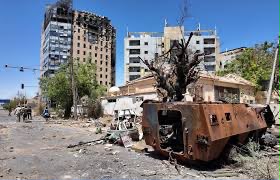
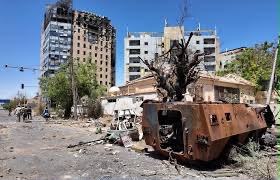
But although the authorities promised a quick restoration of normal life after their military victory, power is still mostly out, buildings remain damaged and workers are going unpaid. Some say they have come back only as a last resort, fleeing a crackdown on refugees in neighbouring Egypt.
The government, which had evacuated ministries and administrative offices to the coastal city of Port Sudan, has ordered civil servants to return to work in Khartoum. Students, who had been offered classes online and permitted to take their exams at temporary centres in other cities or abroad, have been told to return to classrooms.
“We left Sudan in the first place because of the lack of security, but then we started finding the same thing. It wasn’t safe in Egypt,” Altayeb said.
When they heard that the situation in Sudan was improving, she and her family decided to return. She is trying to return to her work as a schoolteacher, but like many government employees, she has not been paid even her meager salary.
Limited recovery
Signs of recovery have so far been concentrated in Omdurman, Khartoum’s sister city across the White Nile, where the army had maintained partial control. Khartoum proper, as well as Bahri city to the north, remain largely without electricity and other services.
Altayeb Saadeldin, spokesman for the Khartoum state government, said those attacks meant the capital’s electricity was working at 1/3 of its prewar capacity.
“That third is being distributed so we can provide people for 8 hours a day,” he said.
The University of Khartoum lies in the most damaged part of the city. Students told they must return to in-person exams and classes have found labs, lecture halls and dormitories still damaged by the war.
“The city needs work just like the university needs work,” said student Megdad Kammal.
University officials say rehabilitation is ongoing ahead of the new semester later this year.
Small business struggles
Small business owners have also faced pressure to open up shop, particularly in Khartoum’s vital Souq al-Arabi, a sprawling market in the city centre which became a battle zone riddled with land mines during the RSF retreat.
But while authorities have started collecting taxes and other fees, many complain they still don’t have access to basic services such as power.
“Our income is very low right now. They need to help us to come back, to encourage us to come back,” said Mohamed Abdelbasit, who owns a print shop, arguing that tax collection should be postponed to help shopkeepers cover their costs.
Saadeldin, the spokesman for Khartoum state government, said the state was providing postponements as needed, but that the resource-starved state also needed revenue to manage basic services such as safety and the sewage system.