
DODOMA: TANZANIA is entering what the government describes as a decisive phase in its development journey, with the 2026/27 budget laying the groundwork for implementation of Vision 2050, the country’s ambitious roadmap for the next quarter century.
The vision, launched by President Samia Suluhu Hassan in July last year, seeks to transform Tanzania into a prosperous, inclusive and selfreliant nation powered by a competitive, knowledge-based economy. At its heart is a bold target: building a one-trillion-dollar economy by 2050, while significantly improving living standards for all Tanzanians.
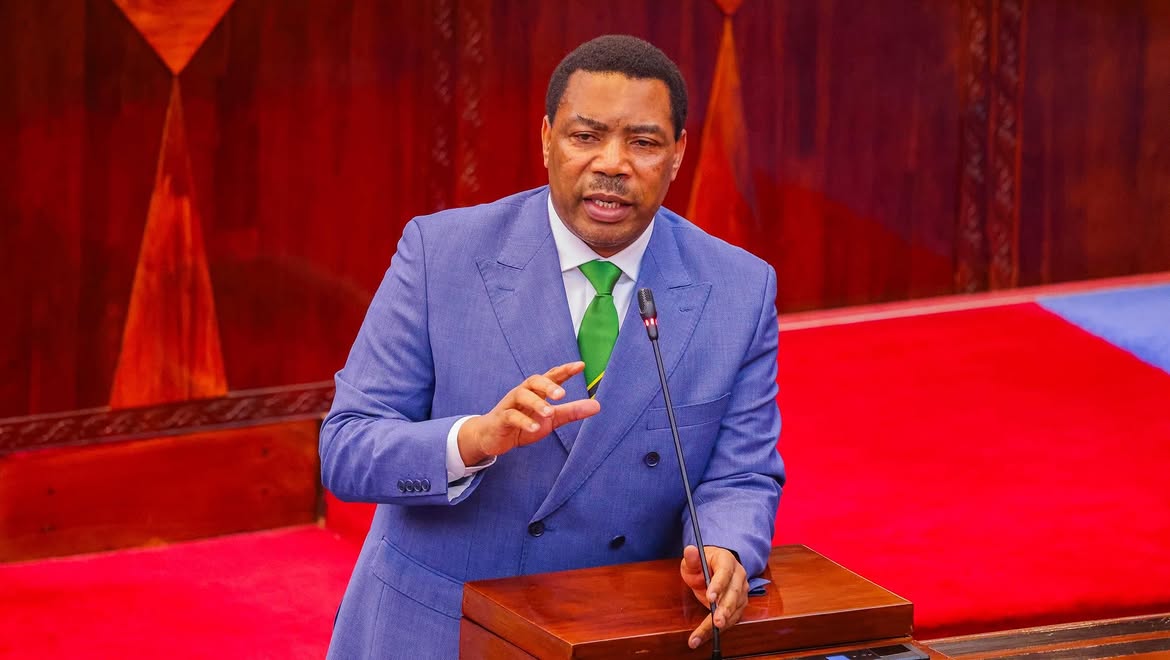
Presenting budget estimates for the Prime Minister’s Office and institutions under its supervision, Prime Minister Dr Mwigulu Lameck Nchemba told the National Assembly that the country was now moving beyond planning and into implementation.
For the government, the launch of Vision 2050 marked the beginning of a new chapter, one that builds on the foundations laid by Vision 2025.
Over the past 25 years, Vision 2025 guided Tanzania through a period of significant economic and social progress. The country expanded infrastructure, improved access to key services and attained lower-middle-income status. Vision 2050 is intended to take that progress further by accelerating economic transformation and strengthening Tanzania’s competitiveness in an increasingly dynamic global economy.
According to Dr Nchemba, implementation of the Fourth FiveYear Development Plan (2026/27– 2030/31), themed “Transformation for Economic Growth and Job Creation,” marks the first concrete step in turning the new vision into reality.
“The plan and budget to be approved by this House constitute the first stage of implementing the Fourth Five-Year Development Plan for the implementation of Vision 2050,” the Prime Minister told lawmakers.
To support that effort, the Prime Minister’s Office sought parliamentary approval of 12.5tri/- for the 2026/27 financial year. The House approved the request.
Of that amount, 8.73tri/- is allocated to recurrent expenditure, while 3.77tri/- is earmarked for development projects.
Most of the funding 12.27tri/- is directed to the Prime Minister’s Office–Regional Administration and Local Government (PMO-RALG), underscoring the government’s belief that local authorities will play a central role in delivering the goals of Vision 2050.
According to the government, the vision aims to build an industrialised upper-middle-income economy with annual per capita income reaching 7,000 US dollars by 2050. It also seeks to eliminate extreme poverty, expand access to quality education and healthcare, create decent employment opportunities and position Tanzania among Africa’s leading economies.
The vision rests on three broad pillars: a strong, inclusive and competitive economy; human capabilities and social development; and environmental integrity and climate resilience.
Supporting those pillars are five strategic drivers integrated logistics, energy, science and technology, research and development and digital transformation which are expected to underpin productivity, innovation and long-term competitiveness.
Economy enters implementation phase from a position of strength
The government believes implementation of Vision 2050 begins at a favourable moment, with key economic indicators showing continued resilience and growth.
According to Dr Nchemba, the economy expanded by 6.0 per cent during the third quarter of 2025, compared with 5.5 per cent during the same period the previous year.
Growth was driven largely by sustained investment in infrastructure, transport, energy, communications and social services sectors that the government considers critical to long-term transformation.
Inflation remained stable, averaging 3.5 per cent between July and December 2025 before easing to 3.3 per cent in January 2026. Those levels remain well within national and regional benchmarks.
The country’s external position also strengthened.
Export earnings increased from 16.3 billion US dollars (about 42.8tri/-) in January 2025 to 18.7 billion dollars (about 49tri/-) a year later, while foreign exchange reserves rose to 6.3 billion dollars (about 16.5tri/-), enough to cover more than 4.8 months of imports.
Private-sector lending recorded one of the strongest performances, climbing from 12.8 per cent in January 2025 to 23.5 per cent by January 2026.
For the Premier, who previously served as Finance and Planning Minister, such figures provide evidence that Tanzania is entering the implementation phase of Vision 2050 from a position of relative strength.
He argues that maintaining macroeconomic stability, strengthening fiscal sustainability and creating a predictable investment climate will be essential if the country is to achieve the ambitious targets outlined in the vision.
If there is one recurring theme throughout the government’s longterm agenda, it is the importance of investment and industrialisation.
Dr Nchemba told the National Assembly that the private sector will be one of the principal drivers of economic transformation under Vision 2050.
During the 2025/26 financial year alone, Tanzania registered 927 investment projects valued at 11.08 billion US dollars (about 29tri/-), reflecting what officials describe as growing investor confidence in the country’s economic prospects.
The government also continued expanding industrial infrastructure, including the establishment of 34 Special Economic Zones and implementation of 25 strategic projects worth 280.8 million US dollars (about 737.4bn/-).
Together, the projects are expected to generate exports worth more than 672 million US dollars 1.8tri/-) and create thousands of jobs.
At the same time, reforms aimed at improving the business environment continued. A total of 245 fees, levies and charges were reduced or abolished, while 28 laws were amended to remove bottlenecks and improve the ease of doing business.
According to the government, the reforms are intended to create an environment in which businesses can invest, innovate and grow.
Vision 2050 itself argues that Tanzania’s growth performance over the past two decades, while commendable, has yet to fully unlock the country’s economic potential. The document therefore calls for greater productivity, deeper industrialisation and stronger integration into regional and global markets.
Envisaged strategic projects such as the Bagamoyo Special Economic Zone, Liganga and Mchuchuma developments and the Engaruka Soda Ash project are expected to play a key role in driving industrial growth and expanding export capacity.
Meaningful transformation must be deep rooted. One of the distinguishing features of Vision 2050 is the emphasis placed on local government authorities as agents of transformation.
The government believes many of the vision’s objectives will ultimately be achieved, or missed, at community level.
That is why a significant share of public resources continues to be channelled through PMO-RALG and local government structures.
According to the vision, stronger local governance, improved service delivery, greater accountability and increased public participation will be critical to achieving inclusive development.
Officials say local governments will be expected to drive implementation of programmes related to education, healthcare, water supply, infrastructure and local economic development.
The goal is to ensure that economic growth translates into tangible improvements in people’s daily lives, regardless of where they live.
Job creation and youth empowerment remain central to the government’s long-term strategy.
With Tanzania’s population projected to exceed 118 million by 2050, policymakers increasingly view human capital as one of the country’s most valuable assets.
The government believes that equipping young people with relevant skills, knowledge and opportunities will be essential to sustaining economic growth over the coming decades.
During the year, 12,000 public servants were recruited and deployed, including 5,000 health workers and 7,000 education workers.
An additional 200 billion shillings was allocated to youth economic empowerment initiatives targeting agriculture, livestock, fisheries, manufacturing, trade and information technology.
The government also launched a national programme linking universities, vocational training institutions and employers in an effort to improve employability, entrepreneurship and innovation.
According to Vision 2050, expanding access to decent work and increasing workforce productivity will be critical to achieving the country’s broader development objectives.
The government also sees education, science and innovation as key drivers of future competitiveness.
As economies around the world become increasingly technology-driven, Tanzania hopes to position itself as a knowledgebased economy capable of generating and applying innovation across multiple sectors.
To support that transition, authorities launched a national literacy and numeracy programme while increasing investment in science and technology education.
Through the Samia Scholarship Extended Programme, top-performing students are receiving support to pursue studies in Data Science, Artificial Intelligence and related disciplines at leading international universities.
Meanwhile, the Samia Innovation Commercialisation Fund is helping local innovators turn promising ideas into commercially viable ventures.
The government says such investments are closely aligned with Vision 2050’s ambition of creating a society driven by knowledge, creativity and technological advancement.
From aspiration to implementation
For Dr Nchemba, Vision 2050 is not simply a government programme. It is a national agenda that requires participation from citizens, businesses, civil society organisations, development partners and public institutions alike.
That message reflects the spirit of the vision itself, which was developed through extensive consultations across the country and is intended to represent the aspirations of Tanzanians from all walks of life.
ALSO READ: Vision 2050 challenges mining sector to deliver greater national prosperity, industrial growth
As implementation begins, the government insists that achievements in infrastructure, agriculture, education, healthcare, investment and energy should be viewed not as final outcomes, but as foundations upon which a much larger transformation will be built.
The 2026/27 financial year therefore represents more than another budget cycle. It marks the transition from planning to execution.
Whether through industrialisation, digital transformation, youth empowerment, agricultural modernisation or stronger local governance, the objective remains the same: creating the conditions for a prosperous, competitive and selfreliant Tanzania by 2050.
The task ahead is substantial, but the Prime Minister remains upbeat, maintaining that the direction is clear.
The next quarter century, as he apparently suggests, will not simply be about economic growth, but it will be about transforming the structure of the economy, expanding opportunities for citizens and positioning Tanzania among the continent’s leading success stories.