
TANZANIA: THE story of economic development is often told through statistics—growth rates, investment figures and rising incomes. Yet, the most visible signs of progress are often found elsewhere. They can be seen in a new highway that cuts travel time between regions, a bridge that links previously isolated communities, or a transport corridor that opens up access to markets and opportunities.
These physical connections do more than move people and goods. They shape how economies function, influence where businesses invest and determine how widely the benefits of growth are shared.
As Tanzania embarks on the implementation of Vision 2050, infrastructure is emerging as one of the most important foundations upon which the country’s long-term ambitions will rest.
The vision itself is bold. By 2050, Tanzania aims to build a one-trilliondollar economy, create modern industries, strengthen its position as a regional trade hub and improve the quality of life for a population expected to exceed 118 million people.
Achieving those goals, however, will require more than sound policies and investment capital. It will depend on the networks that connect farms to markets, industries to ports and communities to economic opportunities.
This is where roads, bridges, transport corridors and urban mobility systems become far more than public works projects. They form the infrastructure that enables economic activity to take place.
Without reliable transport links, farmers struggle to access markets, businesses face higher operating costs, investors encounter logistical barriers and industries find it harder to compete. In many respects, the success of broader economic transformation will depend on the strength of these connections.
Against this backdrop, the Ministry of Works’ 2026/27 budget carries significance that extends well beyond annual spending allocations. It represents the first infrastructure budget to be implemented under the Tanzania Development Vision 2050, marking the beginning of a new phase in the country’s development journey.
Presenting the budget in the National Assembly, Minister for Works Abdallah Ulega described it as a historic moment.
“This budget is unique because it is the first budget in the implementation of the Vision 2050 aspirations,” he told lawmakers.
The significance of that statement lies not only in the timing of the budget but also in what it signals about Tanzania’s development priorities. Infrastructure is increasingly being viewed not simply as a supporting service, but as a strategic driver of economic transformation.
The roads, bridges and transport systems being planned and built today are intended to do more than improve mobility. They are expected to support industrialisation, facilitate trade, attract investment and help lay the foundations for the Tanzania envisioned in 2050.
This perspective is reflected throughout Vision 2050, which identifies integrated logistics as one of the key drivers expected to accelerate Tanzania’s transformation over the next quarter century.
The vision recognises that Tanzania’s strategic location on the Indian Ocean, combined with its role as a gateway to several landlinked neighbours, provides a unique opportunity to become a leading trade and logistics hub in Africa.
Yet, geography alone does not create prosperity. To fully realise this advantage, Tanzania requires infrastructure capable of moving people, goods and services efficiently within its borders and across the region.
Vision 2050, therefore, envisages a future in which roads, railways, ports, airports and digital systems operate as an integrated network supporting commerce, investment and industrial growth.
The importance attached to infrastructure is not difficult to understand. Roads connect farmers to buyers, factories to suppliers and businesses to customers. Bridges reduce transport costs and travel times.
Efficient transport systems make investment more attractive and improve the competitiveness of local industries. In a rapidly changing global economy, infrastructure has become one of the key determinants of economic success.
This ambition is already taking shape. According to the ministry’s budget estimates, the construction and infrastructure sector remained the secondlargest contributor to Tanzania’s Gross Domestic Product in 2025, accounting for 11.9 per cent of economic output. The sector recorded growth of 4.0 per cent, up from 3.0 per cent the previous year.
Beyond the statistics lies another important story, the livelihoods created through infrastructure development. During the year under review, nearly 19,000 jobs were generated for contractors, consultants, engineers, technicians, artisans and suppliers. Many of these opportunities benefited young people and women, demonstrating how infrastructure investment contributes not only to economic growth but also to social inclusion.
The scale of investment underway also reflects the government’s confidence in infrastructure as a catalyst for broader development. Across the country, roads are opening access to rural communities, bridges are eliminating long-standing transport bottlenecks and strategic projects are strengthening links between production centres and markets. These investments are helping to create conditions for business expansion, trade growth and increased productivity.
The story of Tanzania’s road network illustrates how far the country has travelled since independence. In 1961, Tanzania had just 1,360 kilometres of paved roads.
Today, the national road network stretches to more than 37,700 kilometres, including over 12,200 kilometres of paved roads. Over the decades, that expansion has helped connect regions, improve access to social services and strengthen economic integration.
Progress has accelerated in recent years. Within five years, the sixth phase government completed nearly 1,500 kilometres of paved roads and delivered 18 major bridges. Such achievements represent far more than engineering milestones. They mean shorter journeys for transporters, better access to markets for farmers, easier movement for businesses and improved access to schools and health facilities for communities.
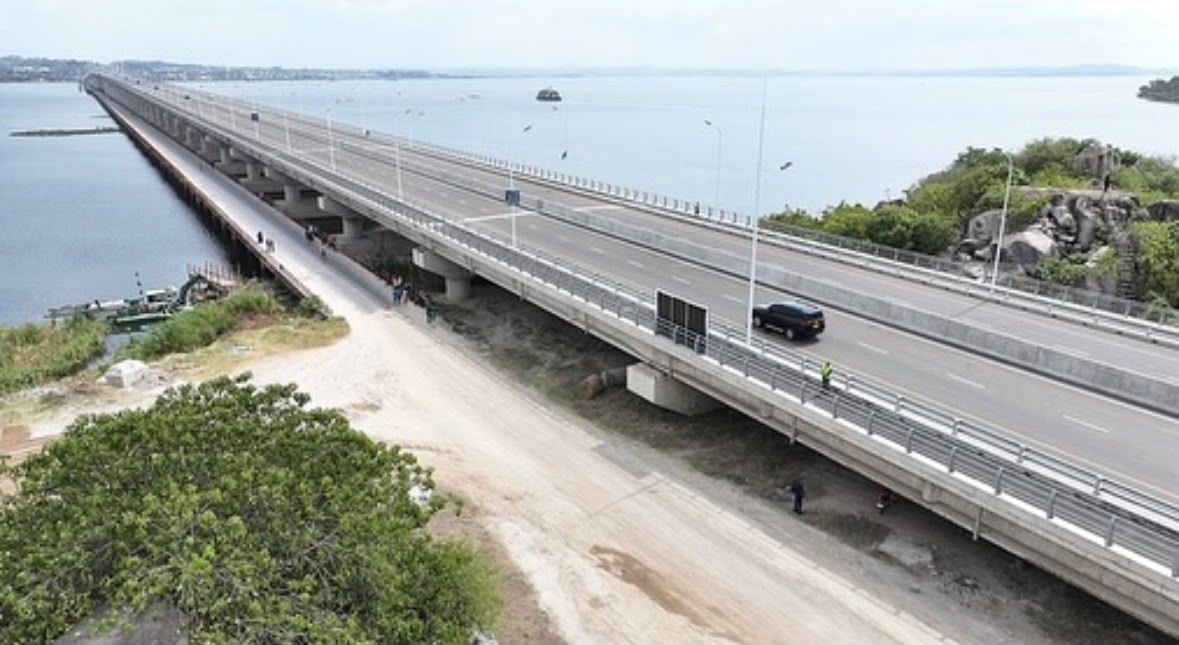
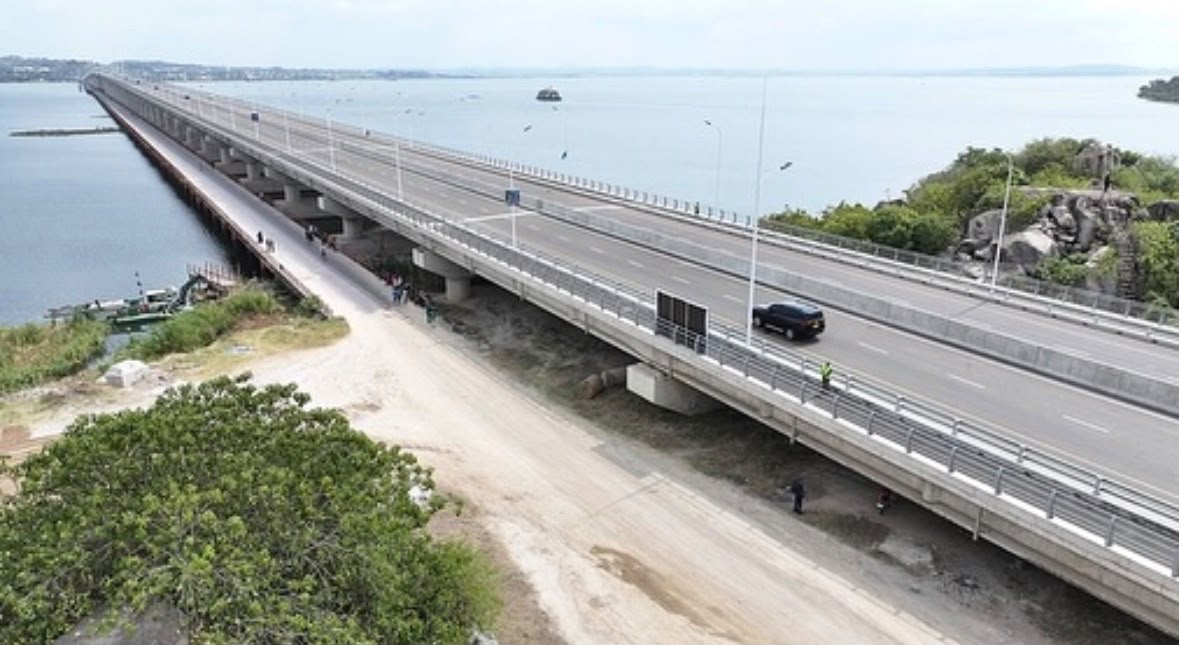
Among the most significant projects completed during the period is the John Pombe Magufuli Bridge linking Kigongo and Busisi across Lake Victoria. The bridge has dramatically reduced travel times and improved connectivity between regions.
For transport operators and traders, the benefits are measured in lower costs and improved efficiency. For communities, the bridge represents new opportunities for commerce and mobility.
The focus now is on ensuring that infrastructure development supports the wider transformation envisioned under Vision 2050. This is evident in the ministry’s emphasis on roads serving agriculture, mining, tourism and industrial development. Such projects are designed not only to improve mobility but also to unlock economic potential in strategic sectors.
Roads linked to the Standard Gauge Railway (SGR) network are another example of this approach. As Tanzania invests heavily in modern rail infrastructure, connecting roads are being developed to ensure seamless movement between railway stations, industrial centres and markets. The completed Kizota-Zuzu Road serving the Dodoma SGR station demonstrates how integrated transport planning is beginning to take shape.
The objective is not simply to build roads, railways and ports as separate projects. Rather, it is to create a transport ecosystem in which each component strengthens the others. Such integration is central to Tanzania’s ambition of becoming a regional logistics and trade hub.
Several flagship projects scheduled for continued implementation during the 2026/27 financial year illustrates this long-term vision. These include the Dodoma Outer Ring Road, the TangaPangani-Makurunge corridor, the Geita-Bulyanhulu-Kahama route and roads supporting strategic agricultural, mining and tourism zones.
Improved transport infrastructure in such areas has implications far beyond mobility. It lowers the cost of doing business, increases productivity and strengthens Tanzania’s attractiveness to investors. It also helps create stronger linkages between different sectors of the economy, allowing growth in one sector to stimulate activity in others.
Another lesson shaping future infrastructure priorities comes from climate change. Recent years have demonstrated how vulnerable roads and bridges can be to extreme weather events. El Niño rains and Cyclone Hidaya caused widespread damage to roads, bridges, drainage structures and culverts in various parts of the country, disrupting transport networks and economic activity.
The government’s response has included emergency recovery projects and significant investment in rebuilding damaged infrastructure. However, the experience has also highlighted the need to think beyond recovery and focus on resilience.
Infrastructure built today must be capable of withstanding tomorrow’s challenges. This is why increasing attention is being given to improved design standards, stronger construction materials and better drainage systems.
Climate resilience is no longer viewed as a separate environmental concern. It has become an essential component of infrastructure planning and economic development.
As Tanzania becomes increasingly urbanised, another challenge is emerging. Growing cities require transport systems capable of moving large numbers of people and goods efficiently. Without adequate investment, congestion can undermine productivity, increase business costs and reduce the quality of life.
Recognising this reality, the government continues to invest in urban mobility projects. Preparations are underway for flyovers at Morocco and Mwenge intersections in Dar es Salaam, while financing is being sought for improvements at Kamata, Magomeni, Fire, Selander and Buguruni intersections.
Such projects are often viewed primarily as solutions to traffic congestion. In reality, they are also economic investments. Every hour saved on the road improves productivity. Every reduction in congestion lowers transport costs. Every improvement in mobility enhances the efficiency of economic activity.
Financing these ambitions, however, presents its own challenge. The scale of infrastructure investment required over the next 25 years is enormous. Government resources alone will not be sufficient to meet all financing needs.
Vision 2050, therefore, places considerable emphasis on partnerships. Public-Private Partnerships are expected to play an increasingly important role in mobilising resources, attracting expertise and accelerating project implementation. The government has already invited local and international investors, financial institutions and development partners to participate in road, bridge, building and transport projects.
For Tanzania, greater private sector participation offers multiple benefits. It brings additional capital, encourages innovation and can improve efficiency in project delivery. More importantly, it allows the country to undertake larger and more ambitious projects than would otherwise be possible through public financing alone.
ALSO READ: TARURA affirms high-standard works in all its assigned road and bridge projects
Ultimately, the significance of the Ministry of Works’ budget cannot be measured solely by kilometres of roads built or the number of bridges completed. Its true importance lies in what those projects make possible.
Infrastructure facilitates trade. It supports industrialisation. It attracts investment. It connects producers to markets. It strengthens regional integration. It creates jobs and improves the daily lives of citizens.
Vision 2050 envisages a Tanzania that is prosperous, competitive and globally connected. A country with a diversified economy, modern industries and improved living standards. Realising that vision will require innovation, investment, skilled human capital and strong institutions.
But it will also require something more tangible. It will require roads that connect opportunities, bridges that unite communities and transport systems that allow people, goods and ideas to move efficiently across the country.
As Tanzania begins implementing Vision 2050, infrastructure is emerging not merely as a development sector but as one of the foundations upon which the country’s future prosperity will be built. The roads and bridges taking shape across the nation today are doing more than linking destinations. They are helping to build the Tanzania of 2050.