
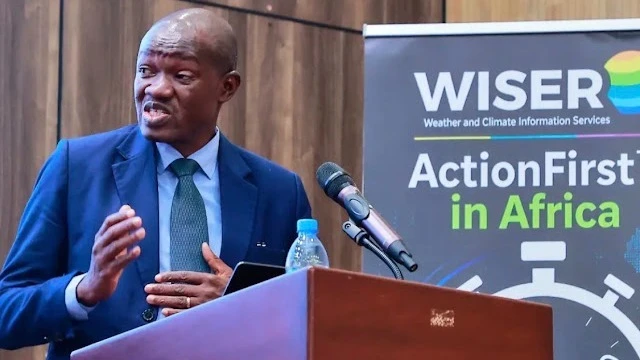
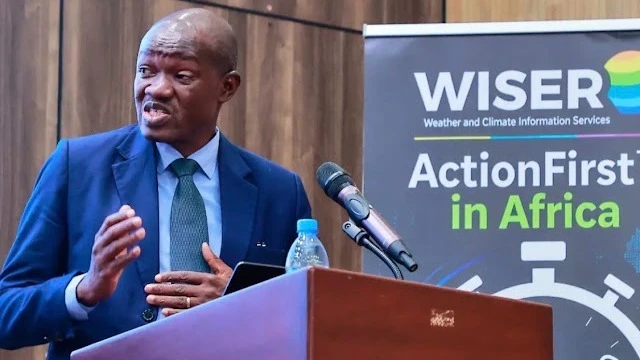
ARUSHA: TANZANIA has called for stronger early warning systems and climate services across Eastern Africa, stressing that effective disaster preparedness depends on making climate information available, accessible and applicable to all users.
The call was made by Tanzania Meteorological Authority (TMA) Director General, Dr Ladislaus Chang’a, when opening the Regional Dialogue on Strengthening Early Warning Systems and Climate Services in Eastern Africa in Arusha.
Dr Chang’a said countries must commit to addressing the “3As” challenges of Availability, Accessibility and Applicability of climate information to improve preparedness for increasingly frequent climate-related disasters.
“Strengthening Early Warning Systems and Climate Services is paramount. Building effective early warning systems requires more than producing accurate forecasts. It requires deliberate efforts and commitment to address the 3As challenges while working in the spirit of leaving no one behind,” he said.
He said climate change and extreme weather events continue to pose unprecedented challenges across Eastern Africa, including devastating floods, prolonged droughts, severe thunderstorms, heatwaves and other extreme weather events.
“These hazards threaten lives, food security, water resources, infrastructure, ecosystems and national economies,” he said.
For Tanzania, Dr Chang’a said strengthening early warning systems remains a national priority through continued investment in observation infrastructure, weather radars, automatic weather stations, numerical weather prediction, climate services, digital dissemination platforms and impact-based forecasting.
He said the investments support implementation of the global Early Warnings for All initiative and ensure vulnerable communities receive timely and reliable weather and climate information.
Dr Chang’a also reaffirmed TMA’s commitment to strengthening South-South cooperation by sharing expertise and technical support with other African meteorological agencies in areas such as legislation, quality management systems, numerical weather prediction, severe weather forecasting, impactbased forecasting, training, calibration of meteorological equipment and digital meteorological systems.
“Weather systems do not recognise political borders, and neither should our collaboration. The strength of Eastern Africa lies in our ability to work together, share knowledge, exchange data, learn from one another and build a stronger regional early warning architecture that serves all our people,” he said.
He said the dialogue provides an opportunity to strengthen collaboration among Regional Climate Centres, Regional Specialised Meteorological Centres and National Meteorological and Hydrological Services (NMHSs) to improve forecasting, climate services, data sharing and service delivery across Eastern Africa.
According to Dr Chang’a, the meeting builds on recent regional engagements, including the Fourth World Meteorological Organisation (WMO) Workshop on Operational Climate Prediction (OCP-4) and the 20th Meeting of the East African Community (EAC) Sectoral Council on Transport, Communication and Meteorology, both hosted in Arusha.
ALSO READ: Climate change costs Tanga 50bn/- annually
He recalled that EAC ministers adopted several recommendations during the meeting, including strengthening the authoritative role of National Meteorological and Hydrological Services in issuing weather and climate early warning information and taking timely action to prepare for the potential impacts of El Niño 2026.
Dr Chang’a said the regional dialogue will sustain the momentum by bringing together stakeholders to strengthen early warning systems and climate services across Eastern Africa.
“Delegates will discuss measures to strengthen regional climate centres, improve impact-based forecasting, enhance regional coordination in sharing weather guidance and information, and promote the use of Information and Communication Technology (ICT), Artificial Intelligence (AI) and Machine Learning in climate services,” he said.
The dialogue brought together stakeholders from across Eastern Africa with support from development partners, including the World Meteorological Organisation (WMO), the WISER Action First Initiative and the UK Met Office, to strengthen regional cooperation on early warning systems and climate services.