

ALGERIA: Tanzania is turning its remarkable success in beekeeping into a powerful instrument for economic diplomacy, trade promotion and investment attraction as the country accepted and prepares to take centre stage at the Africa Bee Expo 2026 in Algiers, Algeria.
The decision to honour Tanzania as the guest of honour at the international exhibition reflects growing international recognition of the country’s achievements in the beekeeping sector and its potential to become a stronger player in the global honey and bee products market.
The expo, scheduled for September 3-6, 2026, at the SAFEX Exhibition Centre in Algiers, will bring together beekeepers, investors, researchers, policymakers, industry experts and business leaders from Africa and beyond to exchange knowledge, explore partnerships and promote the growth of the bee products industry.
For Tanzania, the event represents more than a showcase of honey. It is an opportunity to market the country’s investment potential, strengthen international partnerships and demonstrate how sustainable industries can contribute to economic transformation.
Tanzania’s participation will be led by the Minister for Natural Resources and Tourism, Dr Ashatu Kijaji, who will officially open the exhibition on behalf of the Government of the United Republic of Tanzania.
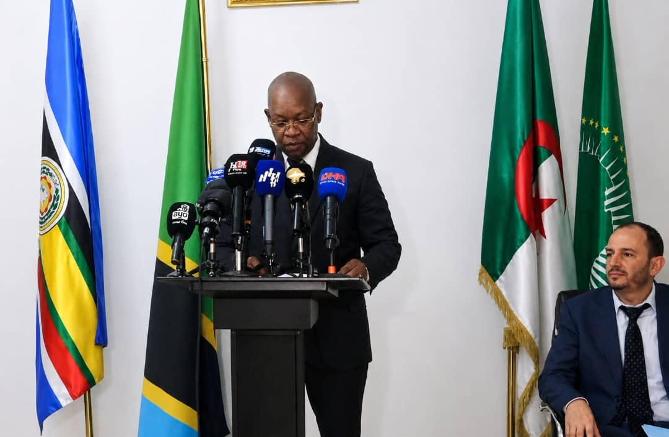
Speaking to Algerian media at the Tanzanian Embassy in Algiers, Tanzania’s Ambassador to Algeria, Mobhare Matinyi, said the country’s participation reflects the importance the government attaches to beekeeping as a strategic sector supporting employment creation, export growth, environmental conservation and rural development. The Tanzanian delegation will comprise senior government officials, technical experts and private sector stakeholders representing different areas of the beekeeping value chain.
The country plans to use the expo as a global business platform to promote its honey, beeswax and other bee-related products while highlighting investment opportunities in production, processing, packaging, technology, tourism and related industries.
“Participation in the Africa Bee Expo 2026 will focus on promoting Tanzania’s bee products and beekeeping services, as well as tourism and investment opportunities,” Ambassador Matinyi said.
During the exhibition, Tanzania will showcase its honey, beeswax and other value- added products while sharing knowledge and experiences in sustainable beekeeping, quality assurance, conservation and development of the industry.
The country will also participate in international honey quality competitions, providing Tanzanian producers with an opportunity to benchmark their products against global standards, improve competitiveness and increase international visibility. Tanzania’s presence at the expo comes at a time when beekeeping is increasingly becoming an important contributor to the national economy and rural livelihoods.
According to government statistics, the sector supports approximately two million people and generates about US$77.5 million annually, equivalent to around 205 billion Tanzanian shillings, through exports of honey and beeswax to international markets.
ALSO READ: Analyst hails the CCM-ACT-Wazalendo reconciliation as a symbol of political maturity
Tanzania currently ranks as Africa’s second-largest honey producer and tenth globally, producing approximately 34,000 tonnes of honey every year. However, the country’s potential extends far beyond current production levels. Estimates indicate that Tanzania has the capacity to expand to about 9.2 million beehives, which could produce up to 138,000 tonnes of honey and 9,200 tonnes of beeswax annually.
This untapped potential creates opportunities for investors interested in commercial honey production, modern processing facilities, packaging solutions, export logistics, research and development, and technology-driven improvements across the value chain.
The beekeeping industry is also much broader than honey production alone. It supports the manufacturing of cosmetics, pharmaceutical products, nutritional supplements, candles and other innovative products derived from bee resources. For investors seeking sustainable and environmentally responsible ventures, Tanzania’s beekeeping sector offers a unique combination of economic opportunity and ecological benefits.
Unlike many industries that depend heavily on resource extraction, beekeeping encourages environmental protection because bees rely on healthy forests and biodiversity. Communities engaged in honey production therefore have stronger incentives to conserve natural ecosystems.
This relationship between business growth and environmental preservation fits well with the growing global demand for green investments and sustainable production systems.
The invitation from Algeria also reflects strengthening cooperation between the two countries and recognition of Tanzania’s progress in the sector. Chairman of the Africa Bee Expo organising institution, Fatah Benchouia, said Tanzania was selected as guest of honour because of its achievements in beekeeping and the positive cooperation existing between Algeria and Tanzania.
He noted that Tanzania’s annual honey production of about 34,000 tonnes compares favourably with Algeria’s approximately 7,300 tonnes, demonstrating Tanzania’s strong position within Africa’s beekeeping industry.
Mr Benchouia was accompanied by Dr Abdelmadjid Bouchareb, Chairman of the Scientific Council of the Africa Bee Expo, and Ahmed Tibaoaoui, President and Chief Executive Officer of World Trade Centre Algeria, a strategic partner of the exhibition. Beyond the beekeeping sector, Tanzania’s participation presents an opportunity to promote its wider economic strengths.
The country’s message to investors is that Tanzania is not only rich in natural resources but also offers opportunities across agriculture, tourism, manufacturing, renewable industries and sustainable development sectors.
The expo will provide Tanzanian businesses and institutions with direct access to international buyers, investors and technical experts, allowing them to build partnerships and learn from innovations shaping the global beekeeping industry.
For investors, the sector presents opportunities in an industry where demand for natural, organic and local beekeepers, international exposure can open new markets, encourage improved production standards and strengthen the quality and branding of Tanzanian honey products. For investors, the sector presents opportunities in an industry where demand for natural, organic and sustainably produced goods continues to rise worldwide.
ALSO READ: 19 artists confirmed for FuTopia’s second edition in Zanzibar
The government’s focus on beekeeping reflects a wider strategy of promoting industries that generate economic value while improving community livelihoods. Beekeeping creates employment opportunities, particularly in rural areas, supports household incomes and contributes to the conservation of forests and natural habitats.
The story Tanzania is taking to Algeria is therefore much bigger than honey. It is a story of innovation, sustainability and investment opportunities built around one of nature’s smallest but most valuable workers—the bee. In international diplomacy, successful partnerships are often built around shared interests and practical opportunities.
Tanzania’s bees are proving that even a small insect can carry a big economic message: that sustainable resources can connect communities, create jobs and attract global investment.
As Tanzania prepares for the Africa Bee Expo 2026, the country is positioning its beekeeping sector not merely as a producer of honey, but as a gateway to expanded trade, stronger international cooperation and long-term economic growth.
The message from Algiers will be clear: Tanzania’s natural wealth, combined with innovation and responsible investment, offers opportunities waiting to be explored.