
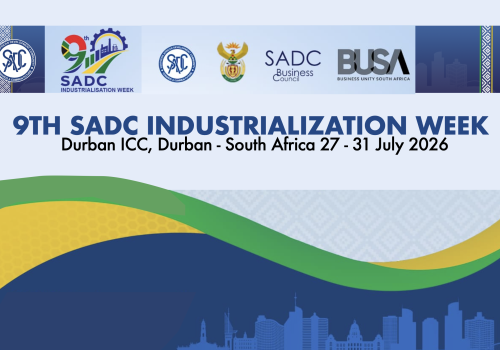
DURBAN: THE 9th Annual SADC Industrialisation Week (SIW 2026) will be held in Durban, South Africa, from today to Friday, and will offer more than a typical regional conference.
Given its significance, it has been officiated by the president of South Africa, Cyril Ramaphosa.
Hosted jointly by the South African government, the SADC Secretariat and the SADC Business Council, this event has established itself as Southern Africa’s leading platform for industrial policy.
It attracts investment, supports regional value chains and strengthens private sector collaborations.
This year’s theme: “Resilient, Sustainable and Inclusive industrialisation through Infrastructure Development, Agricultural and Critical Minerals Transformation in Pursuit of a Just World” closely aligns with Tanzania’s development goals as outlined in Vision 2050.
In Tanzania’s case, the key issue is not whether it has participated, but whether it can turn this attendance into tangible outcomes like investment, technology transfer and industrial growth.
Success should be gauged by signed memoranda, new factories, export deals and employment opportunities, rather than speeches or exhibition visits that will take place from 26th July to 31st July 2026.
Tanzania is entering SIW 2026 as a participant from a position of significant strength. It has one of the fastest-growing economies in the region, low inflation rates, increasing infrastructure investments, an improving energy sector and competitive reserves of critical minerals like graphite, nickel, rare earth elements and gold.
Additionally, major projects such as the Standard Gauge Railway (SGR), Julius Nyerere Hydropower Project (JNHPP), port modernisation and transport corridors are continuously lowering production costs and enhancing regional connectivity.
These developments make Tanzania increasingly attractive as a manufacturing destination rather than merely a supplier of raw materials, with an evolving focus on strengthening manufacturing in the pharmaceutical sector, which is looking to involve more of the private sector. Perhaps the greatest opportunity lies in critical minerals.
Global industrial policy has shifted dramatically. Countries are no longer competing simply to mine minerals, they are competing to control mineral processing, battery manufacturing and clean technology supply chains.
Tanzania has some of the largest graphite deposits in Africa, along with substantial nickel reserves, rare earth minerals and abundant natural gas.
These resources position the country well to engage in the production of electric vehicle batteries, renewable energy parts and advanced manufacturing.
SIW 2026 provides Tanzania with direct connections to manufacturers, battery producers, mining firms, technology companies and development finance institutions looking for secure supply chains to support the global energy transition.
However, Tanzania should heed Africa’s past mistake: Exporting raw minerals and importing costly finished goods, which generates jobs in other countries but hampers domestic industrial growth.
Instead, Tanzania ought to leverage Durban to negotiate investments in mineral beneficiation plants, battery precursor manufacturing, battery assembly, industrial research centres and technology transfer partnerships.
This strategy would boost export revenues notably and generate thousands of high skilled jobs. Agriculture offers a significant opportunity.
Although it employs the majority of Tanzanians, it primarily exports raw commodities. SIW 2026 emphasises transforming agriculture as a key part of regional industrialisation.
Instead of exporting raw materials like cashew nuts, coffee, tea, cotton, sisal, sunflower and horticultural products, Tanzania should focus on attracting regional manufacturers that can produce higher-value processed foods, edible oils, beverages, textiles and industrial inputs.
Industrialisation starts at the point where agriculture intersects with manufacturing.
This also opens up opportunities for Tanzanian manufacturers to become part of regional value chains.
The SADC Industrialisation Strategy is progressively encouraging the development of production networks rather than focusing on isolated national industries.
A vehicle assembled in South Africa might incorporate Tanzanian graphite, Zambian copper, parts from Botswana and aluminium from Mozambique.
Likewise, pharmaceutical products could combine ingredients from multiple SADC countries before final assembly.
Instead of trying to produce everything locally, Tanzania should focus on specific strategic niches where it can play a crucial role in regional production networks.
ALSO READ: SADC pushes African control of mineral wealth amid global scramble for critical resources
Tanzania should actively promote its infrastructure as a key competitive advantage. Ongoing investments in ports, railways, roads, aviation and energy are gradually turning Tanzania into a major logistics centre for East and Southern Africa.
The Port of Dar es Salaam remains a critical gateway for several neighbouring nations, while recent developments at Tanga and Mtwara further enhance maritime competitiveness.
Together with SGR and enhanced road networks, Tanzania is establishing itself as the gateway connecting the Indian Ocean to the Great Lakes and Central Africa.
These developments lower transport costs, which are the biggest barrier to Africa’s industrial competitiveness. Durban serves as an ideal platform to persuade manufacturers that setting up production facilities in Tanzania grants access not just to local consumers, but also to broader SADC and East African markets. Energy warrants equal focus. Reliable electricity is essential for industrial growth.
The JNHPP’s completion, alongside natural gas expansion and renewable energy investments, greatly enhances Tanzania’s competitiveness.
Energy-intensive industries such as fertiliser, aluminum processing, cement, steel, chemicals and battery manufacturing depend on reliable power.
As Tanzania enhances its energy capacity, it may attract industrial investors looking to lower operating costs, encouraging them to consider moving their production facilities to the country.
Equally crucial is financing, as industrialisation depends on long-term patient capital. SIW 2026 unites development finance institutions, commercial banks, export credit agencies and institutional investors from throughout the region.
This presents a major opportunity for Tanzania’s financial institutions, including the Bank of Tanzania, TIB Development Bank, commercial banks and pension funds, to develop innovative financing partnerships that bolster manufacturing, SME industrialisation and infrastructure projects.
As a policy bank, TIB Development Bank is well placed to play a strategic role in ensuring Tanzania actively participates in all areas requiring long-term financing, to be established as part of the initiatives emerging from the 9th SIW 2026.
Blended finance mechanisms, guarantees and industrial investment funds could unlock billions of dollars in productive investment.
Small and medium enterprises should proactively engage instead of remaining passive. Their industrial success hinges on SMEs becoming essential suppliers to larger manufacturers.
Durban SIW offers Tanzanian entrepreneurs opportunities to secure regional procurement contracts, establish technology partnerships and enter export markets.
Participation should, therefore, extend beyond government officials to include manufacturers, youth entrepreneurs, womenowned businesses, innovators and start-up companies.
However, Tanzania must also face some difficult truths. While industrialisation conferences often result in impressive declarations, they rarely lead to concrete results.
Additionally, many African governments sign cooperation agreements that end up not being implemented. Business forums often create optimism that seldom leads to actual investment.
The true challenge starts once delegates go back home. Tanzania needs to establish an implementation framework right after SIW 2026.
It is essential to track every investment discussion, assign responsible institutions to each memorandum, and set timelines for all identified opportunities. Without systematic follow-up, Durban risks becoming just another missed opportunity.
Moreover, policy consistency will play a crucial role in Tanzania’s success, as investors prioritise predictability over incentives. Frequent regulatory changes, prolonged licensing processes, inconsistent taxes and bureaucratic delays deter industrial investment.
If Tanzania wishes to attract manufacturers relocating supply chains into Africa, improving the business environment must remain a continuous national priority. Skills development is essential for modern industry.
Manufacturing depends on professionals like engineers, technicians, data analysts, robotics specialists and industrial managers. Without a skilled workforce, industrial parks will struggle to compete internationally.
Therefore, universities, vocational schools and private companies need to collaborate more effectively to ensure graduates possess the skills necessary for emerging industrial technologies.
An essential aspect is export competitiveness, as manufacturing alone does not ensure prosperity.
Industries need to produce goods that can compete globally in quality, productivity and cost. Achieving this demands investments in standards, certification, digital technologies, logistics and research.
Fortunately, Tanzania’s expanding digital infrastructure and growing manufacturing base provide encouraging foundations for such transformation. Climate resilience warrants further focus.
As global investors place greater emphasis on environmentally sustainable practices, green manufacturing, renewable energy, circular economy strategies and low-carbon industrial methods are swiftly transitioning from optional choices to essential investment criteria.
Tanzania has ample renewable energy resources to foster climatefriendly industrial growth and boost export competitiveness.
Ultimately, SIW 2026 symbolises more than just a regional conference. It embodies Africa’s collective commitment to industrialising together rather than competing separately.
For Tanzania, involvement should support a strategic transition from exporting raw commodities to exporting industrial products, technologies and value-added services.
The country’s goal should not be just boosting exports, but rather enhancing industrial sophistication. History shows that no nation has reached upper-middle income levels without industrialisation.
Relying solely on natural resources never leads to sustainable prosperity. Prosperity occurs when countries transform knowledge, infrastructure, capital and innovation into competitive industries.
Durban offers Tanzania an opportunity not only to participate in regional discussions but also to position itself as a leading industrial hub in Southern Africa.
If Tanzania enters SIW 2026 with well-defined priorities, coordinated institutions and diligent follow-up, the event could serve as a key milestone toward realising Vision 2050.
However, if involvement remains limited to photos, speeches and ceremonial statements, another meaningful opportunity will silently slip away. Industrial revolutions are not born in conference halls; they start with decisions made afterward. For Tanzania, the actual work begins once the delegation gets back home.