
IN the drylands and highlands of northern Tanzania, seeds are far more than planting materials.
They are repositories of biodiversity, carriers of indigenous knowledge, and the foundation upon which food security, resilience and sustainable livelihoods are built.
For generations, farming communities in Karatu and Arusha districts relied on farmer-managed seed systems that enabled them to conserve, exchange and reproduce seeds adapted to local environmental conditions.
However, over time, these systems began to weaken due to climate change, erosion of agricultural biodiversity, increasing dependence on external seed sources, and the gradual disappearance of traditional crop varieties.
Many farmers found themselves struggling to access quality seed at the beginning of planting seasons, while valuable indigenous genetic resources were being lost.
Recognising that resilient food systems begin with resilient seed systems, Iles de Paix Tanzania launched a transformative intervention in 2017 through the Kilimo Endelevu Project under the Revitalisation of FarmerManaged Seed Systems component.
The initiative was grounded in agroecological principles that place farmers at the centre of seed conservation, production and governance while promoting biodiversity, local knowledge, and community ownership.
The vision was clear: Strengthen farmers’ capacity to conserve, multiply, access and manage their own seeds to improve food sovereignty, climate resilience and long-term agricultural sustainability. The journey started in Karatu District, where eight Community Seed Banks were established across eight villages.
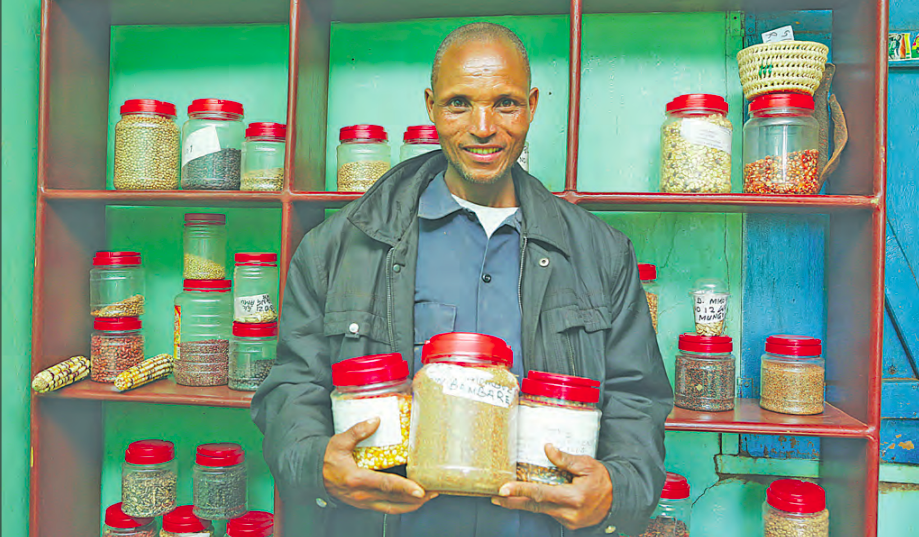
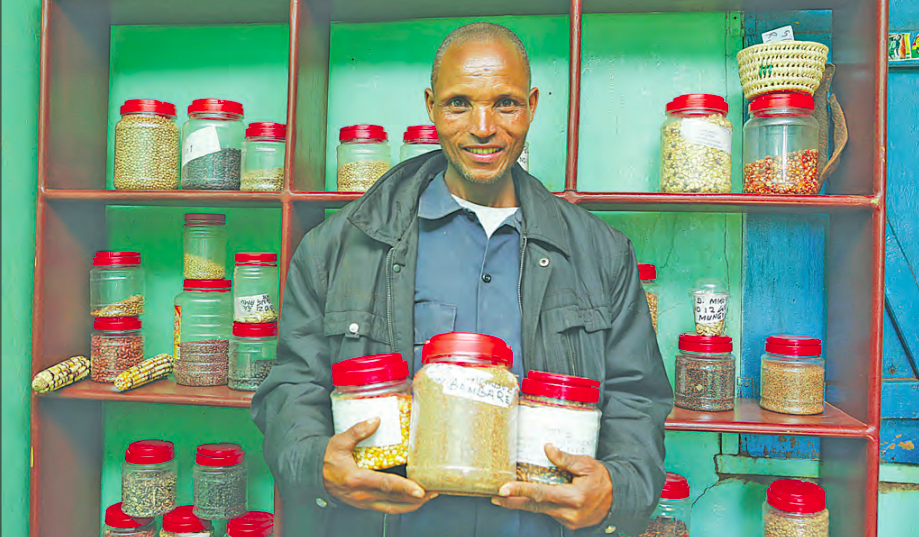
These seed banks were not conceived merely as storage facilities, but as community institutions where farmers could collectively safeguard local seed diversity, exchange planting materials, and build knowledge around seed selection, preservation and multiplication.
As farmers began to experience the benefits of having locally accessible seed reserves, demand for the approach grew rapidly.
Communities witnessed reduced dependence on external seed markets, improved access to locally adapted crop varieties, and increased confidence in their ability to respond to climatic and economic shocks.
Building on the success achieved during the initial phase, Iles de Paix Tanzania expanded the initiative in 2023 by supporting the establishment of an additional eleven Community Seed Banks in eleven villages across Karatu District.
This brought the total number of village-level Community Seed Banks in Karatu to nineteen. During the same period, an Improved Community Seed Bank was established at the Karatu Farmers Centre to serve as a learning, demonstration, and coordination hub for seed conservation and farmer-managed seed systems.
The facility has become an important centre where farmers, extension officers, researchers, and development practitioners can learn about community seed banking, seed quality management, seed governance, and agroecological approaches to biodiversity conservation.
The expansion continued in 2024 when five new Community Seed Banks were established in the Arusha District Council, extending the benefits of the initiative to new farming communities.
Today, a total of twentyfive Community Seed Banks stand as living examples of community-led innovation and resilience across Karatu and Arusha districts.
Together, they form an interconnected network that strengthens local food systems while protecting agricultural biodiversity for future generations.
The impact of these seed banks extends far beyond seed storage. Through community-led governance structures, farmers have organised systems for seed collection, documentation, conservation, multiplication and exchange.
Members contribute seeds after harvest, borrow seeds during planting seasons, and replenish stocks after production, creating a self-sustaining cycle that continuously strengthens local seed availability.
The seed banks now conserve and multiply a wide range of crops, including common beans, sorghum, finger millet, maize, pigeon peas, cowpeas, vegetables and several indigenous fruit varieties that were previously at risk of disappearing.
One of the most remarkable outcomes has been the emergence of communitybased seed multiplication systems.
Farmers trained through the project have become custodians of local genetic resources and champions of quality seed production.
ALSO READ: Tanzania moves to secure future food systems
Using agroecological production practices, they are multiplying seeds adapted to local conditions and supplying them not only to members of their own communities but also to neighbouring villages.
What began as a conservation initiative has evolved into a vibrant local seed economy that enhances access, affordability, and availability of quality seeds while preserving biodiversity.
The benefits are visible across farming households. Farmers who previously struggled to find seeds at planting time now have reliable access to locally adapted varieties within their own communities.
The timely availability of quality seeds has improved planting schedules, enhanced crop establishment, and reduced production costs.
More importantly, communities have regained control over their seed resources, reducing vulnerability to market fluctuations and strengthening their ability to make independent decisions about what crops to grow and conserve.
From an agroecological perspective, the Community Seed Banks have become powerful tools for climate adaptation and resilience.
Northern Tanzania continues to experience increasing climate variability characterised by prolonged droughts, erratic rainfall patterns, and emerging pest and disease challenges.
By maintaining a diverse portfolio of locally adapted crop varieties, farmers are better equipped to cope with these uncertainties.
Crop diversity functions as a natural risk-management strategy, ensuring that even when one variety performs poorly under changing conditions, others can survive and produce.
This diversity not only enhances household food security but also contributes to healthier and more sustainable farming systems. The initiative has also generated important policy lessons.
It demonstrates that farmer-managed seed systems are not relics of the past but critical components of resilient and sustainable food systems.
Community Seed Banks complement formal seed systems by preserving genetic diversity, supporting local adaptation, and ensuring that farmers retain access to seeds that respond to their specific agroecological contexts.
As governments and development partners seek solutions to climate change, biodiversity loss, and food insecurity, the experience from Karatu and Arusha illustrates the value of investing in community-driven approaches that empower farmers as custodians of agricultural biodiversity.
Perhaps the most significant achievement is the strong sense of ownership that communities have developed over the years. Village seed bank committees oversee daily operations, farmers actively contribute seeds and knowledge, and local leaders support the continued functioning of the institutions.
This collective ownership has transformed the seed banks into sustainable community assets capable of continuing beyond project support. They have become centres of learning, innovation, cooperation and resilience.
Since 2017, Iles de Paix Tanzania has not only established twenty-five Community Seed Banks but has also contributed to rebuilding a foundation for sustainable food systems in northern Tanzania.
Through strengthening farmer-managed seed systems, the organisation has empowered communities to conserve biodiversity, improve access to quality seeds, increase resilience to climate change, and strengthen food sovereignty.
The Community Seed Banks are more than structures; they are symbols of hope and evidence that when farmers are entrusted with the resources, knowledge, and opportunities to manage their own seeds, they become architects of resilient agricultural futures.
Their success stands as a compelling model for scaling agroecological transformation, enhancing food security, and building sustainable rural livelihoods across Tanzania and beyond.