
DAR ES SALAAM: AS Tanzania prepares to commemorate Gawio Day on June 30,2026 public investment has emerged as one of the key pillars driving economic transformation, improved public service delivery and sustainable development.
The annual event, to be held at State House in Dar es Salaam under the theme “Public Investment with Results: A Pillar of a Competitive Economy and Sustainable Development Towards Dira 2050,” provides an opportunity to account for the performance of government investments while recognising public institutions that have generated value for the nation.
Ahead of this year’s Gawio Day, the ‘Daily News’ Treasury Registrar’s Column spoke with Acting Treasury Registrar Ms Lightness Mauki, who explains how the Office of the Treasury Registrar safeguards government investments, the reforms that have improved the performance of public entities and why public investment remains central to Tanzania’s Dira 2050.
1. The Office of the Treasury Registrar plays a central role in managing government investments. What exactly is its mandate?
Answer: The Office of the Treasury Registrar is the government institution mandated to safeguard, manage and maximise the value of public investments and government assets held in public institutions, State-owned enterprises and companies in which the government has ownership interests.
We act on behalf of Tanzanians as the government’s shareholder representative, ensuring that public investments generate value while protecting the interests of the State.
Our responsibilities include representing the government in shareholders’ meetings and through boards of directors, monitoring financial and operational performance, ensuring that dividends and other revenues due to the government are remitted to the Consolidated Fund, coordinating institutional reforms and restructuring where necessary and promoting transparency, accountability and integrity in the management of public assets.
Beyond safeguarding government ownership interests, the Office also advises the government on public investment policy, evaluates the financial and operational performance of public institutions and recommends reforms aimed at improving efficiency, profitability and longterm value creation.
Through continuous oversight, we ensure that public assets are managed prudently and continue contributing to national economic growth, fiscal stability and improved public service delivery.
Ultimately, our objective is to ensure that every shilling invested by the government delivers measurable returns through increased revenue, quality public services and sustainable national development.
2. Before discussing performance, how do you define public investment?
Public investment refers to resources invested by the government on behalf of citizens in public entities and strategic companies in which it holds minority shareholding, with the objective of generating economic and social benefits.
These investments generally take three forms. The government may inject financial capital as equity, contribute assets such as land, buildings, infrastructure or equipment as capital, or own shares in strategic companies, including joint ventures with the private sector.
The purpose is to safeguard national interests in strategic sectors, ensure reliable public services, generate revenue for development, stimulate economic growth and attract private investment through enabling infrastructure and services.
Public investment is therefore about transforming national resources into lasting benefits for both present and future generations. It is not simply government expenditure but a strategic investment in productive assets and institutions that create jobs, strengthen domestic industries, improve productivity and generate sustainable returns that can be reinvested to improve the welfare of all Tanzanians.
3. President Samia Suluhu Hassan has consistently called for stronger public institutions. How has her vision shaped your work?
Answer: Her Excellency’s vision continues to guide the work of the Office of the Treasury Registrar and public institutions.
She has emphasised that public entities should become productive institutions that generate measurable results rather than depend on government support. This means improving profitability, strengthening corporate governance, promoting accountability and ensuring that boards and management uphold the highest standards of integrity.
She has also championed institutional reforms to improve efficiency and encouraged leaders to think strategically, embrace innovation, develop new markets and forge productive partnerships with the private sector.
Her leadership has further encouraged public institutions to become more commercially oriented while maintaining their public service mandate. Institutions are expected to innovate, diversify their revenue streams, improve operational efficiency and reduce unnecessary dependence on government support. This approach has strengthened financial discipline, enhanced service delivery and increased the contribution of public entities to the national economy.
We continue translating this vision into practice through performance contracts, institutional reforms, regular performance assessments, capacity building and governance improvements across public entities.
4. How does public investment improve the lives of ordinary Tanzanians?
Answer: Public investment contributes directly to both economic and social development.
Returns generated from government investments finance roads, schools, hospitals, water projects and energy infrastructure. Public institutions also create employment opportunities, develop local skills and support industrialisation.
Efficient public enterprises reduce the cost of doing business by providing reliable infrastructure and services, thereby encouraging private investment and economic expansion. At the same time, improved infrastructure and quality public services increase investor confidence, stimulate entrepreneurship and support inclusive economic growth across the country.
In strategic sectors, public investment protects long-term national interests while strengthening economic resilience.
Ultimately, the dividends and other revenues presented during Gawio Day translate into better services, improved living standards and greater opportunities for Tanzanians.
5. Gawio Day has become an important national event. What does it represent?
Answer: Gawio Day represents the culmination of the government’s annual public investment oversight cycle.
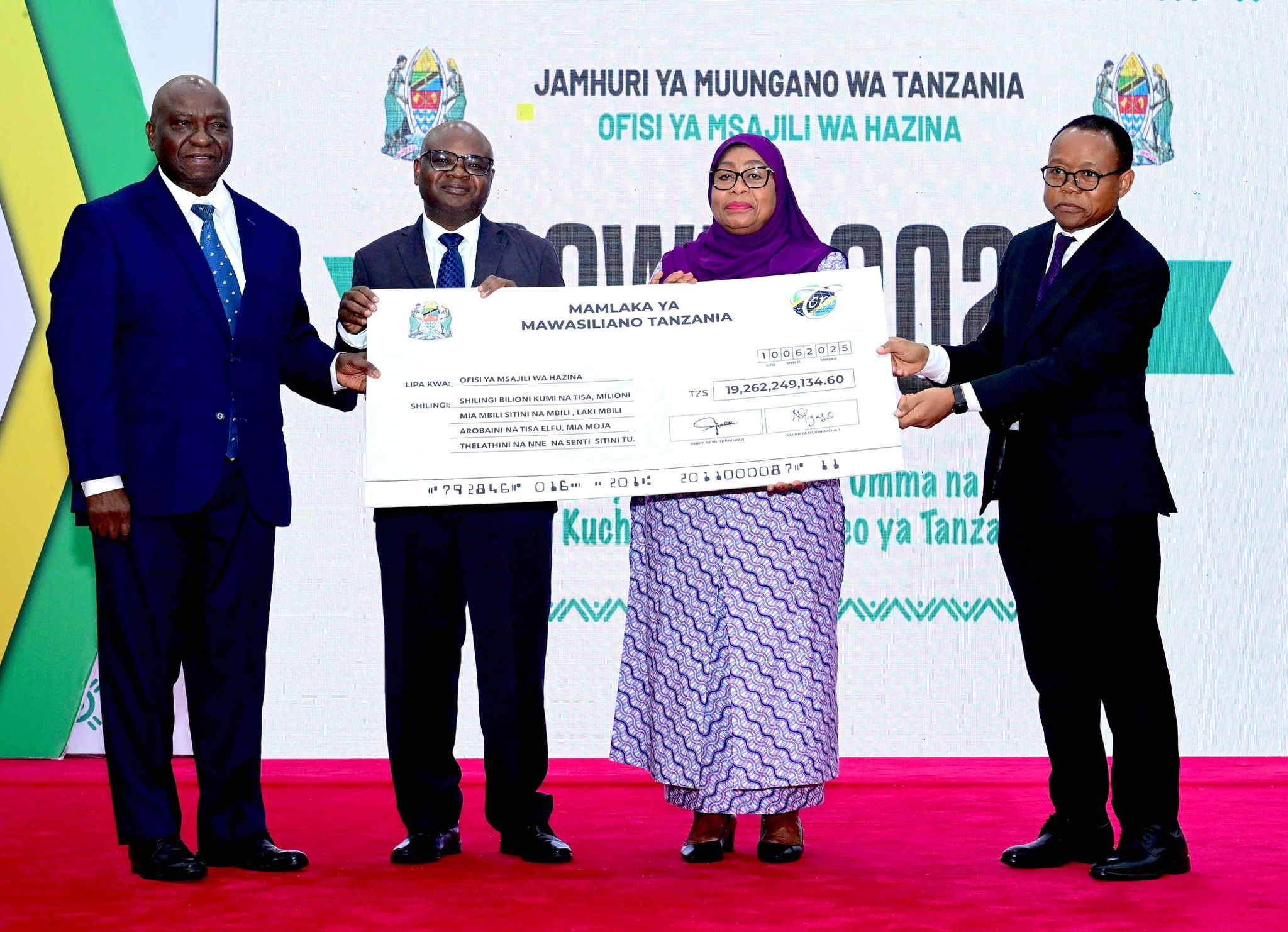
It is first and foremost a day of accountability, where public institutions report the financial returns generated from government investments and demonstrate how public resources have been utilised.
It also reflects the government’s commitment to transparency by showing citizens how public investments are performing and the value they generate for national development.
Secondly, it provides an opportunity to assess the effectiveness of public investment management. The financial contributions presented reflect both institutional performance and the effectiveness of government oversight.
The event also recognises outstanding public institutions whose performance sets a benchmark for others, promoting a culture of excellence, innovation and continuous improvement throughout the public sector.
Finally, it allows the government to set new priorities and policy directions aimed at further improving the performance of public institutions.
This year’s Gawio Day will be held on 30 June 2026 at State House in Dar es Salaam, where President Samia Suluhu Hassan will receive financial contributions from public institutions on behalf of the government.
6. This year’s theme is “Public Investment with Results: A Pillar of a Competitive Economy and Sustainable Development Towards Vision 2050.” Why was this theme chosen?
Answer: The theme reflects the government’s strategic priorities.
“Public Investment with Results” emphasises that investments must produce measurable outcomes, including government revenue, quality services, employment opportunities and visible development projects.
“A Pillar of a Competitive Economy” recognises that efficient public institutions lower business costs, improve service delivery, strengthen investor confidence and enhance Tanzania’s competitiveness regionally and globally.
“Sustainable Development Towards Dira 2050” highlights the importance of making investment decisions today that continue benefiting future generations while supporting environmentally, socially and economically sustainable growth.
The theme also reflects the aspirations of Dira 2050, which places productive public investment at the centre of economic transformation, industrialisation, innovation and long-term national prosperity.
It therefore challenges every public institution to focus on performance, accountability, innovation and long-term value creation.
7. Public revenues from State-owned enterprises have increased significantly under the sixth phase government. What has driven this growth?
Answer: Under the sixth phase government led by President Samia Suluhu Hassan, Tanzania has recorded consistent year-onyear growth in non-tax revenues generated from public investments and remitted to the Government Consolidated Fund.
For example, in the 2023/24 financial year, public institutions contributed approximately 767.1bn/- to the government. This increased to 1.028tri/- in the 2024/25 financial year, representing a significant rise in returns from government investments. We are optimistic that contributions in the current financial year will increase even further as more public institutions continue to improve their operational and financial performance.
This remarkable growth has not happened by chance. It is the result of deliberate reforms undertaken by the government under President Samia Suluhu Hassan’s leadership to strengthen corporate governance, improve accountability, enhance financial discipline and ensure that public institutions operate more efficiently and sustainably.
The Office of the Treasury Registrar has also intensified performance monitoring through regular reviews, performance contracts, financial and commercial analysis, and closer engagement with boards and management.
At the same time, many institutions have embraced innovation, digital transformation and improved business practices, enabling them to increase productivity, reduce operational inefficiencies and generate higher revenues.
Equally important, the President has consistently emphasised that public institutions should no longer be viewed merely as service providers but as strategic national assets that must create measurable economic value while continuing to fulfil their public service mandate.
This clear policy direction has inspired institutions to strengthen their commercial performance without compromising service delivery.
Initiatives such as Gawio Day have further reinforced a culture of accountability by providing a national platform where institutions publicly account for the returns generated from government investments. Together, these reforms have translated into stronger financial performance, higher dividend and revenue remittances to the government, and greater resources to finance Tanzania’s development priorities.
8. What specific measures has the Office of the Treasury Registrar introduced to improve performance?
Answer: We have strengthened performance management through measurable Key Performance Indicators and performance contracts for chief executives.
We also undertake detailed financial and commercial analyses to identify inefficiencies, recommend business improvements and strengthen revenue generation.
In addition, we support the appointment of competent boards, reinforce accountability between boards and management, promote digital systems for financial management and procurement and continuously build the capacity of directors and senior executives in corporate governance, risk management and financial performance.
The Office has also strengthened monitoring and evaluation through regular performance reviews, enhanced compliance mechanisms and continuous engagement with institutions to address operational challenges before they affect performance. We encourage the adoption of international best practices in governance, financial management and risk oversight to ensure public institutions remain efficient, competitive and financially sustainable.
These reforms have significantly improved the effectiveness of public institutions and increased returns from government investments.
9. Finally, what message do you have for Tanzanians and leaders of public institutions as Gawio Day approaches?
Answer: My message to Tanzanians is that public investments belong to them. The Office of the Treasury Registrar manages these investments on their behalf and citizens should continue following the performance of public institutions, including the Gawio Day celebrations on June 30.
ALSO READ: Why OTR’s ISO Certification strengthens future public investment management
To leaders of public institutions, I urge them to remain committed to productivity, efficiency, accountability, innovation and integrity. Tanzanians expect public entities to continue improving their performance, increasing returns to the government and delivering quality services that contribute directly to national development.
Gawio Day is more than a ceremonial event. It is a national accountability platform that demonstrates how public investments are creating measurable value for the country and improving the lives of Tanzanians. Every dividend presented reflects stronger governance, prudent stewardship of public resources and better institutional performance.
As Tanzania advances towards Dira 2050, every public institution has a responsibility to ensure that government investments continue generating sustainable economic and social returns, strengthening the country’s competitiveness and contributing to the national ambition of building a resilient, inclusive and prosperous economy