
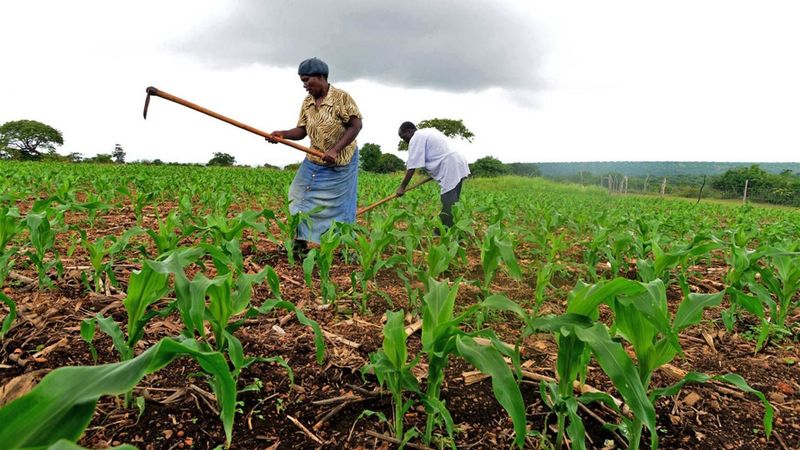

DAR ES SALAAM: FOR years, many Tanzanian farmers have struggled with declining soil fertility, rising fertiliser costs and inconsistent crop yields.
While fertiliser remains one of the most important agricultural inputs, experts have often pointed out that using the wrong type of fertiliser on different soils can limit productivity and increase production costs.
Now, a major initiative by the Tanzania Fertiliser Company (TFC) promises to change that narrative.
The state-owned company has announced plans to establish a modern fertiliser blending plant in Tanga Region that will produce fertiliser specifically designed to meet the fertility requirements of soils found in different parts of the country.
The project is expected to revolutionise fertiliser use in Tanzania by ensuring that farmers receive fertiliser formulations suited to the nutrient needs of their land, ultimately increasing crop yields and improving household incomes.
Speaking recently during the Public Service Week celebrations in Dodoma, TFC Director of Corporate Services, Ms Nuru Mhando, said the company is in the final stages of preparations to launch the facility, which will utilise modern soil-testing technology to produce customised fertiliser blends.
She said the plant represents an important step towards modernising Tanzania’s agricultural sector and enhancing the productivity of millions of farmers who depend on agriculture for their livelihoods.
According to Ms Mhando, the factory will analyse soil fertility levels from different regions before producing fertiliser formulations tailored to local conditions.
“This factory will produce fertiliser according to the specific needs of soils found in various parts of the country. Farmers will therefore access the right fertiliser for their crops, helping them increase productivity while reducing unnecessary costs,” she said.
Agricultural specialists have consistently argued that soils differ significantly from one region to another. As a result, a fertiliser blend that performs well in one area may not necessarily deliver similar results elsewhere.
The planned Tanga facility is expected to address this challenge by supporting precision agriculture, a farming approach that matches fertiliser application with actual soil nutrient requirements.
The move comes at a crucial time when the government is intensifying efforts to transform agriculture into a more productive and commercially viable sector capable of supporting national food security and economic growth.
Beyond improving crop yields, the plant is also expected to reduce Tanzania’s dependence on imported fertiliser.
Over the years, global supply chain disruptions, international conflicts and fluctuating freight costs have contributed to uncertainty in fertiliser availability and pricing across many developing countries, including Tanzania.
By increasing local production capacity, the country stands to save foreign exchange while ensuring farmers have timely access to quality agricultural inputs.
Ms Mhando said that TFC continues to play a key role in implementing the government’s fertiliser subsidy programme, which enables farmers to purchase fertiliser at reduced prices through government support.
She said the programme has helped thousands of farmers access essential agricultural inputs that would otherwise be beyond their financial reach.
According to TFC, the company has so far distributed more than 49,000 tonnes of both basal and top-dressing fertiliser to farmers growing food and cereal crops across the country.
The company has also continued supplying fertiliser to tobacco farmers, one of Tanzania’s strategic agricultural groups that contribute significantly to export earnings and rural economic development.
However, TFC’s role extends beyond fertiliser distribution. Recognising that productivity depends not only on access to inputs but also on knowledge, the company has invested in farmer education programmes aimed at promoting the proper use of fertiliser.
Through training sessions and extension support, farmers are being equipped with practical knowledge on fertiliser application methods, timing and dosage to maximise returns while protecting soil health.
Ms Mhando said TFC remains committed to empowering farmers through education and technical support as part of broader efforts to improve agricultural productivity.
She emphasised that the company will continue working closely with stakeholders to address challenges affecting farmers and ensure agricultural inputs contribute effectively to increased production of both food and cash crops.
The announcement aligns closely with priorities outlined in the Ministry of Agriculture’s recently tabled budget for the 2026/27 financial year.
ALSO READ: Tanzania’s silent agric revolution empowers millions of farmers
Presenting the ministry’s budget estimates in Parliament, Agriculture Minister Daniel Chongolo highlighted fertiliser availability as one of the government’s key priorities in boosting agricultural production and strengthening food security.
The ministry has maintained its commitment to the fertiliser subsidy programme, which has become one of the government’s most significant interventions in supporting farmers and increasing fertiliser use nationwide.
The programme has played a crucial role in encouraging farmers to adopt improved farming practices while helping cushion them against rising global fertiliser prices.
The government has also assured farmers that sufficient fertiliser stocks will be available ahead of the upcoming farming season.
This assurance comes amid concerns about global supply uncertainties that have affected agricultural input markets in recent years.
Under the 2026/27 budget, the Ministry of Agriculture aims to further increase fertiliser use across the country through the ongoing “Kilimo ni Mbolea” campaign, which encourages farmers to embrace fertiliser application as a key strategy for improving yields.
The ministry also plans to strengthen extension services, increase productivity in both food and cash crops and support greater participation of youth and women in agriculture.
These interventions form part of Tanzania’s broader agricultural transformation agenda, which seeks to modernise farming systems, increase production and enhance farmers’ incomes.
Agriculture remains the backbone of Tanzania’s economy, employing the majority of the population and contributing significantly to food security, employment creation and export earnings.
As demand for food continues to rise alongside population growth, experts say investments in local fertiliser production facilities will be critical in ensuring sustainable agricultural development.
For many farmers, the planned Tanga fertiliser plant represents more than just another industrial investment.
It symbolises a future where fertiliser is not only more accessible and affordable but also scientifically tailored to local farming conditions.
If successfully implemented, the project could become a game-changer for Tanzania’s agricultural sector, helping farmers produce more from the same piece of land while contributing to the country’s ambitions of achieving food self-sufficiency, increasing agricultural exports and accelerating economic growth.
With government support, technological innovation and growing investment in local production, Tanzania appears poised to enter a new era in fertiliser development, one that could transform the fortunes of millions of farmers across the country