
DAR ES SALAAM: KAZIMZUMBWI Nature Forest Reserve covers about 48.8 square kilometres in Pugu and Kisarawe districts, approximately 20 kilometres southwest of Dar es Salaam.
Together with the neighbouring Pugu Forest Reserve, it forms one of the last remaining fragments of the ancient East African coastal lowland forest, an ecosystem regarded as one of the oldest surviving tropical forest types in the world.
Often described as the lungs of Dar es Salaam, Kazimzumbwi filters the city’s air, regulates water resources and provides an important green refuge for millions of people.
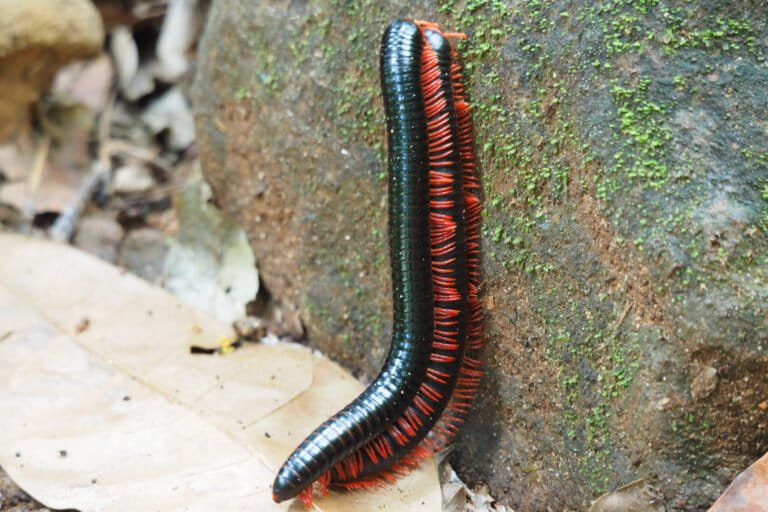
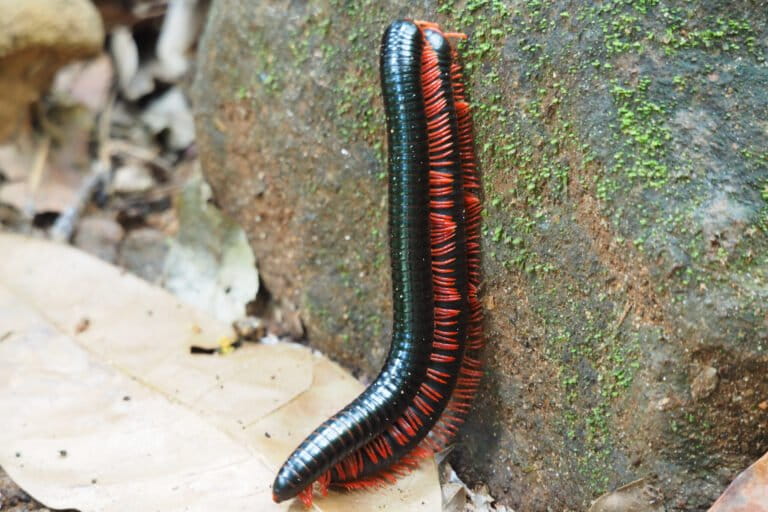
Established as a forest reserve in 1936, it shelters giant bamboo, the iconic Mpugupugu tree and a wide variety of wildlife, including the endangered eastern black-and-white colobus monkey, numerous bird species, reptiles and some of Tanzania’s largest giant millipedes. Visitors quickly notice the abundance of insects, but among the forest’s most remarkable residents are the giant millipedes.
These long, cylindrical animals curl into a tight spiral whenever threatened and are among the forest’s most efficient recyclers. Most individuals found in Kazimzumbwi measure between 20 and 33 centimetres in length, although exceptional specimens can reach about 35 centimetres. Despite their intimidating appearance, they are completely harmless to humans.
Their daily work of breaking down dead leaves, decaying wood and fungi enriches the soil and helps sustain the forest’s extraordinary biodiversity. Millipedes are among the oldest land animals still living today.
Fossil evidence indicates that their ancestors evolved about 420 million years ago during the early Paleozoic Era, when the ancient supercontinent Gondwana covered much of the Southern Hemisphere, including what is now Tanzania. At that time, plants had only recently begun colonising land, creating vast amounts of decaying vegetation.
Millipede ancestors were among the first animals to exploit this new food source, feeding on rotting plant matter long before dinosaurs, birds or mammals existed. Between about 400 and 300 million years ago, atmospheric oxygen levels were considerably higher than today. Combined with the absence of large terrestrial predators and the abundance of decaying vegetation, these conditions allowed ancient arthropods to attain enormous sizes.
One extinct relative, Arthropleura, reached lengths of about 2.6 metres—roughly the size of a small car—making it the largest known land invertebrate in Earth’s history. High oxygen concentrations, predator-free landscapes and extensive swamp forests created ideal conditions for the evolution of giant millipedes.
Over millions of years they developed bodies with numerous fused segments, each carrying two pairs of legs that provided exceptional traction for burrowing through soft soil and thick layers of leaf litter. Unlike their predatory relatives, the centipedes, millipedes abandoned hunting and instead specialised in defence.
They evolved glands capable of secreting foul-smelling or irritating chemicals that discourage birds, reptiles and other predators. Scientists have described more than 12,000 millipede species worldwide, although many believe the true number may exceed 80,000. Their successful transition onto land was driven by several evolutionary pressures.
As early land plants spread across damp landscapes around 400 million years ago, enormous quantities of dead vegetation accumulated. Few animals could digest this material, providing millipede ancestors—probably crustacean-like arthropods living in shallow water and muddy habitats—with an almost competition-free source of food. Individuals capable of breathing air through spiracles and feeding on decaying plants gained a significant evolutionary advantage.
The absence of large predators also favoured larger body sizes. With no birds, mammals or reptiles yet occupying terrestrial ecosystems, early giant millipedes faced few threats. Natural selection favoured longer bodies, additional segments and more legs, enabling them to burrow efficiently while remaining well protected by their heavily reinforced exoskeletons.
As Gondwana gradually fragmented, East Africa retained pockets of humid coastal forest that never completely dried out. These ancient forests became refuges for many unique species, including giant millipedes that continue to thrive today.
Kazimzumbwi and Pugu forests therefore preserve not only ancient trees but also living descendants of some of Earth’s earliest terrestrial animals. Modern giant millipedes remain impressive creatures.
Adults usually measure 20 to 33 centimetres long, are about as thick as a human thumb and can weigh close to 100 grammes. Most possess between 40 and 50 body rings, giving them approximately 256 to 340 legs.
Although the name “millipede” literally means “a thousand feet,” no known species actually has 1,000 legs. Most species have between 200 and 340, while the greatest confirmed number belongs to a much smaller Australian species with about 1,306 legs.
Most body rings bear two pairs of legs because two ancestral body segments fused during evolution. Rather than providing speed, these hundreds of short legs generate extraordinary traction, allowing millipedes to move steadily through thick leaf litter. They are the bulldozers of the forest floor rather than its runners. Their nervous system is equally fascinating.
The brain itself is relatively small and mainly determines the animal’s direction of movement. Each body segment contains its own nerve centre, or ganglion, which coordinates the movement of nearby legs. Instead of the brain controlling every individual leg, these ganglia generate rhythmic walking patterns while sensory organs in each leg continuously adjust to uneven ground.
This decentralised system allows hundreds of legs to move in smooth, wave-like coordination. Giant millipedes are nocturnal, spending daylight hours hidden beneath logs, stones, loose soil or deep leaf litter before emerging after dark to feed.
They do not consume living plants. Instead, they feed on dead leaves, rotting wood, fungi and other decomposing organic matter. By shredding this material into tiny fragments, they greatly accelerate decomposition, allowing fungi and bacteria to complete the recycling process. This continuous nutrient cycling enriches the forest soil and helps maintain the health of Kazimzumbwi’s ancient ecosystem.
Large populations of giant millipedes therefore indicate a healthy, moist and relatively undisturbed forest. Their eyesight is extremely limited. Instead of compound eyes like those of flies, giant millipedes possess small clusters of 30 to 50 simple eyes, known as ocelli, on each side of the head. These eyes detect only light and dark and cannot form detailed images.
ALSO READ: Dar to host global marine conservation summit
Consequently, millipedes rely primarily on their highly sensitive antennae, which detect touch, smell, humidity and chemical signals. The antennae function much like radar.
They sweep constantly from side to side, allowing the animal to detect obstacles, locate food and identify potential mates. If one antenna touches a fallen branch, the millipede simply changes direction. Individuals also greet one another by gently tapping antennae.
Before uncurling from their defensive spiral, they first extend their antennae to assess the surroundings. If they detect the scent of a predator, they immediately roll back into a tight coil. For a giant millipede, the antennae are far more important than the eyes.
An individual can survive with damaged vision, but without antennae it would struggle to find food, locate mates or avoid danger. Protection comes from a remarkably strong exoskeleton made primarily of chitin reinforced with calcium carbonate, making it both lightweight and highly durable, much like the shell of a crab.
A waxy outer coating reduces water loss, allowing the animal to survive in humid forest environments. Because millipedes breathe through tiny openings called spiracles rather than lungs, they are extremely vulnerable to dehydration. This dependence on moisture explains why they remain on the damp forest floor beneath leaves and fallen logs.
The exoskeleton also houses defensive glands that open through small pores along the sides of the body. When disturbed, these glands release unpleasant-smelling chemicals that deter most predators.
Birds, shrews and lizards often attempt to attack a giant millipede only once before abandoning it after encountering both its hard armour and chemical defences. Like all arthropods, giant millipedes cannot grow continuously inside their rigid exoskeleton. Instead, they moult approximately eight to eleven times during their lives.
During moulting, the old shell splits open along the back. The millipede pumps fluid into its body, expands and slowly wriggles free from the old exoskeleton. Immediately after emerging, it is soft, pale and extremely vulnerable.
Over the next one to two days, the new exoskeleton absorbs water and air before gradually hardening as calcium and wax are deposited.
Its colour changes from creamy white to brown and finally to the characteristic glossy black. Many individuals consume their discarded exoskeleton, recycling valuable calcium and chitin to strengthen the new shell more rapidly. Giant millipedes reproduce slowly, reflecting their relatively long lifespan of seven to eleven years.
Courtship involves the transfer of sperm rather than direct mating as seen in mammals. Copulation may last from several minutes to more than an hour. Females can store sperm for weeks or even months before laying eggs.
A female typically deposits between 100 and 300 eggs inside a carefully constructed chamber in damp soil or rotting wood, sealing the chamber with soil and special secretions. She may remain nearby for several days to protect the eggs from fungi, mites and other small predators. Depending on temperature and moisture, the eggs hatch after three to six weeks.
The newly hatched millipedes are tiny, white and softbodied, possessing only three body segments and six legs.
As they moult repeatedly over the next two to three years, they gradually add new body segments and additional legs. Most reach sexual maturity between three and five years of age. If a male fails to locate a receptive female, he may deposit a sperm packet, known as a spermatophore, on the forest floor.
Another male may later collect this packet and transfer it to a female, demonstrating that chemical communication and touch are central to millipede reproduction. Smell guides mate location, antennae confirm identity and fertilisation occurs through a slow, carefully coordinated transfer before the female conceals her eggs safely within the forest floor.
From the earliest forests of Gondwana to the ancient coastal woodlands of modern Tanzania, giant millipedes have remained remarkably successful survivors. Long before amphibians, reptiles, flowering plants or mammals appeared, these resilient decomposers were already recycling organic matter on land.
Today, every giant millipede crawling beneath the leaf litter of Kazimzumbwi Nature Forest Reserve continues a biological role that has remained largely unchanged for more than 400 million years, making these remarkable animals not only living fossils but also indispensable engineers of one of Africa’s oldest surviving forests. Email: rstanslaus@yahoo.com