
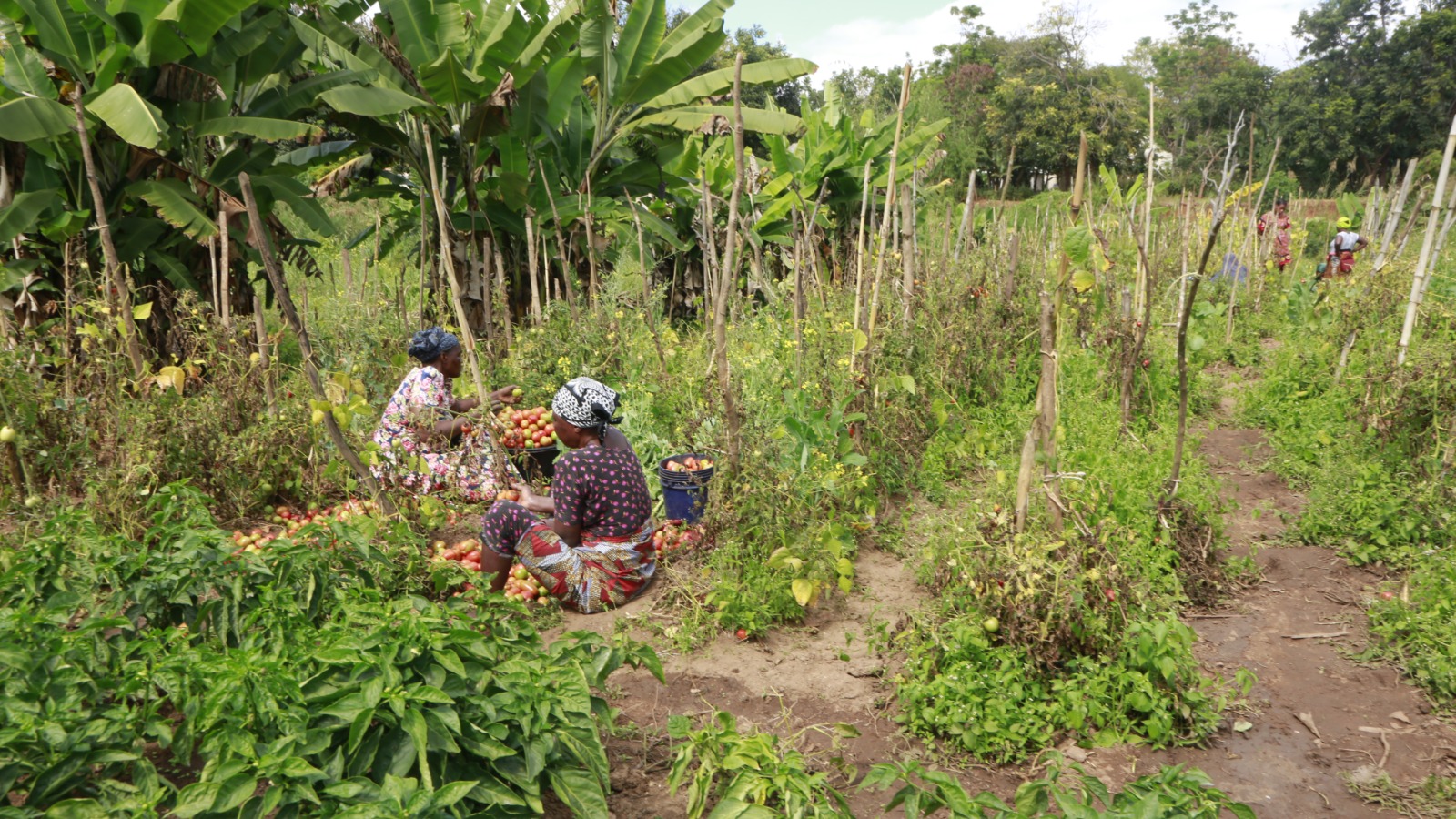

RUVUMA: ALONG the Ruvuma River, vegetable farming represents both opportunity and environmental pressure. For hundreds of households living near its banks, the river provides food, income and a foundation for daily survival. Yet, beneath the productive farms lies a growing challenge: How can communities continue benefiting from the river while protecting the ecosystem that sustains them?
Many farmers cultivate within the legally protected 60-metre river buffer zone, explaining that they lack irrigation equipment that would enable them to move farming activities farther away from the riverbanks. Their situation reflects a wider challenge facing the Ruvuma Basin, where communities are struggling to balance economic needs with environmental protection.
The basin, one of Tanzania’s most important freshwater systems, is under increasing pressure from climate change, deforestation, poor waste management, expanding settlements and rising demand for natural resources.
Supporting more than four million people in southern Tanzania and neighbouring countries, the Ruvuma Basin plays a critical role in agriculture, fisheries, domestic water supply and biodiversity conservation.
Stakeholders say protecting the basin requires more than environmental regulations. It demands stronger cooperation among government institutions, communities and development partners, as well as practical solutions that allow people to improve their livelihoods while safeguarding natural resources.
To promote inclusive water governance, Youth Environmental Justice and Gender Equality (YOGE), in partnership with the International Union for Conservation of Nature (IUCN), Tanzania Media for Community Development (TAMCODE) and the Ruvuma Basin Water Board, launched the Voices for Water project.
The initiative seeks to empower women, young people and local communities to play a greater role in protecting water resources while creating sustainable economic opportunities.
Instead of viewing communities as passive beneficiaries of conservation programmes, the project recognises them as essential partners with valuable knowledge and direct interest in protecting their environment.
ALSO READ: Tanzania, Egypt ties worth deepening
During a storytelling and media campaign in Matogoro, Majengo and Sinai wards, journalists documented the experiences of communities living along the river. The campaign highlighted the environmental challenges affecting the basin, as well as local solutions emerging from communities determined to protect their surroundings.
Many women farmers acknowledged that they understand the importance of protecting riverbanks from cultivation. However, they said limited access to irrigation pumps, pipes and financial resources makes it difficult to relocate farming activities away from protected areas.
For many farmers, environmental compliance is not simply a matter of awareness. It is also a question of access to resources. Without affordable equipment and financial support, adopting environmentally friendly practices remains a major challenge.
Declining water levels have further complicated farming activities. Some farmers reported that reduced water availability has forced them to ration irrigation supplies, raising concerns about future food production and household incomes.
Despite these difficulties, communities expressed commitment to protecting the river, recognising that their livelihoods depend on its long-term sustainability.
The campaign also revealed positive developments, with more women and young people embracing alternative income-generating activities that reduce pressure on natural resources. Fish farming, beekeeping and digital marketing are creating new opportunities while supporting environmental conservation.
However, experts warn that the basin continues to face serious threats. Population growth, deforestation, climate change and inadequate waste management could undermine food security, public health and economic development unless addressed through stronger collaboration.
YOGE Executive Director Advocate Philomena Mwalongo said the Voices for Water project has demonstrated that women and young people should be recognised as key partners in water governance.
She said studies, community dialogues and stakeholder consultations showed that although environmental awareness is improving, women and youth still face barriers to participating in decision-making.
Weak enforcement of environmental laws, overlapping policies on land, forests and water resources, inadequate waste management and limited public awareness remain major obstacles.
According to Ms Mwalongo, sustainable conservation requires empowering communities through education, leadership opportunities and livelihood programmes that enable families to increase incomes while protecting natural resources.
Through the project, women and young people have received training in environmental conservation, digital marketing, beekeeping and fish farming. Communities have also been connected with regional authorities to explore economic opportunities that reduce dependence on activities contributing to environmental degradation.
Ruvuma Regional Administrative Secretary Dr Mary Makondo said expanding the use of clean cooking energy is essential to reducing deforestation, which threatens water catchment areas within the basin.
ALSO READ: Giving women, youth greater voice in saving Ruvuma Basin
She said affordable clean energy technologies, combined with community awareness programmes, would help reduce dependence on firewood while protecting forests that maintain water sources.
She also encouraged investment in beekeeping, describing it as an environmentally friendly activity that improves household incomes while encouraging forest conservation.
Dr Makondo called on development partners to continue supporting women and youth through advocacy, training and capacity-building initiatives aimed at strengthening both conservation and livelihoods.
Songea District Commissioner William Ndile raised concerns over continued dependence on firewood, revealing that Songea Prison alone consumes about 40 tonnes of firewood every month, while schools and other public institutions also rely heavily on biomass for cooking.
Without alternative energy sources, he warned, pressure on forests would continue to increase. He suggested that Ruvuma’s coal resources could support the development of cleaner and more efficient cooking technologies capable of reducing reliance on traditional biomass while protecting forest ecosystems.
Stakeholders involved in the regional dialogue agreed that stronger institutional collaboration is necessary to protect the basin. Government agencies, civil society organisations, basin authorities, journalists and community representatives identified weak coordination, conflicting environmental policies, climate change and poor waste management as urgent challenges.
Participants also questioned how the 60-metre river buffer zone policy could be effectively enforced without helping farmers acquire irrigation equipment that would allow cultivation away from protected riverbanks.
For many women farmers, complying with environmental regulations depends as much on financial resources as it does on awareness. Matogoro resident Fatuma Gawaza appealed for increased support to enable women and young people to purchase irrigation pumps and establish farms outside protected areas.
She said affordable credit would allow communities to increase agricultural production while protecting water sources, arguing that environmental conservation and economic empowerment must go hand in hand.
The dialogue also highlighted the importance of environmental education. Bishop John Ndimbo of the Mbinga Diocese called for conservation and climate change studies to be included in school curricula so children develop a culture of protecting rivers, forests and wetlands from an early age.
He added that religious institutions could complement government efforts by promoting environmental responsibility within communities.
The media has also emerged as an important partner in advancing sustainable water governance. Through radio, television, newspapers and digital platforms, journalists involved in the Voices for Water initiative have documented community experiences, amplified local concerns and encouraged public discussion on conservation.
The initiative has already contributed to tangible action. Following concerns raised over poor waste management, Songea Municipal Council advertised a tender inviting companies and individuals to participate in waste collection services, signalling institutional commitment to addressing environmental challenges.
Although protecting the Ruvuma Basin will require sustained investment, strong policies and long-term commitment, stakeholders believe the Voices for Water initiative has created a strong foundation by placing communities at the centre of conservation efforts.
The project has shown that when women and young people receive knowledge, skills and economic opportunities, they become effective guardians of the natural resources upon which millions of people depend.
The future of the Ruvuma Basin will not be shaped only by government decisions or policy documents. It will also be determined by choices made in riverside communities, farms, schools and local meetings.
The message is clear: Protecting water resources requires more than restrictions. It requires partnerships, investment and trust between authorities and communities.
ALSO READ: EACOP, Tanga City sign 1bn/- health centre agreement
For farmers along the Ruvuma River, conservation is not an abstract concept. It is directly linked to the water they use, the crops they grow and the future they hope to secure for their children.
When communities are empowered to protect nature while improving their livelihoods, conservation becomes an opportunity rather than a burden, ensuring the river continues to sustain both the environment and the people who depend on it.