
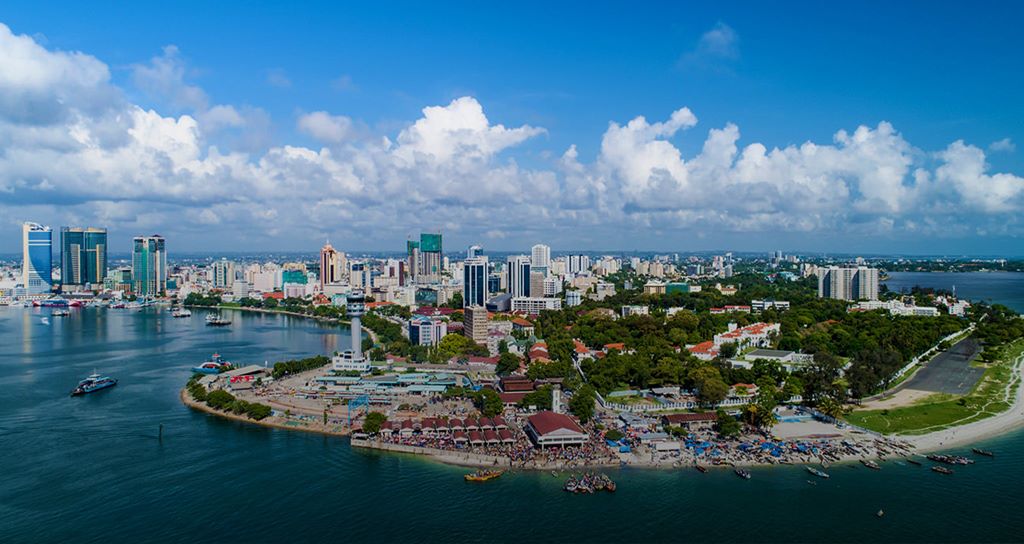

DAR ES SALAAM: AS Tanzania begins implementing Vision 2050, ensuring reliable water supplies is becoming a central part of the country’s long-term development agenda.
The national development blueprint sets out an ambitious vision of transforming Tanzania into a prosperous, inclusive and selfreliant nation by 2050. Among its goals are building a one-trillion-dollar economy, raising per capita income to 7,000 US dollars and improving the quality of life for a population projected to exceed 118 million people.
The vision also commits to universal access to safe water and sanitation, affordable clean energy, improved healthcare, quality education and enhanced social wellbeing.
Achieving those ambitions will depend on many factors, including industrialisation, technological advancement, energy development, logistics, agriculture and privatesector growth.
Running through all of them is one resource that is often taken for granted but remains fundamental to economic and social development.
Water supports agriculture, powers industries, sustains ecosystems, contributes to energy production and enables the delivery of essential public services. It is a resource that influences food security, public health, environmental sustainability and economic productivity. As Tanzania’s economy expands and its population grows, ensuring that water resources remain available, reliable and sustainably managed is becoming increasingly important.
This reality is reflected throughout Vision 2050 and featured prominently in the Ministry of Water’s 2026/27 budget, where investments in dams, groundwater development, climate resilience, sanitation and water-source protection were linked directly to the country’s longterm development aspirations.
Presenting the budget estimates in the National Assembly, Minister for Water Jumaa Aweso reaffirmed the government’s commitment to expanding access to clean and safe water while strengthening the management of the country’s water resources.
“Our responsibility as a nation is to continue working hard to ensure citizens receive clean, safe and sufficient water services,” he told lawmakers.
His remarks underscore a challenge facing many countries around the world. Population growth, rapid urbanisation, climate change and expanding economic activity are increasing pressure on water resources. Governments are responding through investments in storage infrastructure, conservation programmes, climate adaptation measures and modern management systems designed to secure future supplies.
ALSO READ: Tanzania must believe Glasgow can deliver more Commonwealth glory
For Tanzania, the challenge is ensuring that water resources keep pace with growing demand from households, agriculture, industry and expanding urban centres.
According to the Ministry of Water, Tanzania possesses approximately 126 billion cubic metres of renewable water resources annually. Of this total, about 105 billion cubic metres consists of surface water while approximately 21 billion cubic metres comes from groundwater sources.
Current per capita water availability stands at around 2,105 cubic metres per year, placing Tanzania above the internationally recognised water-stress threshold of 1,700 cubic metres.
These figures suggest the country remains relatively well positioned compared to many regions already experiencing severe water scarcity. However, long-term projections indicate increasing pressure on available resources.
The ministry estimates that Tanzania Mainland’s population, which stood at 59.8 million people during the 2022 Population and Housing Census, could rise to approximately 89.2 million by 2035.
As the population grows, annual per capita water availability is projected to decline to around 1,412 cubic metres, placing the country within the water-stressed category. Demand is expected to rise at the same time.
Current annual water demand is estimated at approximately 68 billion cubic metres and is projected to exceed 80 billion cubic metres by 2035 as households, industries, farms, institutions and urban centres require larger quantities of water. These projections help explain why water occupies a strategic place within Vision 2050.
The blueprint identifies Environmental Integrity and Climate Change Resilience as one of its three strategic pillars. It calls for sustainable management of natural resources, protection of wetlands and water catchments, climate adaptation and universal access to safe water and sanitation.
The vision recognises that economic transformation cannot be sustained without environmental sustainability.
A country seeking to build a one-trillion-dollar economy must ensure that the resources underpinning that growth remain available for future generations. In this context, water is increasingly being viewed as a strategic economic resource as much as a social service. Its importance is particularly evident in agriculture.
Vision 2050 identifies agriculture as one of the sectors expected to support economic transformation through increased productivity, value addition and export growth. Water plays a central role in achieving those ambitions. Reliable water supplies enable irrigation, improve agricultural productivity and reduce vulnerability to drought. They allow farmers to produce throughout the year rather than relying solely on seasonal rainfall.
ALSO READ: Parents urged to instill values to curb family violence
As Tanzania seeks to strengthen food security and increase agricultural output, investments in water infrastructure are becoming increasingly important.
The importance of water extends well beyond agriculture. Manufacturing industries require water for production processes, cooling systems and sanitation. Mining operations depend on water for extraction and processing activities.
Tourism facilities require reliable water supplies to support growing visitor numbers. Expanding towns and cities also require significant investments in water infrastructure to meet the needs of households, businesses and public institutions. As Tanzania pursues industrialisation and urbanisation under Vision 2050, demand from these sectors is expected to rise steadily.
Recognising these realities, the government is investing heavily in water infrastructure. Much of the strategy centres on expanding water storage and distribution systems capable of supporting future demand. Among the flagship projects is the Farkwa Dam in Dodoma Region. Valued at approximately 312bn/-, the project includes a treatment plant capable of producing 128,000 cubic metres of water daily.
The dam is expected to supply water to Dodoma City as well as Chemba, Bahi and Chamwino districts. By April 2026, preparations for implementation had reached an advanced stage following the selection of a contractor. The significance of the project extends beyond water supply alone. Dodoma continues to grow as Tanzania’s political and administrative capital.
Population growth, business expansion and increasing investment are creating greater demand for services and infrastructure. Reliable water supplies will be essential to sustaining that growth. Another major project is the Kidunda Dam.
Designed to strengthen water security within the Ruvu River system that serves Dar es Salaam and Coast Region, the project includes a reservoir capable of storing 190 million cubic metres of water together with a 20-megawatt hydropower station. Implementation had reached more than 47 per cent by April 2026. The project is expected to provide additional protection against future water shortages in Dar es Salaam, the country’s commercial capital and one of the fastest-growing urban centres in the region.
Dar es Salaam’s position as Tanzania’s commercial capital makes water security an important economic priority. Reliable supplies are needed to support households, industries, businesses and public institutions as demand continues to grow.
While large-scale projects attract much of the attention, they form only part of the government’s broader water development strategy. Investments are also being directed towards smaller storage facilities designed to improve water availability for communities, livestock, irrigation schemes and environmental conservation.
By April 2026, six dams had been completed in different water basins across the country, helping strengthen water security and support local economic activities. Beyond improving access to water, these projects are designed to help communities withstand growing pressure from climate variability and rising demand. That objective aligns closely with the ministry’s broader focus on climate resilience.
Vision 2050 identifies climate change as one of the defining challenges of the coming decades and emphasises the need for stronger adaptation measures to safeguard economic growth, livelihoods and natural resources. Across Africa, changing rainfall patterns, prolonged droughts and extreme weather events are affecting agriculture, ecosystems and water supplies.
For countries seeking sustained economic growth, strengthening resilience has become increasingly important. One response has been the development of a National Rainwater Harvesting Strategy covering the period from 2025/26 to 2029/30.
The programme seeks to install rainwater harvesting systems in schools, health facilities, markets and other public institutions, particularly in areas vulnerable to water shortages.
By capturing rainfall that might otherwise be lost, the initiative aims to strengthen local water security while reducing pressure on conventional sources. Groundwater development is also receiving greater attention. As demand rises and climate pressures increase, groundwater is expected to become an increasingly important source of water for communities, agriculture and industry.
To support this effort, the government completed the first phase of drilling 112 groundwater investigation boreholes across four major water basins. The information collected is helping authorities identify new water sources and improve long-term planning.
Managing water resources efficiently will increasingly depend on technology and data. The ministry reports that 256 modern hydrological monitoring stations are now operating across the country.
These systems collect information on rainfall, river flows, groundwater levels and other indicators needed for effective planning and decision-making. Such information is becoming increasingly valuable as policymakers seek to improve preparedness for droughts, floods and other climate-related challenges.
The use of technology also aligns closely with Vision 2050’s emphasis on digital transformation as a driver of economic and social development.
Protection of water sources remains equally important. Expanding supply alone cannot guarantee long-term water security if rivers, wetlands and catchment areas continue to face environmental degradation. Recognising this, the government has intensified conservation programmes.
According to ministry data, nearly six million trees have been planted in water-source areas while 359 water sources have been protected through demarcation and conservation initiatives. Efforts are also continuing to reduce encroachment and improve management of environmentally sensitive areas. These activities align closely with Vision 2050’s commitment to environmental stewardship and climate resilience.
The vision acknowledges that economic growth and environmental protection must advance together. Improving access to water services remains one of the ministry’s most immediate priorities. The government aims to increase access to clean water to 90 per cent in rural areas and 95 per cent in urban areas by 2030. Progress has already been recorded.
By December 2025, access to clean water had reached 85.2 per cent in rural areas and 92.5 per cent in urban areas. Hundreds of thousands of citizens have benefited from completed projects, while additional schemes continue to be implemented across the country.
ALSO READ: Health facilities rise by 3,530 after 1.73tri/- investment
These improvements contribute directly to broader development objectives. Vision 2050’s Human Capabilities and Social Development pillar places strong emphasis on health, education, social protection and quality of life. Access to safe water and sanitation forms a critical part of that agenda.
Water contributes directly to improved health outcomes, reduced disease burden and better educational performance. Sanitation is also receiving increasing attention. Environmental sanitation campaigns have expanded the use of improved toilets in rural communities, while investments in sewerage systems and wastewater treatment infrastructure continue in urban areas.
These initiatives contribute to public health, environmental protection and social wellbeing. Water quality management remains another important area of focus. As urbanisation and industrial activity continue to expand, maintaining water quality becomes increasingly important.
The ministry currently operates 17 water quality laboratories responsible for monitoring rivers, lakes, dams and groundwater sources throughout the country. Regional cooperation is expected to play an important role as well. Many of Tanzania’s major water resources are shared with neighbouring countries, making collaboration essential for long-term sustainability.
Programmes such as the Songwe River Basin Development initiative between Tanzania and Malawi demonstrate how shared resources can support irrigation, hydropower generation, environmental conservation and economic development. Ultimately, Vision 2050 presents a vision of a country seeking to combine economic growth, social progress and environmental sustainability.
Water sits at the intersection of all three ambitions. The industries Tanzania hopes to build will require reliable water supplies. The farms expected to feed a growing population will require reliable water supplies. The cities projected to accommodate millions of additional residents will require reliable water supplies.
Tanzania enters the Vision 2050 era with substantial natural water resources, significant investments in infrastructure and a clear commitment to long-term planning. The task ahead is ensuring that these resources continue supporting development as demand grows and climate pressures intensify.
Vision 2050 sets ambitious goals for economic transformation, industrialisation and improved living standards. Achieving them will depend on many factors, but few are as fundamental as water. The investments being made today in dams, groundwater development, climate resilience, sanitation and water-source protection are therefore not only about meeting current needs.
They are about ensuring that Tanzania has the resources required to sustain its transformation over the next quarter century.