
DAR ES SALAAM: ECONOMIC transformation is often assessed through indicators such as growth rates, export earnings, investment inflows and rising incomes. While these metrics offer an important measure of progress, they tell only part of the story.
Sustained economic growth depends not only on what a country produces or attracts in investment, but also on how efficiently people, goods and services move within and beyond its borders. Efficient transport systems are fundamental to economic activity.
Farmers need reliable access to markets. Manufacturers depend on steady supply chains. Exporters require costeffective routes to regional and international customers. Investors, meanwhile, look closely at infrastructure quality, logistics costs and the ease of moving goods before committing capital.
Where these systems function efficiently, businesses become more productive and economies more competitive. Where they do not, growth can be constrained despite broader policy efforts.
This relationship between connectivity and economic performance is reflected in Tanzania’s Vision 2050, the country’s long-term development framework aimed at transforming the nation into a prosperous, inclusive and competitive economy by mid-century.
The strategy envisages a one-trillion-dollar economy supported by industrial expansion, higher productivity, rising incomes and improved living standards for a population expected to exceed 118 million people. Meeting those ambitions will require more than macroeconomic stability and investment.
It will depend on the infrastructure that links production centres with markets, industries with ports and businesses with consumers. Transport networks, logistics systems and trade corridors are expected to play a central role in determining how effectively Tanzania achieves its longterm development goals. For that reason, transport features prominently in Vision 2050.
The strategy identifies Integrated Logistics as one of the key drivers expected to support economic transformation over the next 25 years. The objective extends beyond the construction of roads, railways, ports and airports. It focuses on creating a connected transport ecosystem capable of supporting industrialisation, facilitating trade and improving the country’s competitiveness.
This broader objective provided the context for the Ministry of Transport’s 2026/27 budget presentation in the National Assembly, where transport was positioned as an important contributor to economic growth and national development.
Presenting the budget, Minister for Transport Professor Makame Mbarawa said the government would continue implementing major projects aimed at strengthening transport infrastructure and improving connectivity across the country.
“We will continue implementing transport sector projects so that the sector can make a major contribution to stimulating national economic growth,” he told lawmakers.
His remarks underscore a growing recognition of transport’s role in economic development. International experience shows that countries that have industrialised successfully have typically invested heavily in transport and logistics infrastructure. Efficient networks lower business costs, improve productivity and support the movement of goods and services across markets.
They also help connect regions that might otherwise remain on the margins of economic activity. Tanzania enters the Vision 2050 period with a number of strategic advantages.
Its position on the Indian Ocean and its borders with eight countries place it at the centre of regional trade flows. Several neighbouring states rely on Tanzanian ports and transport corridors to access international markets, creating opportunities for the country to strengthen its role as a regional logistics hub.
Location alone, however, is not enough.
Geographical advantages must be supported by infrastructure capable of handling growing volumes of trade, investment and population growth. Without efficient transport systems, strategic location can become an underutilised asset rather than a source of economic advantage.
ALSO READ: MoCU to admit 5,000 Form Four leavers
This helps explain the government’s continued investment in railways, ports, airports and logistics facilities in recent years. The transport sector already plays a significant role in the economy.
According to government data, it contributed 7.5 per cent of Gross Domestic Product in 2024, making it one of Tanzania’s largest productive sectors. It also generated billions of dollars in foreign exchange earnings and supported hundreds of thousands of jobs across shipping, aviation, logistics, rail services and related activities. Its influence extends well beyond its direct contribution to output.
Transport affects nearly every productive sector of the economy. Agricultural producers depend on reliable routes to move crops to markets.
Manufacturers require efficient logistics systems to secure inputs and distribute finished goods. Tourism relies on airports, roads and maritime services to connect visitors with destinations. Mining operations depend on transport infrastructure to move equipment and exports efficiently.
The performance of these systems has a direct bearing on business costs, productivity and competitiveness. That is one reason Vision 2050 places considerable emphasis on logistics efficiency. In an increasingly integrated global economy, countries compete not only through what they produce but also through how effectively they move goods and services.
Delays, congestion and high transport costs can reduce competitiveness, while efficient logistics networks can encourage investment and support economic expansion. Among the projects expected to contribute significantly to that effort is the Standard Gauge Railway (SGR).
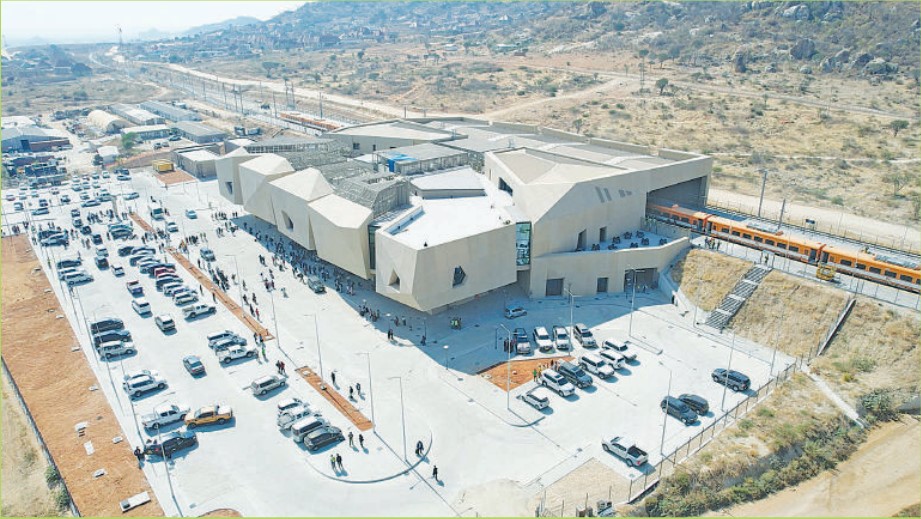
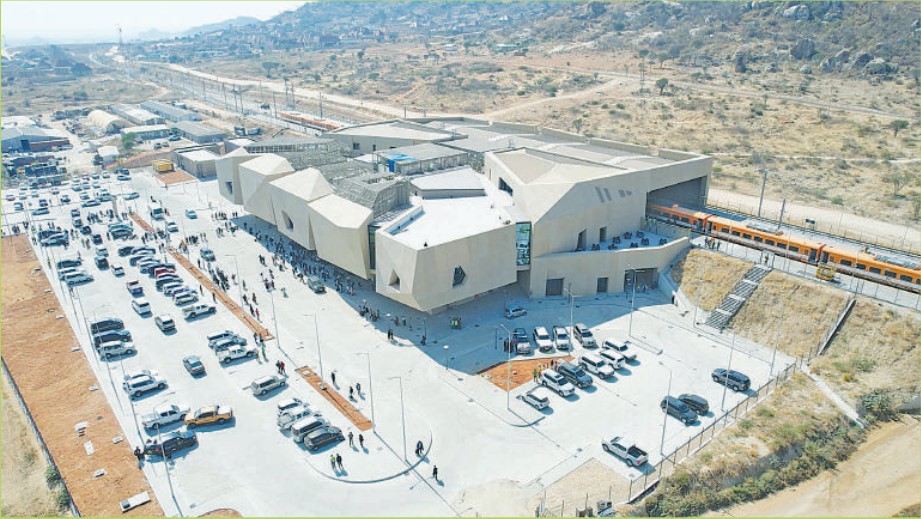
The SGR has emerged as one of Tanzania’s largest infrastructure investments and is expected to play a central role in the country’s future transport system. Once completed, it will link key economic centres and provide a faster and more efficient means of moving passengers and cargo across Tanzania and into neighbouring countries.
The railway is expected to support economic activity in several ways. For businesses, it offers the prospect of lower transport costs and improved logistics reliability.
For exporters, it could provide more efficient access to ports and international markets. For investors, it signals a commitment to developing infrastructure capable of supporting industrial growth and trade. Construction continues across several sections of the network, while operational routes have already recorded increasing passenger numbers and improved revenue performance. Yet, the significance of the project extends beyond transport.
Government officials increasingly describe the railway as a catalyst for broader economic transformation. The expectation is that improved connectivity, lower logistics costs and faster cargo movement will strengthen Tanzania’s competitiveness and support industrial development. Its long-term impact, however, will depend largely on how effectively it integrates with other modes of transport.
This is where the concept of integrated logistics becomes particularly relevant. Vision 2050 emphasises the need for transport systems that operate as part of a coordinated network. Railways, roads, ports, airports and logistics facilities are expected to complement one another, creating efficiencies across the supply chain.
The government’s efforts to connect the SGR directly to Dar es Salaam Port reflect this approach. Such integration is intended to improve cargo handling, reduce delays and lower transportation costs. Ports remain another critical element of Tanzania’s economic strategy.
As gateways for international trade, they play an essential role in linking Tanzania and neighbouring countries to global markets.
Efficient port operations can significantly reduce the time and cost involved in moving goods, generating benefits across multiple sectors of the economy. Recent improvements at Dar es Salaam Port have highlighted the importance of operational efficiency.
Cargo volumes have increased; vessel turnaround times have improved and the port’s role as a regional trade gateway has expanded.
These developments have strengthened Tanzania’s position within regional logistics networks while supporting wider economic activity. Their significance extends beyond the port itself. Faster cargo processing reduces costs for businesses, improves supplychain reliability and enhances investor confidence.
ALSO READ: Zanzibar’s electric bus leap deserves national response
More efficient ports also strengthen a country’s attractiveness as a destination for trade and industrial investment. Looking ahead, Tanzania is planning for future demand as trade volumes continue to grow. Projects such as the proposed Bagamoyo Port are intended to expand maritime capacity and accommodate expected increases in trade and industrial activity.
Vision 2050 anticipates significant growth in exports, manufacturing and regional commerce, making additional port infrastructure an important strategic consideration. Aviation is also expected to play an increasingly important role in supporting economic transformation.
Air transport remains critical for tourism, business travel and highvalue exports. Airport expansion and modernisation projects underway in several regions are intended to improve connectivity, attract investment and support economic activity beyond traditional urban centres. Vision 2050 places strong emphasis on balanced development across the country.
Improved air connectivity can help advance that objective by linking regional economies to domestic and international markets and broadening access to economic opportunities. The expansion of Air Tanzania forms part of this wider effort.
The national carrier has expanded its fleet and route network in recent years, improving connectivity within Tanzania and to selected international destinations. Although challenges remain, the airline is viewed as an important component of the country’s broader transport strategy.
Beyond aviation, railways and ports, inland water transport is also receiving renewed attention as policymakers seek to maximise the economic potential of the country’s lakes and waterways. Investments in ferries and cargo vessels on Lake Victoria, Lake Tanganyika and Lake Nyasa are intended to strengthen connectivity and support economic activity in surrounding regions.
Similarly, plans to rehabilitate and modernise the Tanzania-Zambia Railway Authority (TAZARA) are expected to improve trade links between Tanzania and Zambia while supporting regional integration. The project is intended to increase cargo capacity and reinforce Tanzania’s role as a transport corridor serving neighbouring economies. Financing these ambitions remains a major challenge.
Vision 2050 acknowledges that public resources alone will not be sufficient to meet future infrastructure requirements. As a result, the strategy places significant emphasis on publicprivate partnerships and collaboration with development partners.
The scale of investment required is substantial. Modern transport infrastructure is capital-intensive, and demand is expected to increase as the economy expands. Private-sector participation is therefore likely to play a growing role in financing, operating and maintaining major transport assets.
The urgency of these investments is reinforced by demographic trends. By 2050, Tanzania’s population is projected to exceed 118 million people, while urbanisation is expected to accelerate.
Managing this growth will require transport systems capable of supporting rising demand for mobility, logistics and public services. Vision 2050 recognises that wellplanned infrastructure can act as a catalyst for economic transformation. Conversely, inadequate infrastructure can constrain growth, increase costs and limit opportunities for businesses and households alike.
Transport, therefore, occupies a strategic position within Tanzania’s development agenda. It supports industrialisation, facilitates trade, attracts investment and connects businesses to markets. It strengthens regional integration, creates employment opportunities and provides the infrastructure foundation upon which broader economic growth depends.
As Tanzania begins implementing Vision 2050, transport is increasingly being viewed not simply as a means of moving people and goods, but as a strategic asset capable of shaping the country’s long-term economic trajectory.
The railways under construction, the ports being expanded, the airports being upgraded and the logistics systems being modernised are part of a broader effort to prepare the economy for future growth. The journey towards a one-trilliondollar economy will depend on many factors, including investment, innovation, skills development and effective governance. Yet few are likely to be as important as the ability to connect people, businesses and markets efficiently. In that respect, transport is expected to remain one of the defining sectors in Tanzania’s Vision 2050 journey and a key determinant of how successfully the country translates ambition into sustained economic progress.