
DAR ES SALAAM: STAKEHOLDERS are calling for stronger male involvement in protecting women and children against Gender-Based Violence (GBV), arguing that lasting change is impossible without men taking an active role in the fight.
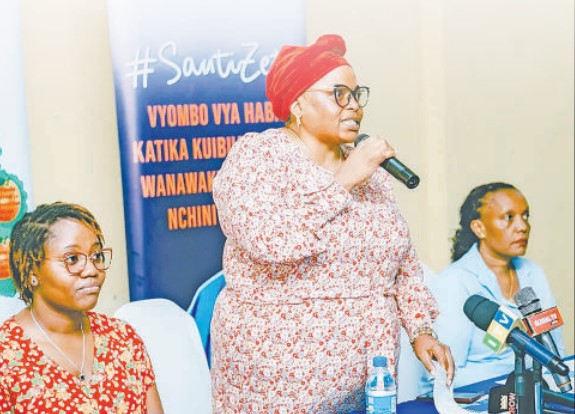
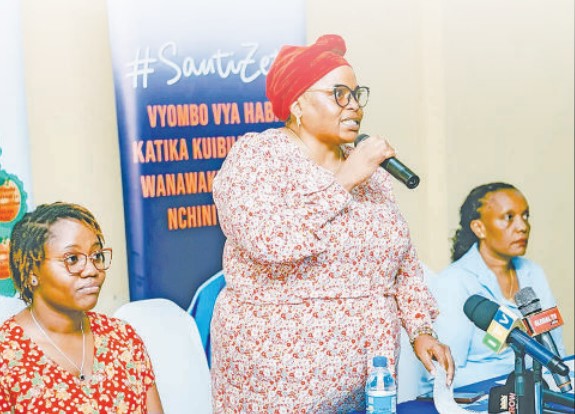
The call was made during a National Dialogue on Men’s engagement in Ending GBV organised by Tanzania Media Women’s Association (TAMWA) in partnership with Deutsche Gesellschaft für Internationale Zusammenarbeit (GIZ) held in Dar es Salaam.
Participants said many communities still view GBV as a women’s issue alone, a perception they warned continues to slow efforts to eliminate violence against women and children.
Speaking during the forum, TAMWA Executive Director Dr Rose Reuben said gender-based violence should not be viewed as a women’s issue alone, but as a human rights concern that requires collective action from both men and women.
“We believe that involving men in ending GBV will help transform attitudes and behaviours. Violence is not a women’s issue alone, it is a human rights issue,” she said.
Dr Reuben said that many men still wrongly perceive campaigns against violence targeting women and children as efforts meant to undermine them or take away their authority in society.
Because of this misconception, she said, there is a need for broader public education to help men understand the wider meaning of gender-based violence and their responsibility in changing harmful attitudes. She added that male leaders, from local government level to national leadership, have significant influence in shaping public opinion and community behaviour.
“When men speak, society listens. That is why their role in ending violence is extremely important,” she said.
According to the World Bank, gender inequality and harmful social norms continue to fuel violence against women globally. World Bank data cited during the dialogue showed that 38 per cent of women murdered worldwide are killed by intimate partners, while seven per cent have experienced sexual violence from non-partners.
Participants at the forum also highlighted that although women and girls remain the primary victims of genderbased violence, men can also suffer emotional and psychological abuse that often goes unreported due to stigma and lack of engagement. Communications and Campaign Specialist with GIZ’s, Agnes Mwafifi urged men to challenge oppressive traditions and become advocates for respect and equality within families and communities.
“A positive society begins with respecting, protecting and nurturing women and children,” she said, encouraging men to openly discuss gender violence issues during community meetings and public forums.
She further warned against resolving abuse cases informally at household level, saying survivors should instead seek justice through legal channels to ensure accountability and protect others from future harm.
Chairperson of Men Engage Tanzania, Vincent Uhega, said communities become safer when men fully understand the issue and actively participate in ending violence against women and children. Education officers and social welfare experts attending the event also linked GBV to poverty, unequal power relations and long-standing cultural practices that place men in dominant decision-making positions.
ALSO READ: Inside Nancy Sumari’s inspiring reinvention
Education officer from Bahi District Council in Dodoma Region, Boniphace Wilson, said men must recognise that their responsibility within families goes beyond financial provision.
“A man should see himself as a protector of the family, not someone who harms it,” he said, adding that fathers have a responsibility to safeguard the wellbeing of women and children.
Similarly, social welfare officials and police gender desk representatives said that many men fail to participate in parenting responsibilities, believing that providing money alone is enough.
Acting Community Policing Commander for Dar es Salaam Special Zone, Christopher Newton, said neglecting emotional support and child upbringing contributes to unstable family environments and increases vulnerability to violence. Acting Head of the Gender and Children’s Desk in Tanga Region, Grace Sandy, said another major challenge is the belief that gender violence concerns women only.
“That is why even when men experience abuse, many remain silent and never report it,” she explained.
Officials also expressed concern over increasing cases of violence against children, including sexual abuse affecting both girls and boys. Representing the Ubungo District Commissioner, Ubungo Division Officer Beatrice Mbawala described GBV as a growing national concern affecting families and communities across the country.
“It is wrong for any man to think this issue does not concern him. Violence affects our wives, mothers, sisters, children and friends,” she said.
Stakeholders at the dialogue agreed that lasting change will only happen when men are treated not as enemies in the fight against gender violence, but as important partners capable of helping transform attitudes, strengthen families and build safer communities for women and children.