

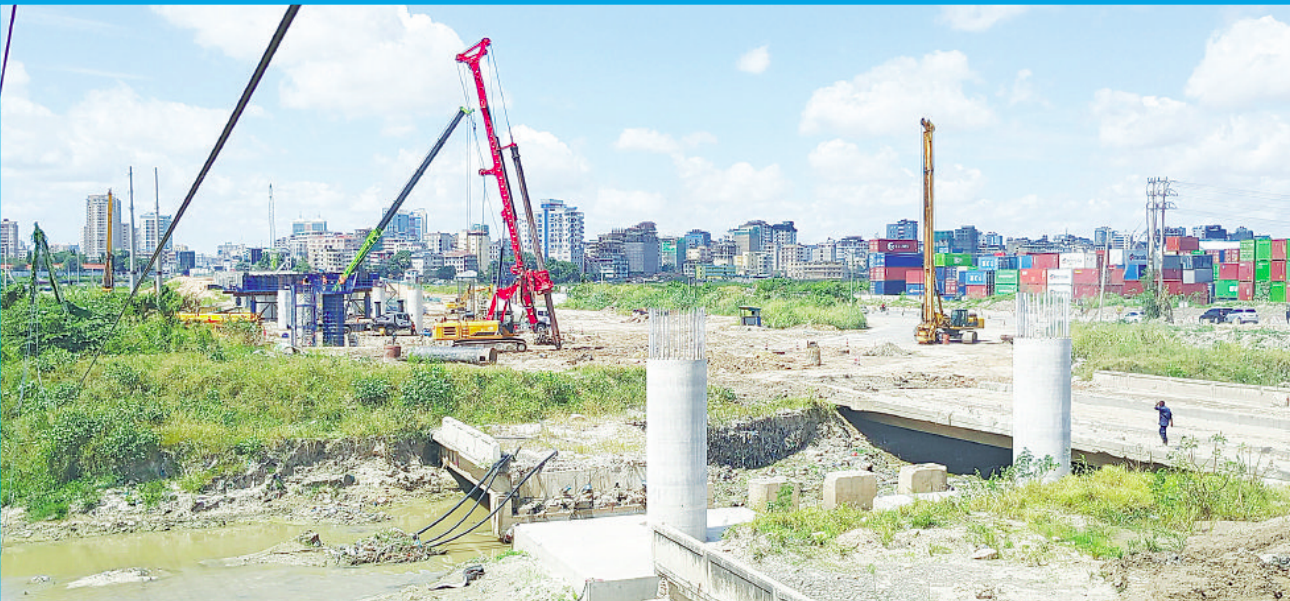
DAR ES SALAAM: FOR decades, many parts of Tanzania were separated not by distance, but by the poor quality of roads connecting them. Farmers struggled to access markets, patients spent hours travelling to healthcare facilities, and businesses faced high transport costs that constrained economic activity.
Today, that narrative is steadily changing. Across the country, an unprecedented expansion of the road network is transforming connectivity, linking previously isolated communities to economic opportunities, social services, and regional markets.
From the Southern Highlands to the western border regions and remote rural districts, road infrastructure has emerged as one of Tanzania’s most significant development investments.
New trunk roads, upgraded regional highways, and improved feeder roads are reducing travel times, facilitating trade, supporting tourism and strengthening national integration.
Under the leadership of the Ministry of Works and through implementing agencies such as Tanzania National Roads Agency (TANROADS) and the Tanzania Rural and Urban Roads Agency (TARURA), thousands of kilometres of roads have been constructed, rehabilitated, and upgraded in recent years.
Areas once considered underserved are increasingly being integrated into major economic corridors, enabling the efficient movement of people, goods and services.
Minister for Works Abdallah Ulega recently revealed that Tanzania now has about 16,000 kilometres of paved roads, a remarkable achievement compared to the 1,360 kilometres that existed at Independence in 1961.
According to Tanroads, the agency currently manages a classified national road network spanning 37,435 kilometres across Mainland Tanzania.
This includes 12,527 kilometres of trunk roads, which serve as the country’s primary inter-regional and international highways, and 23,939 kilometres of regional roads that connect districts and economic centres.
Meanwhile, Tarura oversees the development, maintenance, and rehabilitation of district and urban roads stretching approximately 144,430 kilometres.
Together, Tanroads and Tarura manage a national road network of about 182,000 kilometres, making it one of the largest public infrastructure assets in the country.
While only about 3,337 kilometres of Tarura roads are paved, the extensive network of gravel and earth roads continues to provide critical access to rural communities, farms, schools, health centres, and local markets.
The significance of these investments becomes even clearer when viewed against the challenges Tanzania faced little more than a decade ago.
During the First Five-Year Development Plan (2011/12– 2015/16), Tanzania’s road sector faced multiple challenges, including low road density, inadequate rural accessibility, a large network of unpaved roads, urban congestion, weak institutional capacity, limited funding, poor drainage systems, and insufficient integration of transport networks.
Indeed, Tanzania had one of the lowest road densities in East Africa, with only about 103 metres of road per square kilometre and just 7.4 metres per square kilometre paved.
At that time, only 40.4 per cent of trunk roads were paved, while just 28 per cent of the rural population lived within two kilometres of an all-weather road.
The country also faced numerous infrastructure challenges, including inadequate links between production areas and markets, rapid urbanisation, traffic congestion, limited financing for maintenance and construction, poor drainage systems, and weak institutional capacity in managing feeder roads.
In addition, the domestic construction industry was still developing, while the large proportion of unpaved roads left many communities vulnerable to seasonal rainfall and transport disruptions.
These constraints increased transport costs, slowed economic activity, and restricted access to markets and social services, particularly in rural areas.
However, substantial progress was achieved during the implementation of the Second Five-Year Development Plan (2016/17– 2020/21).
ALSO READ: Tanzania cherishes Canada’s support in facilitating socioeconomic transformation
Significant investments in transport infrastructure enabled the government to connect nearly all regional headquarters with paved roads, greatly improving accessibility and mobility across the country.
However, challenges remained, including financing gaps, maintenance demands for the growing road network, urban congestion, climate-related damage, land acquisition delays, high logistics costs and the need for stronger local contractor capacity.
The government also faced the task of improving integration between roads, railways, ports, and airports to support its industrialisation agenda.
Demand for road construction and upgrading exceeded available public resources. Large strategic projects required substantial capital, creating pressure on government budgets and increasing the need for innovative financing mechanisms.
Urban centres, particularly Dar es Salaam, continued to experience severe traffic congestion. Population growth and increasing vehicle ownership outpaced infrastructure expansion in some areas.
To overcome the challenges identified under the FYDP II, the government significantly increased investment in road infrastructure, strengthened Tanroads and Tarura, expanded the paved road network, enhanced maintenance funding through the Road Fund, and promoted local contractor participation.
Strategic investments in transport corridors, urban roads, and climate-resilient infrastructure improved connectivity, reduced transport costs, and supported the country’s industrialisation agenda.
The government also mobilised financing from development partners and increasingly explored public-private partnerships to meet growing infrastructure demands.
Road network status during FYDP II according to government and planning documents shows that the country’s district, urban, and feeder road network was estimated at approximately 143,279 kilometres. Of this total, 9,781 km were paved (tarmac) roads, while 133,499 kilometres remained unpaved (gravel or earth roads).
For the national road network managed by Tanroads, the classified national road network consisted of approximately 35,000–37,000 kilometres of trunk and regional roads.
By the end of FYDP II, a significant proportion of trunk roads had been upgraded to bitumen standard, enabling nearly all regional headquarters to be connected by paved roads. Indeed, significant progress was achieved under FYDP II.
The period witnessed completion of several strategic trunk road projects, upgrading of regional roads to tarmac standard, expansion of rural and feeder roads through Tarura, improved connectivity between regional headquarters, district centres, ports, border posts, and production areas.
The period also witnessed increased accessibility to markets, health facilities, schools, and administrative centres.
One of the most notable achievements was that almost all regional headquarters in Mainland Tanzania became connected by paved roads, a major milestone compared to the situation under FYDP I.
During the Third Five-Year Development Plan (2021/22– 2025/26), Tanzania significantly expanded its transport infrastructure, with the national road network reaching approximately 182,000 kilometres and paved roads increasing to about 16,000 kilometres.
The government’s focus shifted from connecting regional headquarters to linking district centres, opening economic corridors, improving rural accessibility and reducing urban congestion.
Major investments by Tanroads and Tarura, supported by growing use of public-private partnerships, helped strengthen connectivity and position transport infrastructure as a key driver of economic transformation and industrialisation.
Minister for Works Abdallah Ulega recently revealed that Tanzania now has about 16,000 kilometres of paved roads, a remarkable achievement compared to the 1,360 kilometres that existed at Independence in 1961.
According to Tanroads, the agency currently manages a classified national road network spanning 37,435 kilometres across Mainland Tanzania.
This includes 12,527 kilometres of trunk roads, which serve as the country’s primary inter-regional and international highways, and 23,939 kilometres of regional roads that connect districts and economic centres.
Meanwhile, Tarura oversees the development, maintenance, and rehabilitation of district and urban roads stretching approximately 144,430 kilometres.
Together, Tanroads and Tarura manage a national road network of about 182,000 kilometres, making it one of the largest public infrastructure assets in the country. While only about 3,337 kilometres of Tarura roads are paved, the extensive network of gravel and earth roads continues to provide critical access to rural communities, farms, schools, health centres and local markets.
The significance of these investments becomes even clearer when viewed against the challenges Tanzania faced little more than a decade ago.
The pace of investment has continued to accelerate. “Tanzania’s gazetted road network now extends to approximately 182,000 kilometres,” said Mr Ulega.
He further disclosed that more than 5,100 kilometres of roads are currently under construction at various stages across the country. In addition, road projects covering approximately 3,700 kilometres have already been procured and awarded to contractors, positioning them for implementation in the coming years.
The minister also highlighted the growing role of local expertise in infrastructure development. Apart from the roughly 600 kilometres of paved roads inherited from the colonial administration, more than 15,000 kilometres have been built or are currently being constructed by Tanzanians themselves.
Beyond improving mobility, road construction has become a major contributor to economic growth.
Presenting his ministry’s budget in the National Assembly recently, Mr Ulega described the construction sector as a cross-cutting pillar that supports the expansion of multiple economic and social sectors.
According to the 2025 National Economic Survey, construction was the second-largest contributor to Tanzania’s Gross Domestic Product (GDP), accounting for 11.9 per cent of the economy.
The sector also recorded growth of 4.0 per cent in 2025, up from 3.0 per cent in 2024. Its impact extends beyond economic output.
Construction activities generated nearly 19,000 jobs in 2025, benefiting contractors, consultants, engineers, technicians, artisans, and suppliers of construction materials.
Many of these opportunities were created for young people and women, demonstrating the wider social benefits of infrastructure investment.
As Tanzania continues to pursue inclusive and sustainable development, the expanding road network demonstrates that infrastructure is far more than concrete and asphalt.
It is a catalyst for economic transformation, social inclusion and national integration. President Samia Suluhu Hassan has repeatedly underscored the importance of transport infrastructure in driving development.
While inaugurating the 13th Parliament in Dodoma in November 2025, she reaffirmed the government’s commitment to completing ongoing road projects and accelerating the implementation of new ones.
“We will accelerate the implementation of road projects through Tanroads to achieve our goal of connecting all district headquarters to regional capitals with tarmac roads,” President Samia said.
The president also pledged to strengthen Tarura through increased funding and enhanced institutional capacity to improve urban, district and rural roads, ensuring they remain accessible throughout the year.
Improved roads, she noted, will not only ease mobility for communities but also enable farmers to transport their produce to markets more efficiently, reducing postharvest losses and boosting rural incomes.
However, under FYDP III, still Tanzania’s road sector faced challenges including financing constraints, rising maintenance costs, climate-related damage, urban congestion, land acquisition delays and the need to upgrade a vast network of unpaved roads.
Increasing construction costs and capacity limitations among local contractors also posed implementation challenges.
In response, the government expanded infrastructure investment, strengthened Tanroads and Tarura, promoted Public-Private Partnerships, and prioritised climate-resilient and economically strategic road projects.
In a further effort to accelerate infrastructure expansion, the government has recently opened the door for private-sector participation through Public-Private Partnerships (PPPs).
Addressing Parliament in Dodoma, Minister Ulega announced that Tanroads had invited private investors to participate in the development of six strategic road projects across the country.
“I would like to inform this august House that under the leadership of President Samia Suluhu Hassan, the government remains committed to opening up the country and ensuring that no Tanzanian is left behind,” he said.
Among the projects is the Morogoro–Dodoma highway, which will be upgraded into a four-lane road.
The corridor is one of the country’s busiest routes, linking the commercial capital, Dar es Salaam, with the administrative capital, Dodoma.
Another priority project is the Chalinze–Segera–Tanga road, which is expected to strengthen connectivity between the Northern Corridor and the Port of Tanga.
The government is also planning a 42-kilometre expressway connecting the Port of Dar es Salaam to Kibaha, a project aimed at reducing traffic congestion and improving freight movement along one of the country’s busiest transport corridors.
Other strategic projects include the 384-kilometre Handeni–Kiberashi–Chemba–Kwamtoro–Singida road, which will enhance access between the Port of Tanga and inland regions, and the 27-kilometre Kitonga Bypass in Iringa Region, designed to improve safety and ease traffic flow through the challenging Kitonga escarpment.
In addition, travellers will benefit from a proposed 10-kilometre expressway linking Dar es Salaam city centre to Julius Nyerere International Airport, significantly improving urban mobility and access to the country’s principal gateway.
As these projects move from planning to implementation, they will further strengthen Tanzania’s transport network and support the country’s broader economic ambitions.
The story of Tanzania’s roads is ultimately a story of transformation. Roads connect farmers to markets, students to schools, patients to healthcare, businesses to customers, and regions to national and international trade corridors.
By investing in connectivity, Tanzania is not only building roads—it is building the foundations of a more integrated, competitive, and prosperous economy