
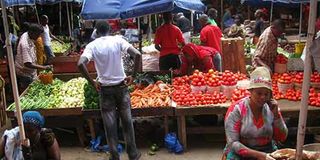
DAR ES SALAAM: ACROSS the country, informal markets are more than just centers of trade they are lifelines for millions of households.
From bustling street vendors in Dar es Salaam to small traders in regional towns and rural marketplaces, the informal sector provides employment, income, and affordable goods to a significant portion of the population.
Yet, as Tanzania continues its journey toward economic modernization and urban development, a critical question remains: how can policymakers balance regulation with the livelihoods of those who depend on informal markets?
The informal economy plays a vital role in the country’s socioeconomic landscape. It absorbs labor that cannot be accommodated by the formal sector, particularly among youth, women, and individuals with limited educational qualifications.
For many families, informal trading serves as the primary source of income and a pathway out of poverty. In a country where the labor force continues to grow rapidly, informal markets have become an essential mechanism for job creation.
However, informal markets face numerous challenges. Many traders operate without legal recognition, secure business premises, or access to financial services. Poor infrastructure, limited sanitation facilities, and inadequate storage spaces often affect productivity and public health.
Furthermore, conflicts between local authorities and traders frequently arise over issues such as licensing, taxation, and the use of public spaces.
In recent years, efforts to organise urban areas and improve municipal revenue collection have led to stricter regulations on street vending and informal trading. While these measures are often motivated by legitimate concerns regarding public order, traffic management, and environmental cleanliness, they can also have unintended consequences.
Forced relocations, abrupt enforcement actions, and restrictive regulations may disrupt livelihoods, reduce incomes, and increase vulnerability among already marginalized populations.
The future of informal markets in the country should not be viewed as a choice between regulation and survival. Rather, it should focus on creating an inclusive framework that recognizes informal traders as important contributors to economic development. Effective regulation does not necessarily mean suppression; it can mean empowerment through better planning, support, and integration.
One promising approach is the development of well-designed market infrastructure. Local governments can invest in accessible market spaces equipped with sanitation facilities, storage units, water services, and security. When traders are provided with suitable locations that attract customers and support business growth, compliance with regulations becomes more practical and beneficial for all parties involved.
Financial inclusion is another critical area. Many informal traders struggle to access affordable credit due to a lack of collateral or formal business records. Expanding access to digital financial services, microfinance, and business development programs can help traders grow their enterprises and gradually transition into the formal economy. Digital payment systems can also improve transparency and facilitate tax administration without imposing excessive burdens on small businesses.
Technology presents additional opportunities. Mobile applications for licensing, tax payments, and market information can reduce bureaucratic barriers and improve communication between traders and authorities.
As the country advances its digital transformation agenda, integrating informal businesses into digital ecosystems can enhance productivity and competitiveness.
Equally important is stakeholder engagement. Policies affecting informal traders should be developed through consultation rather than imposed unilaterally. Traders’ associations, community leaders, and local government officials can work together to identify practical solutions that address both regulatory objectives and livelihood concerns. Participatory policymaking builds trust and increases the likelihood of successful implementation.
Youth employment considerations must also remain at the center of policy discussions. With thousands of young Tanzanians entering the labor market every year, informal markets continue to serve as a crucial source of entrepreneurial opportunities. Supporting youth-led enterprises through training, mentorship, and simplified registration procedures can help transform survival businesses into sustainable ventures.
Moreover, the informal sector should be viewed as a potential partner in achieving broader national development goals. Informal traders contribute to food distribution, local supply chains and household welfare.
ALSO READ: ‘Inclusive economy fosters unity’
Their activities support urban resilience and economic dynamism. Recognizing this contribution can help shift public discourse from seeing informal markets as a problem to understanding them as part of the solution.
As Tanzania pursues industrialization, urbanization and economic transformation, policymakers face the challenge of creating cities and markets that are both orderly and inclusive. Achieving this balance requires moving beyond punitive approaches toward strategies that combine regulation with support, enforcement with dialogue, and modernisation with social protection.
The future of informal markets in the country will ultimately depend on the ability of government, businesses, and communities to work together. By fostering an environment where informal traders can operate legally, safely, and productively, the country can unlock greater economic opportunities while ensuring that development leaves no one behind.
In doing so, the country will not only strengthen livelihoods but also build a more inclusive and resilient economy for generations to come.