
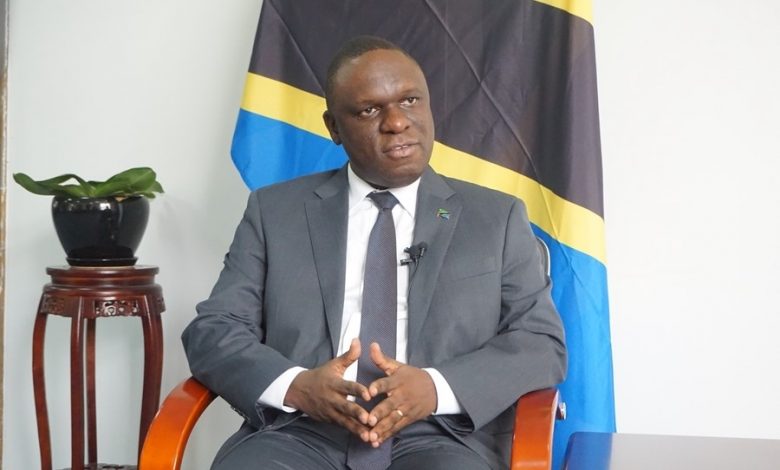
UNITED KINGDOM: While some people may regard Tanzania’s move to embark on the development of a National Kiswahili Large Language Model as another digital initiative, it reflects the country’s investment in the future.
This was said by Tanzania’s High Commissioner to the United Kingdom (UK), Mbelwa Kairuki, recently while delivering a keynote speech on leadership in the age of Artificial Intelligence (AI) during the Hack the Law 2026 conference held at the University of Cambridge.
During the well-attended event, the diplomat said that if Artificial Intelligence is to become a truly global technology, it must also become a technology that understands the diversity of human experiences, including African languages, with Kiswahili being among them.
According to him, more than 200 million people communicate in Kiswahili across Africa, making it one of the fastest-growing languages on the continent and an official working language of the African Union.
“It deserves a meaningful place in the digital age. Developing a Kiswahili language model is therefore about much more than building software. It is about ensuring that future generations can engage with technology in a language that reflects their own culture and identity. It is also about confidence — confidence that Africa should not merely consume Artificial Intelligence developed elsewhere, but can help create it,” he added.
He said if Africa invests wisely in education, scientific research, digital infrastructure, and innovation, the continent will not simply participate in the next technological revolution but will also help shape it.
The envoy said that if AI is changing the world, then it must also change the way people are educated to lead in the new era.
The High Commissioner noted that institutions such as Cambridge have never simply prepared graduates for today’s jobs; instead, they have prepared generations to solve problems that did not yet exist.
“That tradition is more important now than ever before. The lawyer who graduates this year will practise in a profession very different from the one many of us entered,” he noted.
He told participants that routine legal research that once required days may soon take minutes, while thousands of documents can be reviewed almost instantly.
ALSO READ: Trade, investment feature in UK speaker, Tanzania envoy talks
“Contracts can be drafted with remarkable speed. Translation across languages has become faster and more accurate. These developments should be welcomed. But they also raise a more important question: What will distinguish an outstanding lawyer when every lawyer has access to the same technology? The answer will not be technology. It will be judgement,” he noted.
Amid the growing use of AI, clients will continue to seek lawyers who exercise sound judgement under pressure, while judges will continue to rely on advocates who present honest arguments supported by credible authorities.
“Governments will continue to depend on legal advisers who understand not only what the law permits, but also what justice requires. Artificial Intelligence can strengthen professional practice. It cannot replace professional character,” Kairuki said.
He reminded participants that whatever path they choose, they should remember one principle: technology should always remain in the service of people.
“But never surrender your curiosity, your integrity, your compassion, or your independent judgement. These qualities will always distinguish exceptional leaders from capable technicians,” the envoy said.