
WATER is one of the most valuable resources for human survival, economic development and environmental sustainability.
Governments and water utilities invest substantial financial and technical resources in the abstraction, treatment, storage and distribution of clean water to households, industries, institutions and businesses.
However, a significant portion of this water never reaches its intended users due to leakages within water supply systems.
Although water shortages are often associated with droughts, pollution and declining water sources, water leakages represent a less visible but equally important threat to water security.
Every drop of water lost through leaking pipes represents water that could otherwise have been supplied to households, institutions and businesses.
Water leakages occur when treated water escapes from water supply infrastructure before reaching consumers. These losses may result from ageing or corroded pipelines, faulty valves, damaged water metres, poor installation workmanship, excessive pressure within distribution networks, or accidental damage caused by construction activities.
Leakages can occur at various points within the water supply system, including transmission mains, distribution networks, service connections, storage tanks and customer premises.
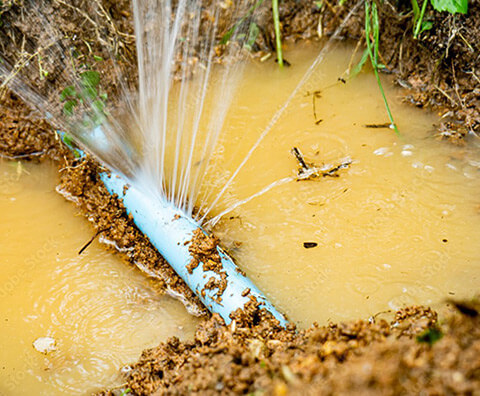
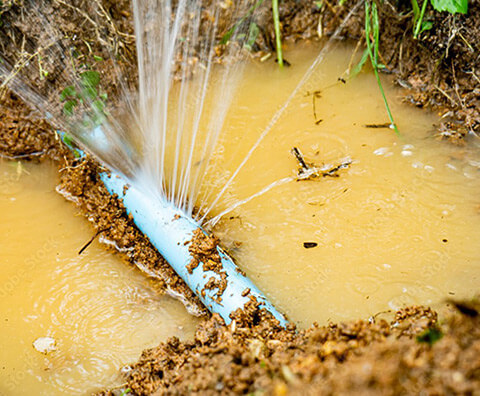
In many urban and peri-urban areas, where the majority of households are connected to water supply systems operated by water utilities, leaking pipes carrying treated water can often be observed along roadsides, open grounds and within residential properties.
Such leakages contribute to significant water losses, reduce the efficiency of water supply systems and increase operational costs for water service providers.
In domestic settings, leaks are often identified through visible signs such as continuous water flow, unusually wet areas, or the sound of running water in the absence of rainfall.
When such signs are detected, prompt action to isolate the affected section of the supply system, for example, by closing the relevant gate valve, can help minimise further water loss until repairs are undertaken.
At first glance, a leaking pipe may appear to be a minor problem. However, the cumulative impact of numerous leaks across a water supply network can be substantial.
A small leak releasing only a few litres per minute can result in thousands of litres of water being wasted over time. When multiple leaks remain unattended for days, weeks, or even months, the total volume of water lost becomes significant.
The implications of water leakages extend beyond the immediate loss of water. Every litre that escapes from a leaking pipe represents water that has already been abstracted from rivers, lakes, reservoirs, or groundwater sources.
Before reaching consumers, this water undergoes treatment processes that require chemicals, energy, labour and infrastructure investment.
Consequently, water leakages result not only in the wastage of water itself, but also in the loss of the financial and environmental resources invested in its production and distribution.
In many parts of the world, including Tanzania, water utilities face increasing challenges in meeting the growing demand for clean and reliable water supplies.
Rapid urbanisation, population growth and climate variability are placing unprecedented pressure on available water resources. Under such circumstances, reducing water losses through leakages can often be more cost-effective than developing new water sources or expanding treatment facilities.
Every litre saved through effective leakage management contributes directly to improved water availability and service delivery. Water leakages also affect the operational efficiency of water utilities.
When significant volumes of water are lost within the distribution system, utilities must abstract and treat additional water to compensate for those losses.
This increases production costs, energy consumption and operational expenditures. In many cases, these costs are ultimately borne by consumers through higher tariffs or reduced service quality.
Furthermore, leakages can contribute to inequitable water distribution. In areas where water supply systems are already under stress, excessive losses may reduce water pressure and limit the amount of water reaching certain neighbourhoods.
As a result, some consumers may experience frequent service interruptions, inadequate water supply, or low water pressure while water continues to be wasted through undetected leaks elsewhere in the network.
ALSO READ: Ruvu basin project drives economic growth, water security
Beyond their impact on water supply systems, leakages can also damage public infrastructure and the surrounding environment.
Continuous seepage from underground pipes can weaken road foundations, contribute to the formation of potholes and accelerate the deterioration of roads, pavements and drainage systems.
In extreme cases, prolonged leakages may undermine building foundations and increase maintenance costs for both public and private infrastructure. Water leakages can also create environmental and public health concerns.
Pools of stagnant water formed by leaking pipes may become breeding grounds for mosquitoes and other disease vectors.
In some situations, damaged pipelines operating under low pressure may allow contaminants from surrounding soils or wastewater sources to enter the distribution system, potentially compromising water quality and increasing health risks for consumers.
Water leakages result in the unnecessary loss of treated water and place additional pressure on water abstraction, treatment and distribution systems.
Every drop of water lost through leaking pipes represents water that could otherwise have been supplied to households, institutions and businesses.
Persistent leakages increase operational costs because additional water must be extracted, treated and pumped to compensate for losses.
Leakages can also damage roads and other infrastructure, creating additional maintenance costs for local authorities and utility providers.
Despite their prevalence, many leakages remain unreported for extended periods.
Despite their significant impacts, water leakages often persist for extended periods before they are detected and repaired. Many leakages occur underground, making them difficult to identify without regular monitoring and inspection.
Even when leakages are visible, they may go unreported by community members who assume that someone else will notify the water supply utility, or who wait for utility staff or technicians to detect and address the problem.
Consequently, substantial volumes of treated water intended for human consumption may be lost before corrective action is taken, resulting in unnecessary wastage of a valuable resource.
Addressing water leakages requires a combination of institutional commitment, technological innovation and public participation.
Water utilities must invest in regular inspection and maintenance of infrastructure, replacement of ageing pipelines, pressure management systems and modern leak detection technologies.
Advances in digital monitoring systems, smart meters, and geographic information systems now enable utilities to identify and respond to leakages more quickly and efficiently than ever before.
However, water utilities cannot address this challenge alone. Communities also play an important role in reducing water losses.
Residents are often the first to observe leakages within their neighbourhoods, along roadsides, or near public facilities. Prompt reporting of such leakages to the responsible water utility can significantly reduce the time taken to identify and repair damaged infrastructure, thereby minimising the volume of treated water that would otherwise be lost.
Public awareness is therefore essential. Communities should understand that reporting a leak is not merely a service complaint but an act of water conservation that is strongly encouraged by water supply utilities.
Every reported leakage helps protect water resources, reduce operational costs and improve service reliability for all users. In this sense, members of the public become active partners in safeguarding water security.
Consumers also have responsibilities within their own premises. Leaking taps, faulty toilet cisterns, damaged storage tanks and defective internal plumbing systems can collectively result in significant water losses.
Regular inspection and maintenance of household and institutional water systems can help prevent unnecessary losses and promote more efficient water use. In this regard, it is important for consumers to reflect on whether adequate measures are in place within their homes, institutions, or business premises to ensure that treated water supplied by utilities is not wasted through internal leakages.
As water scarcity becomes an increasing concern in many regions due to climatic variability and unsustainable human activities, improving the efficiency of existing water supply systems must become a priority.
While considerable attention is often directed toward developing new water sources, protecting watersheds and expanding infrastructure, equal emphasis should be placed on reducing losses within existing systems, as this helps conserve treated water delivered to consumers.
Water saved through leakage reduction is often the most costeffective and environmentally sustainable source of additional water supply.
Ultimately, water leakages are more than a technical problem; they are a water resources management challenge with economic, environmental and social consequences.
Reducing leakages requires collaboration between water utilities, local authorities, communities and individual consumers.
By investing in infrastructure maintenance, embracing modern technologies and fostering a culture of vigilance and responsibility, societies can significantly reduce water losses and strengthen water security.
Every drop of water saved contributes to a more sustainable future. In an era of growing water demand and increasing environmental pressures, preventing water leakages is not simply about fixing pipes, it is about protecting a precious resource upon which present and future generations depend.