
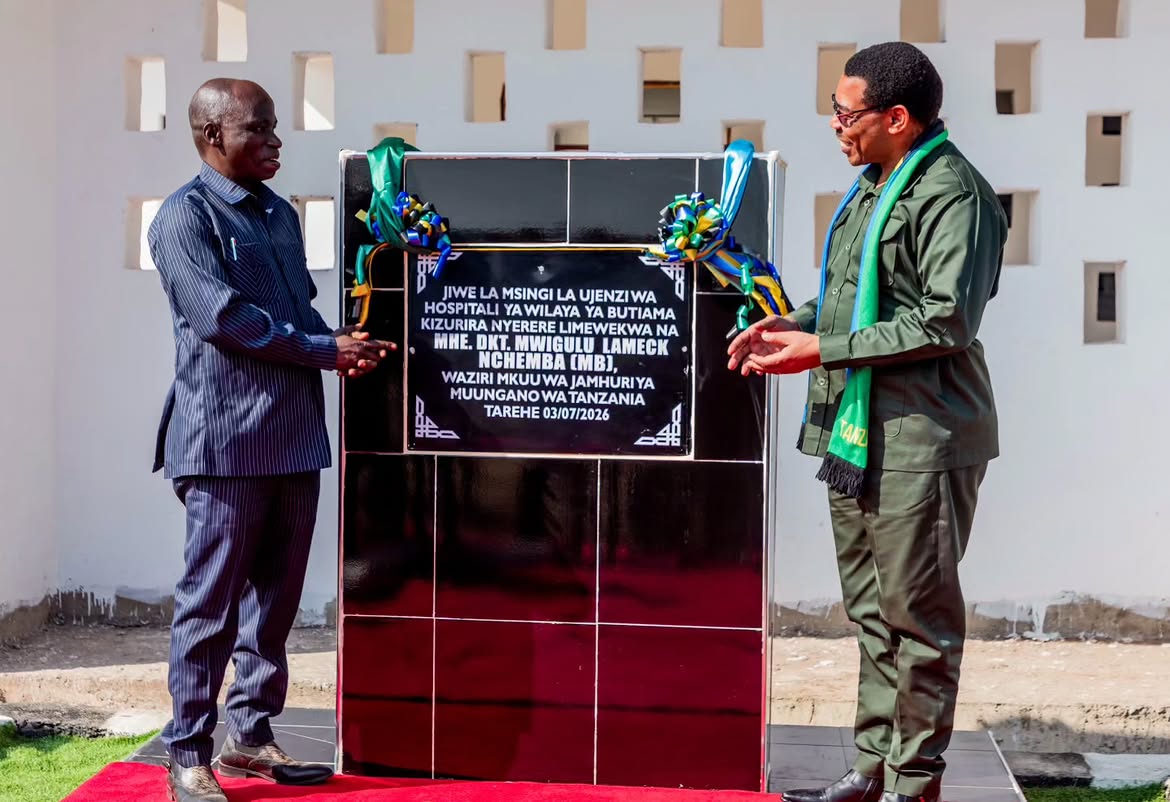
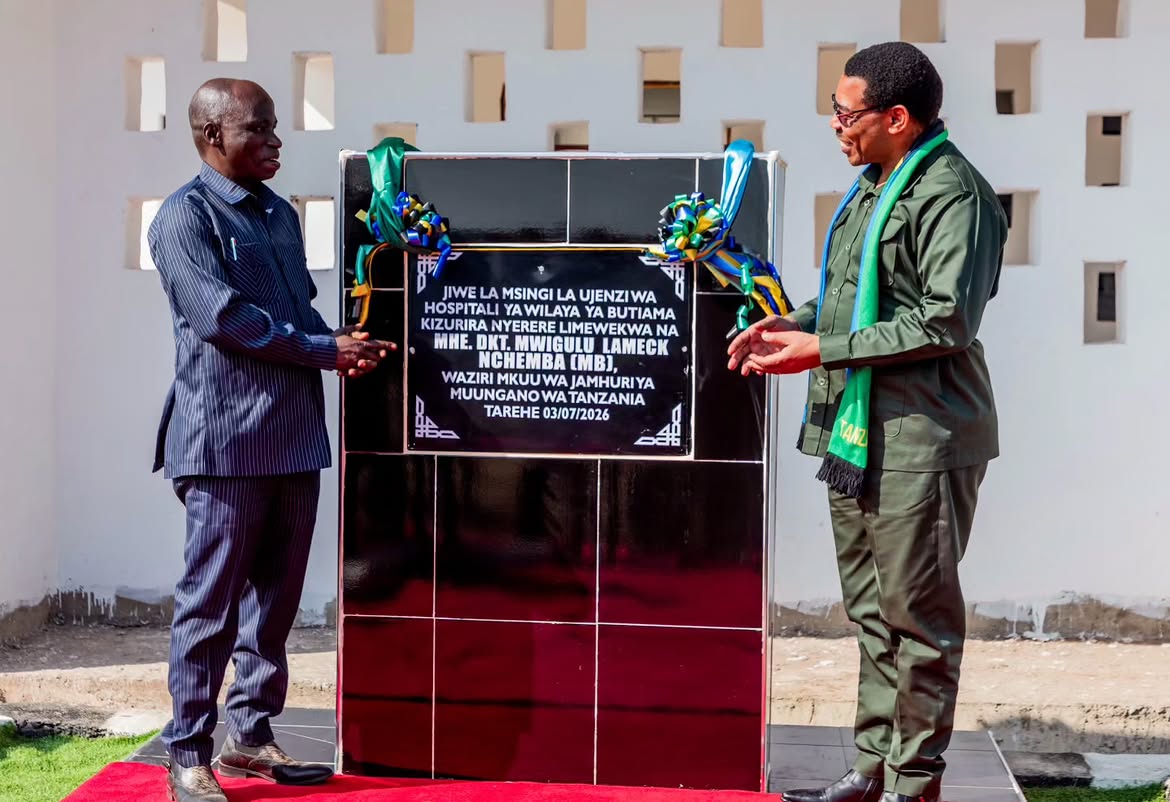
BUTIAMA: PRIME Minister Mwigulu Nchemba has laid the foundation stone for the Kizurira Nyerere Butiama District Hospital, marking a key step in the government’s efforts to expand access to quality healthcare services in rural areas.
The hospital, being constructed in Butiama District, is designed to improve access to health services for residents who previously had to travel long distances to reach district hospitals in other areas.
According to project information presented to the Prime Minister during his inspection visit, the Butiama District Council has so far received 3.66bn/- from the central government and internal council revenues for the construction of the facility, which is being implemented under the force account system.
Additionally to the information, several key structures have already been completed and are operational, including the outpatient department (OPD), laboratory, emergency unit, operating theatre, maternity ward and an incinerator. Other buildings, such as the administration block, male and female wards, radiology unit, pharmacy store and laundry facility, are at various stages of completion.
ALSO READ: Paris braces for “siku wa Mswahili” to showcase Tanzanian culture
Deputy Minister in the President’s Office, Regional Administration and Local Government,(PMO-RALG) Festo Dugange, said the government has significantly increased investment in health infrastructure across the country.
He noted that while Tanzania had only 55 district hospitals since independence up to 2020, the government has constructed 129 district hospitals within the past six years, enabling all 184 councils to now have improved and modern health facilities.
Moreover, he said that the government has allocated 500m/- in the 2026/2027 financial year to complete remaining structures at the Butiama hospital to ensure full services become operational.
Once completed, the hospital is expected to expand services in outpatient care, surgery, maternal and child health, radiology, laboratory services and other specialist care, reducing unnecessary referrals and improving healthcare delivery in the region.