
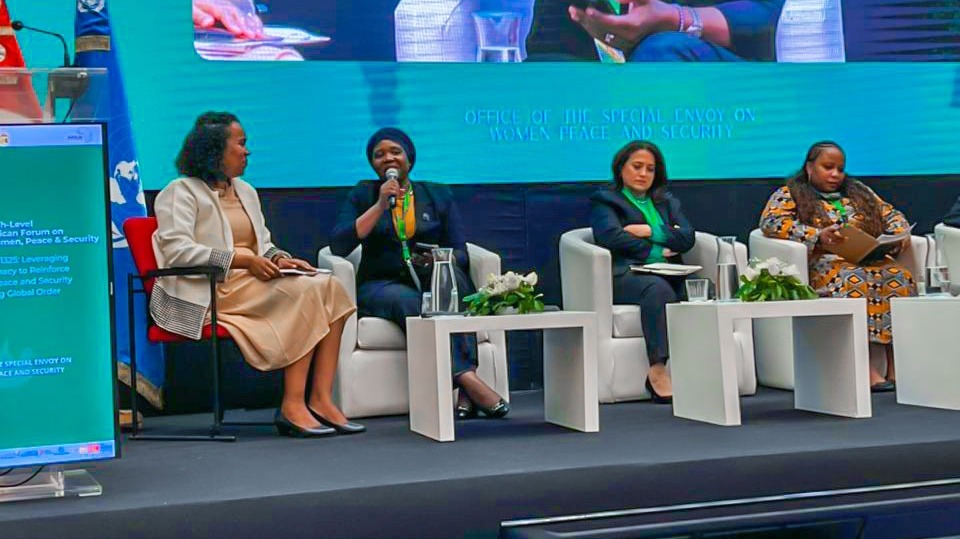

DAR ES SALAAM: FROM online spaces to decision making tables, Tanzania is pushing for women to lead and for technology to work in their favour, not against them.
That call was made by the Minister for Community Development, Gender, Women and Special Groups, Dr Dorothy Gwajima, during the 6th African Union High-Level Meeting on Women, Peace and Security (WPS) held in Tunis, Tunisia.
Addressing African leaders and policymakers, Dr Gwajima urged the strategic use of technology and Artificial Intelligence (AI) to strengthen public education, prevent Gender Based Violence (GBV) and expand women’s participation in peace and security processes across the continent.
“The rapid growth of technology and AI has created powerful opportunities to educate communities about the effects of GBV and to spread messages that condemn such acts,” she said during a high-level panel discussion.
According to the Minister, digital platforms, when used responsibly, can amplify women’s voices, promote zero tolerance to abuse and support early prevention efforts.
However, she cautioned that technology must be guided by strong safeguards to ensure it protects rather than harms women and girls.
Dr Gwajima also highlighted Tanzania’s progress in implementing the Women, Peace and Security agenda, marking 25 years since the adoption of United Nations Security Council Resolution 1325.
Key achievements include the launch of Tanzania’s first National Action Plan on Women, Peace and Security (TNAP), significant policy and legal reforms such as the 2024 Election Act, and increased representation of women in leadership and decisionmaking positions within government.
“Women are not just beneficiaries of peace and security, they are drivers of it,” she said, calling for greater recognition of women as leaders across political, social and economic spheres.
Economic empowerment, she noted, remains a cornerstone of Tanzania’s gender strategy. Initiatives such as the allocation of 10 per cent of local government council revenues as loans for women have been designed to strengthen financial independence and reduce vulnerability to abuse and exploitation.
Despite these gains, the Minister acknowledged that women across Africa continue to face persistent challenges.
Harmful cultural practices, economic constraints and intimidation still discourage many women from seeking leadership roles. More recently, digital spaces have introduced new risks.
“Social media has increasingly been used to spread hate speech, fake videos and online harassment aimed at discrediting women and silencing their voices,” Dr Gwajima warned.
She added that women and girls remain the most affected by online genderbased violence, which often spills into real-life threats and exclusion.
Rather than retreat from digital platforms, she called for stronger public education on safe and responsible technology use, alongside coordinated efforts among governments, civil society organisations, development partners and regional institutions.
ALSO READ: The women saving mothers’ lives in rural communities
“The effective implementation of the Women, Peace and Security agenda requires collaboration at all levels,” she emphasised, reaffirming Tanzania’s commitment to working closely with the African Union and other stakeholders.
She said that Tanzania will continue to work with the African Union and other stakeholders to ensure women secure meaningful participation in decisionmaking and peacebuilding processes across Africa.