
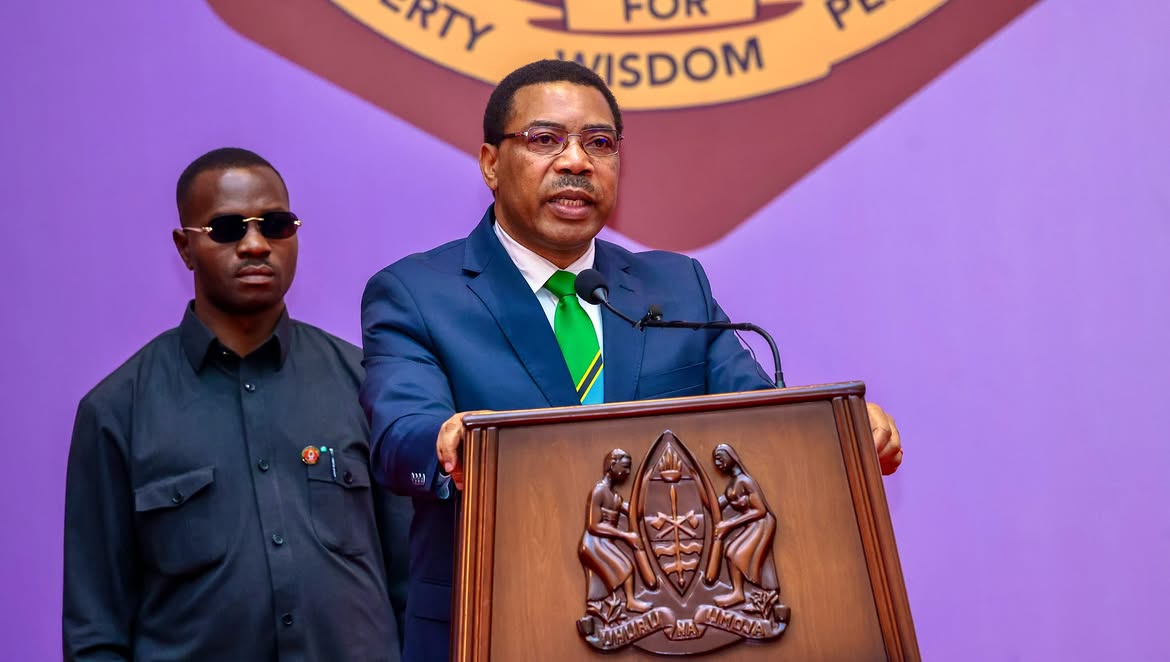
DAR ES SALAAM: PRIME Minister Mwigulu Nchemba has called on African nations to leverage ongoing global political, economic, and security changes as an opportunity to accelerate development, strengthen strategic leadership, add value to the continent’s natural resources, and build resilient institutions that safeguard citizens’ interests and promote sustainable growth.
Speaking today,July 21, 2026, during the Second Alumni Conference of the Tanzania National Defence College (NDC) held at the Julius Nyerere International Convention Centre (JNICC) in Dar es Salaam, Dr Nchemba said the world is undergoing significant transformations driven by geopolitical competition among major powers, technological advancement, the global energy transition, and increasing competition for strategic natural resources.
He said these developments require African countries to cultivate leaders capable of making strategic decisions that protect the continent’s interests and advance its long-term development.
“Africa must not continue to be an arena for competition among global powers. We should capitalize on our strategic position, abundant natural resources, and human capital to drive development that directly benefits our people,” Dr Nchemba said.
The Prime Minister noted that Africa possesses approximately 30 percent of the world’s critical minerals, which are essential for the global technology and clean energy transition. He urged African countries to prioritize value addition to their natural resources instead of continuing to export raw materials and relying on foreign economies.
He further emphasized the need for African leaders to build strong institutions capable of driving development, protecting citizens’ interests, and ensuring that the continent’s resources benefit both present and future generations.
Addressing the global security environment, Dr Nchemba said international conflicts continue to affect African economies through rising energy costs, transportation expenses, and the prices of goods and services. He stressed that these challenges underscore the importance of building resilient economies, strengthening intra-African trade, and enhancing regional cooperation.
ALSO READ: How stability in Middle East calms financial markets, boost economic growth
He added that such challenges should serve as a catalyst for increased investment in industries that add value to raw materials, as well as in technology, research, and innovation, to create competitive, self-reliant, and sustainable economies.
Dr Nchemba also urged participants—senior leaders from various sectors—to use the conference as a platform to develop recommendations that would help Africa transform political, economic, and security challenges into opportunities for sustainable development.
Earlier, the Commandant of the Tanzania National Defence College, Ambassador Major General Wilbert Ibuge, said the conference aims to bring together the institution’s alumni to exchange experiences, strengthen networks among strategic leaders, and discuss key issues related to politics, governance, economic development, and security across Africa.
Meanwhile, the Chancellor of the Tanzania National Defence College, Dr. Abdulhamid Mzee, described the conference as an important academic forum that brings together alumni, experts, and national leaders to examine the challenges and opportunities facing Africa in the current global environment.
Following the keynote address, participants held a high-level panel discussion on political trends, leadership, economic transformation, and security in the 21st century and their implications for Africa’s development. The discussion featured prominent experts and leaders, including Professor Rwekaza Mukandala, Ambassador Ombeni Sefue, Minister for Education, Science and Technology Professor Adolf Mkenda, Commander of the Kenya Army and Tanzania National Defence College alumnus Lieutenant General David Kipkemboi Ketter, and Professor Palamagamba Kabudi, Minister of State in the Prime Minister’s Office responsible for Policy, Parliament, Coordination, and Persons with Disabilities.