
DAR ES SALAAM: EVERY community has a role to play in supporting girls so that they can achieve their dreams, particularly through education. Yet, despite significant progress made in expanding access to schooling in Tanzania, thousands of girls living in disadvantaged communities continue to face barriers that prevent them from completing their education and progressing to higher learning institutions.
For many girls, the journey to the classroom is shaped not only by determination but also by the realities of poverty. Families struggling to meet their daily needs often find it difficult to afford school supplies, transport, accommodation and other education-related costs.
While some parents make enormous sacrifices to keep their daughters in school, many girls are forced to abandon their studies due to financial hardship, early marriage, teenage pregnancy or household responsibilities.
There is a well-known Swahili saying, “Educate a woman and you educate the whole society,” the proverb reflects a widely recognised truth that investing in girls’ education creates benefits that extend far beyond the individual learner.
Educated women are more likely to secure decent employment, raise healthier families, invest in their children’s education and contribute meaningfully to national development.
It is this principle that continues to guide the work of the Campaign for Female Education (CAMFED) Tanzania, a non-governmental organisation that has dedicated itself to ensuring girls from economically disadvantaged backgrounds have an opportunity to access quality education and fulfil their potential.
Although Tanzania has made remarkable strides in increasing enrolment at the primary and secondary school levels through the implementation of fee-free basic education, the transition to higher education remains a significant challenge for many young women.
According to the latest education statistics, girls account for nearly half of all pupils enrolled in primary and secondary schools across the country. However, the number of female students progressing to universities and other higher learning institutions remains considerably lower than those completing secondary education.
Financial limitations continue to be one of the biggest obstacles preventing academically qualified girls from pursuing higher education. Education experts have repeatedly noted that girls from rural communities face even greater challenges than their counterparts in urban areas.
Long distances to school, inadequate learning facilities, cultural expectations, gender stereotypes and limited economic opportunities often combine to reduce their chances of completing their education.
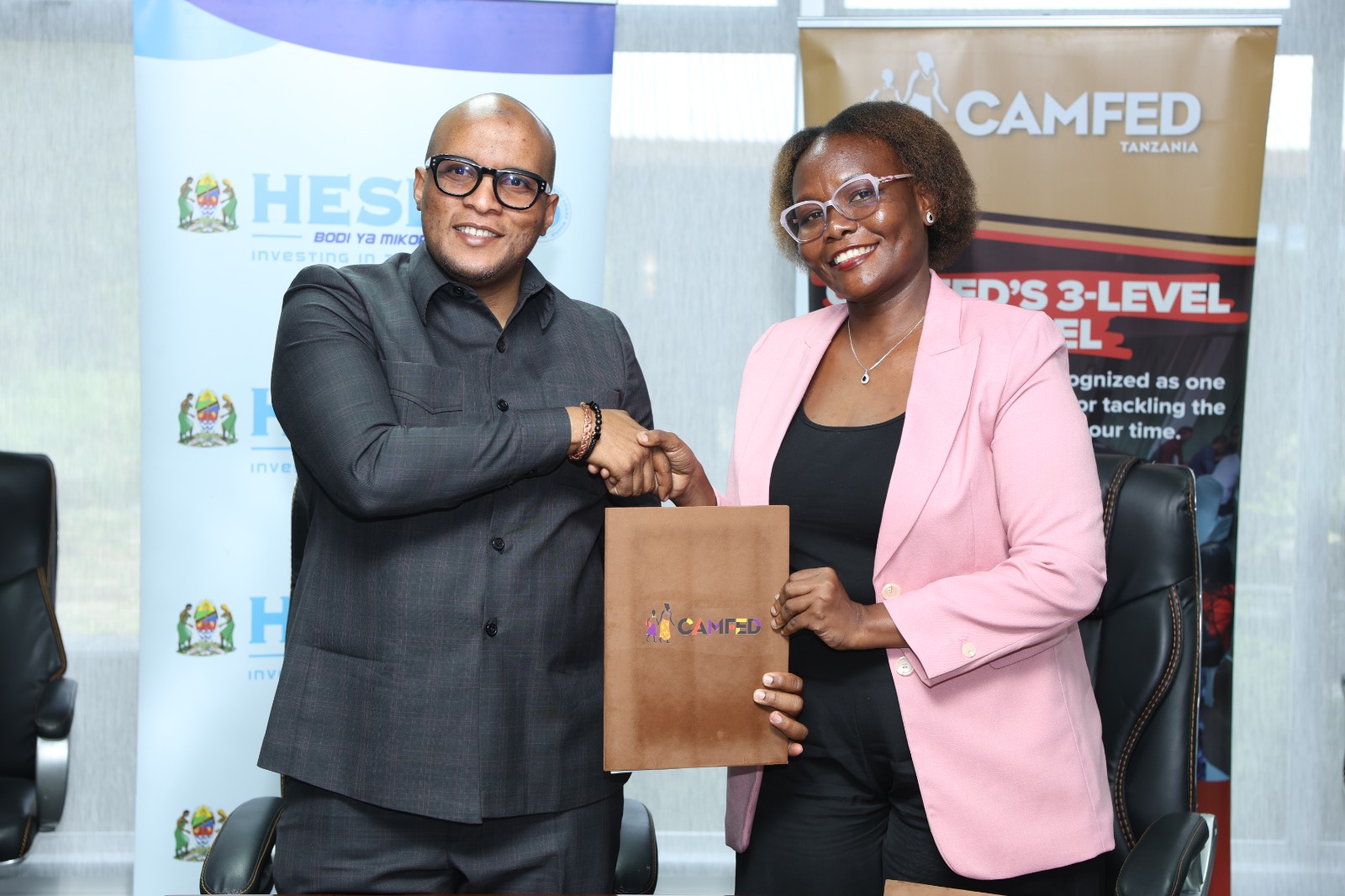
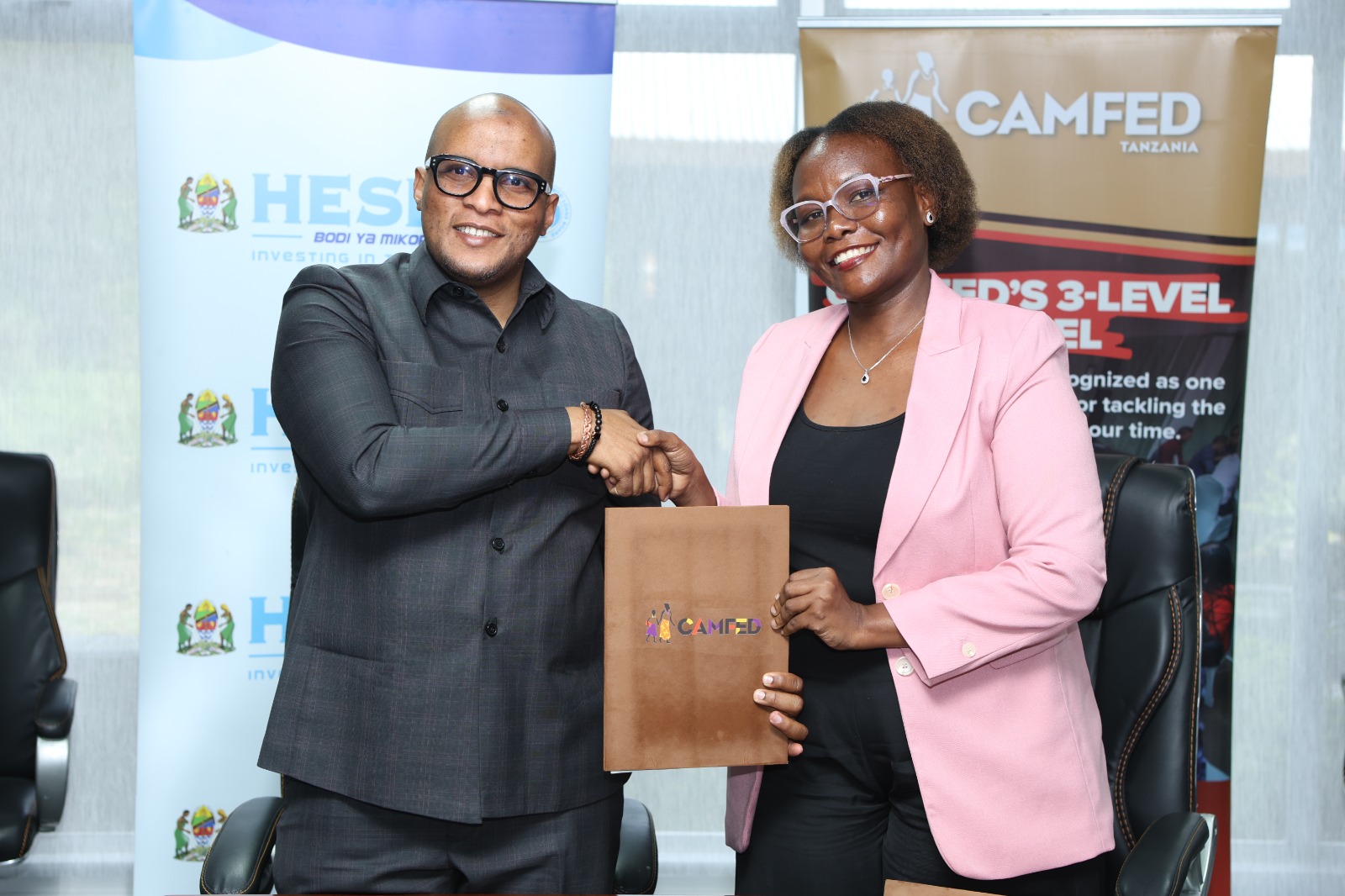
Recognising these challenges, the Higher Education Students’ Loans Board (HESLB) and CAMFED Tanzania have taken a significant step towards expanding educational opportunities for vulnerable girls by signing a five-year Memorandum of Understanding (MoU) that seeks to improve access to higher education sponsorship.
The agreement aims to strengthen collaboration between the two institutions in ensuring that more female students from disadvantaged backgrounds receive the financial and institutional support needed to pursue university education.
Speaking during the signing ceremony in Dar es Salaam, HESLB Executive Director Dr Bill Kiwia said the partnership represents an important milestone in widening access to higher education financing while strengthening support systems for young people transitioning into higher learning institutions.
“This collaboration will help empower more young people, especially those from economically challenged backgrounds, to access opportunities for higher education,” Dr Kiwia said.
ALSO READ: Why joint accountability matters in protecting public resources
He explained that the number of students completing secondary education and qualifying for admission into universities and colleges has continued to increase every year, reflecting the government’s investment in expanding access to education.
However, this positive trend has also created increasing pressure on the student loans budget, he said, “the government has continued to increase the higher education loan budget to meet the growing demand year after year. However, due to the significant rise in applicants, there is still a need to broaden partnerships with various stakeholders to ensure more young people access education opportunities.”
Dr Kiwia said that the partnership is in line with President Samia Suluhu Hassan’s directive encouraging stronger collaboration between public institutions and development partners to improve service delivery and ensure Tanzanians have greater access to essential services.
He said the two institutions will collaborate in several strategic areas, including sharing information, identifying eligible beneficiaries, providing financial literacy education, strengthening career guidance and offering capacity-building programmes that prepare students to maximise opportunities available to them during and after higher education.
According to Dr Kiwia, the partnership extends beyond providing financial assistance saying, “this partnership will not only increase access to higher education but also promote equity and contribute to the development of a skilled and knowledgeable workforce essential for national growth.” For many young women, accessing higher education represents more than earning a university degree. It provides an opportunity to break the cycle of poverty, secure meaningful employment and become role models within their communities.
Studies have consistently shown that educated women are more likely to delay marriage, have healthier families, earn higher incomes and contribute more effectively to economic growth. CAMFED Tanzania Executive Director Anna Sawaki said the collaboration demonstrates a shared commitment to ensuring that vulnerable learners are not left behind simply because of financial challenges.
“As outlined in Tanzania’s long-term development priorities, including the Vision 2050 education agenda, education remains a fundamental right for every child. This partnership strengthens our ability to reach more learners, especially those we are unable to support directly,” Ms Sawaki said.
She explained that the agreement will allow both institutions to identify deserving beneficiaries through jointly agreed eligibility criteria while strengthening efforts to mobilise additional resources and expand publicprivate partnerships in education.
ALSO READ: Zero waste turns rubbish into a harvest of opportunities
Ms Sawaki said such partnerships are increasingly important as the demand for higher education financing continues to rise with growing enrolment at lower education levels. Senior Programme Officer at CAMFED Tanzania, Ms Dominica Lyambo, said the partnership will significantly expand support programmes targeting girls from disadvantaged communities who possess the academic ability to succeed but lack the financial means to continue their education.
“CAMFED continues to strive to ensure that every girl child gets the opportunity to study and succeed and ultimately bring positive change to society. That is why we continue to call for more support and collaboration from all stakeholders,” she said.
Ms Lyando added that empowering girls through education creates lasting social and economic benefits, not only for individual families but also for communities and the country as a whole. The partnership also aligns with Tanzania’s Vision 2050 aspirations, which place human capital development at the centre of national transformation.
The long-term development framework seeks to build a competitive, inclusive and knowledge-based economy by expanding equitable access to quality education, strengthening science, technology, engineering and mathematics (STEM), improving technical and vocational education and training (TVET), promoting digital skills and encouraging stronger collaboration between government, the private sector and development partners.
Education stakeholders believe achieving these ambitions will require sustained investment in girls’ education at every stage, from primary school through university while ensuring that poverty does not become the deciding factor in a child’s future.
For countless girls growing up in remote villages and low-income households, academic success often depends on the willingness of governments, communities, families and development partners to work together in removing the barriers that stand between them and their dreams.
The HESLB-CAMFED partnership is therefore more than a financing agreement. It represents renewed hope for girls whose ambitions have long been constrained by circumstances beyond their control.
By expanding access to higher education, strengthening support systems and promoting equal opportunities, the initiative has the potential to transform not only the lives of individual students but also the future of families, communities and Tanzania’s development. As the country moves towards achieving its Vision 2050 goals, ensuring that every capable girl has the opportunity to complete her education and contribute to national progress will remain one of the most important investments Tanzania can make.