
TANZANIA: RELIABLE rural road infrastructure remains one of Tanzania’s greatest development challenges. While the country has made remarkable progress in upgrading trunk roads and connecting regional headquarters with paved highways, many district and village roads remain in poor condition, limiting economic growth and denying rural communities access to essential services.
Roads are more than transport corridors. They are the backbone of rural development, linking farmers to markets, children to schools, patients to health facilities and businesses to investment opportunities.
Without all-weather roads, the country’s efforts to promote agriculture, industrialisation and inclusive economic growth cannot be fully realised.
Good infrastructure is also one of the first considerations for investors. Businesses are more willing to invest where roads are reliable, transportation costs are predictable and goods can move efficiently throughout the year.
Together with the Standard Gauge Railway (SGR), improved rural roads would significantly enhance Tanzania’s competitiveness by lowering production and transport costs.
Despite the progress made on major highways, many rural roads remain impassable during the rainy season. This continues to undermine agricultural productivity, discourage investment and isolate communities from social services.
My own experience illustrates this challenge.
In 2006, while serving in Morogoro Region, I accompanied the Regional Commissioner on a visit to Kilombero District. The journey from Morogoro to Ifakara and then to Mlimba was relatively smooth. However, travelling the approximately 50 kilometres from Mlimba to Tanganyika-Masagati took more than three hours because of the poor condition of the road.
Residents explained that during the rainy season, access becomes extremely difficult. Many households’ stockpile food, medicines and other essential supplies because transport is often disrupted for weeks.
Nearly two decades later, I encountered a similar situation in Kilolo District, Iringa Region.
Towards the end of 2025, I travelled to Mhanga Village. I was impressed to see that the 33-kilometre road from Iringa Municipality to Kilolo District headquarters was being upgraded to asphalt standard, reflecting the government’s continued investment in infrastructure.
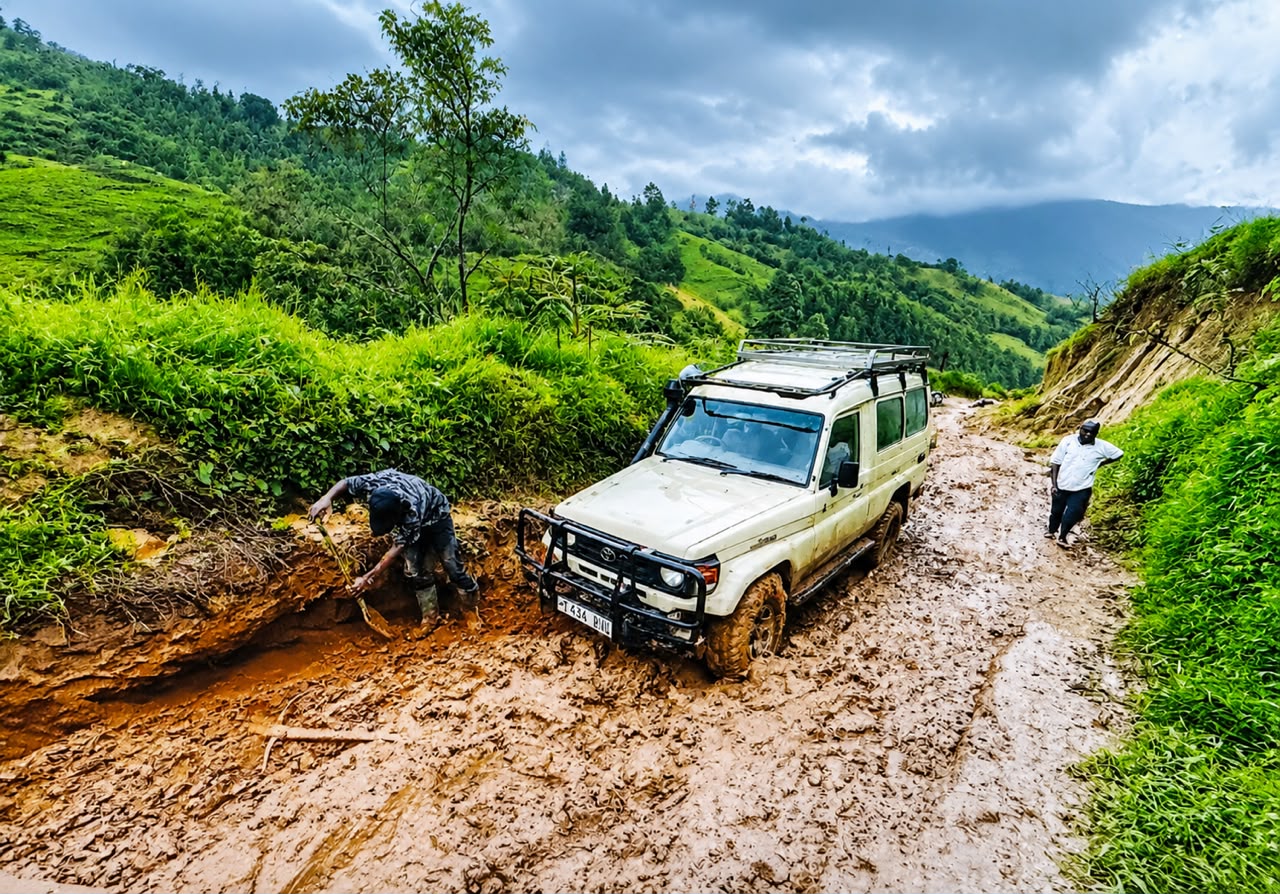
However, the journey from Kilolo to Mhanga, a distance of about 47 kilometres, was extremely difficult. The road was badly damaged and traversed steep hills. A journey that should normally take about an hour lasted more than four hours.
The most difficult section was the 10 to 12 kilometres between Idete and Mhanga. Following the rainy season, this stretch required almost two hours to negotiate, averaging barely six kilometres per hour.
One cannot help but wonder how patients, expectant mothers and schoolchildren cope under such conditions, especially when health facilities and other essential services are located many kilometres away.
Ironically, Kilolo District, Iringa Region has enormous economic potential. Farmers produce potatoes, maize, peas, cabbage and rice, while fruit growers harvest large quantities of pears. Livestock keeping, particularly dairy farming, is also expanding.
The district is equally rich in forestry resources. Along the road, piles of sawn timber and wooden poles awaited buyers or transport to markets in Iringa and elsewhere.
Unfortunately, poor roads prevent many of these products from reaching markets on time. Timber left exposed to sun and rain deteriorates in quality, while fruits and vegetables often spoil before they can be sold. The result is lost income for farmers and reduced economic activity.
Transport becomes even more challenging during the rainy season. Bus services that normally reach Idete terminate at Kidabaga, forcing passengers to rely on four-wheel-drive vehicles or motorcycles. Even then, travellers are often required to dismount and push motorcycles through muddy sections of the road while paying high transport charges for relatively short distances.
Although these experiences come from specific districts, they reflect a wider national challenge. Across much of rural Tanzania, district and village roads remain in poor condition despite serving the majority of the population.
Since independence, Tanzania has invested heavily in trunk roads linking regional headquarters, an achievement that deserves recognition.
However, the next phase of infrastructure development should place greater emphasis on rural roads, where improved connectivity would directly support agriculture, trade, education, healthcare and rural industries.
The National Assembly has approved more than 2.5tri/- for the Ministry of Works’ 2026/27 budget to strengthen the national road network. While this is commendable, district councils, through the Prime Minister’s Office–Regional Administration and Local Government (PMO-RALG), also require greater financial support to upgrade rural roads to allweather standards.
ALSO READ: Roads are infrastructures, dignity, opportunities and future
Road improvements should be complemented by investments in electricity, water supply, healthcare, education, storage facilities and agro-processing infrastructure.
Together, these services would unlock the productive potential of rural communities and make them more attractive to private investment.
Improving rural roads is not simply an infrastructure project; it is an investment in national development. Better roads reduce transport costs, increase farmers’ incomes, improve access to social services and stimulate local businesses.
If Tanzania is to achieve inclusive and sustainable economic growth, upgrading rural road infrastructure must become a higher priority.
Stronger district road networks will connect rural producers to markets, attract investment and improve the quality of life for millions of Tanzanians living in villages. The returns on such investments will extend far beyond transport, accelerating socioeconomic transformation across the country.