
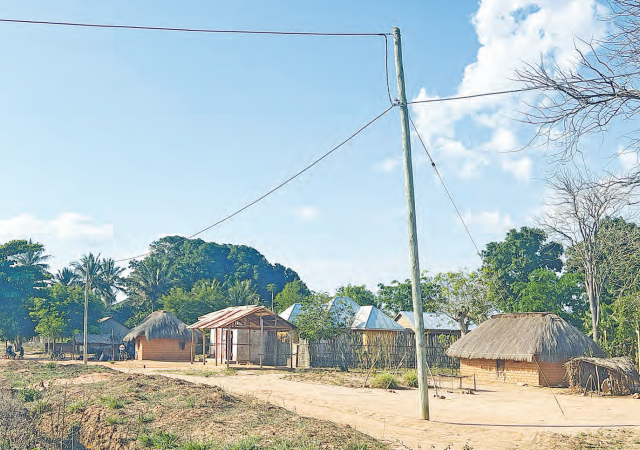
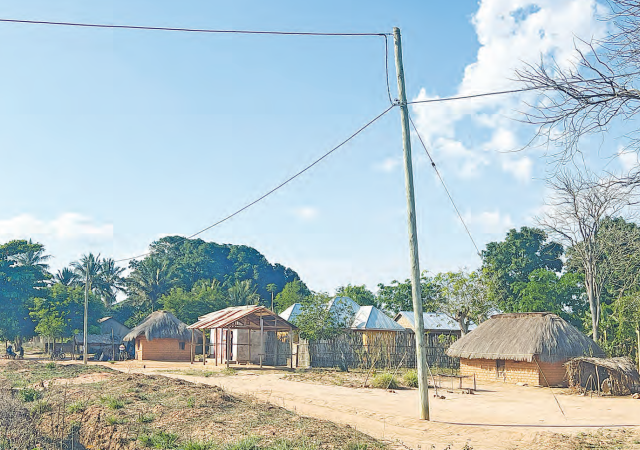
DAR ES SALAAM: TANZANIA’S rural electrification programme has made remarkable progress over the past decade, transforming the social and economic landscape of communities across the country.
Through the just concluded Vision 2025 under successive Five-Year Development Plans (FYDPs), the government has prioritised investment in electricity infrastructure to support industrialisation, improve public services, attract investment and enhance the quality of life, particularly in rural areas.
Major investments in power generation, transmission and distribution, together with accelerated rural electrification programmes implemented through the Rural Energy Agency (REA), have significantly expanded electricity access, making energy a key pillar of Tanzania’s long-term development agenda.
The first Five-Year Development Plan (2011/12–2015/16) focused on building the country’s energy infrastructure by increasing electricity generation and expanding transmission and distribution networks. It laid the foundation for subsequent expansion of the national grid and rural electrification.
The major success of FYDP I was laying the foundation for Tanzania’s modern electricity network through expanded generation capacity, strengthened transmission and distribution infrastructure, and accelerated rural electrification, paving the way for the rapid expansion of electricity access achieved under subsequent development plans.
Key achievements included expansion of electricity generation capacity, helping to improve the reliability of power supply. It also enhanced development of transmission and distribution infrastructure, enabling the national grid to reach more regions.
The plan also helped strengthening of the national grid, which supported future industrialisation and economic growth as well as acceleration of rural electrification, with REA extending electricity to more villages and public institutions such as schools and health facilities. It also enabled the creation of the infrastructure platform that enabled the much larger expansion of electricity access under FYDP II and FYDP III.
Despite laying the foundation for energy sector expansion, FYDP I faced several challenges, including low electricity access in rural areas, inadequate generation and transmission infrastructure, financing constraints, slow household connections and vulnerability to power shortages caused by heavy dependence on hydropower. These challenges underscored the need for continued investment, which became a major focus of the subsequent development plans.
The main challenges included low electricity access, particularly in rural areas, where a large proportion of villages and households remained unconnected to the national grid.
Others included insufficient generation capacity, which led to power shortages and occasional load shedding as demand grew faster than supply as well as limited transmission and distribution infrastructure, making it difficult to extend electricity to remote regions.
It also faced high financing requirements, as large investments were needed for power generation, transmission and rural electrification projects, slow household connections, even in areas where the grid had reached, due to the cost of connection fees and internal wiring.
Heavy reliance on hydropower, was another challenge, leaving electricity supply vulnerable to drought and climate variability. Institutional and implementation constraints, including delays in project execution, land acquisition and procurement processes was also another major challenge that faced the plan.
Building on this foundation, FYDP II (2016/17–2020/21) prioritised reliable electricity to support industrialisation. During this period, Tanzania increased electricity generation capacity, strengthened the national grid and expanded electricity access for industries and households.
The major success of FYDP II was the significant expansion of Tanzania’s electricity sector, marked by increased power generation capacity, a stronger national grid and accelerated rural electrification. These investments improved electricity access for households, industries and public institutions, enhanced the reliability of power supply and provided critical support for the country’s industrialisation and economic transformation agenda.
Key achievements included increased electricity generation capacity, improving the availability and reliability of power, expansion and strengthening of the national transmission grid, enabling electricity to reach more regions and supporting industrial growth as well as rapid expansion of rural electrification, with thousands of villages connected through REA programmes.
It also improved electricity access for households, businesses and public institutions, including schools and health facilities, enhanced greater use of natural gas for power generation, helping diversify the country’s energy mix and improve energy security as well as enhanced power supply reliability, reducing outages in many parts of the country and supporting manufacturing and investment.
Although FYDP II (2016/17– 2020/21) made significant progress in expanding the electricity sector, it also faced several challenges.
The main challenges included low household connectivity: While many villages were connected to the national grid, household connections lagged because many families could not afford connection fees and internal wiring costs.
The plan also faced high infrastructure costs: Extending transmission and distribution networks to remote rural areas required substantial financial resources. The was also an issue of rapid growth in electricity demand: Industrialisation and urbanisation increased demand for electricity, requiring continuous investment in generation and grid expansion.
Project implementation delays was also a setback. Some energy projects experienced delays due to procurement processes, financing constraints and land acquisition issues.
Other challenges included reliability challenges in some areas. Although grid stability improved, some regions continued to experience power interruptions and limited network capacity as well as dependence on traditional biomass. Despite increased electricity access, many rural households still relied on firewood and charcoal for cooking, limiting the broader impact of electrification.
COVID-19 pandemic also proved to be a major challenge. Towards the end of the plan period, the pandemic disrupted supply chains, delayed some infrastructure projects and created financial pressures.
FYDP III (2021/22–2025/26) has accelerated efforts toward universal electricity access by promoting renewable energy, modernising the grid and extending electricity to rural communities.
The major success of FYDP III was the significant progress made toward universal electricity access through expanded power generation, modernised transmission and distribution infrastructure, accelerated rural electrification and increased investment in renewable energy.
During the plan period, electricity accessibility surpassed the national target, village electrification reached about 99 per cent and generation capacity continued to grow, providing a stronger foundation for industrialisation, improved public service delivery and inclusive socio-economic development.
Anchored in the objectives of FYDP III, the Ministry of Energy, REA and the Tanzania Electric Supply Company Limited (TANESCO) intensified efforts to bring electricity to rural areas, supporting economic growth and improving access to essential services.
Under FYDP III, electricity access was targeted to increase from 78.4 to 85 per cent of the population, while household connectivity was expected to rise from 39.9 to 60 per cent.
According to the Minister for Energy Deogratius Ndejembi, Tanzania has already surpassed its population access target. By March 2026, electricity accessibility had reached 85.5 per cent, up from 78.4 per cent in 2020.
Household connectivity also increased from 37.7 per cent in 2020 to 52.1 per cent by March 2026. The government now aims to connect an additional 8.3 million customers to achieve 75 per cent household connectivity by 2030.
REA data show that rural electrification has expanded dramatically since the agency was established in 2007. At that time, only 506 villages had access to electricity.
By December 2024, however, more than 12,300 of Tanzania’s approximately 12,318 registered villages had been connected to electricity, representing about 99 per cent village electrification.
This achievement stands among the country’s most significant infrastructure milestones and reflects sustained investment, coordinated planning and strong partnerships between the government, development partners and the private sector.
To reach remote communities, electrification programmes have combined national grid expansion with off-grid and renewable energy solutions suited to areas where grid extension remains difficult.
The government has also continued expanding electricity generation to meet rising demand.
Minister Ndejembi said installed generation capacity increased from 4,031.71 megawatts in March 2025 to 4,522.54 megawatts by March 2026, representing a 12.17 per cent increase.
The increase was supported by the commissioning of several generation projects, including the first phase of the 50-megawatt Kishapu-Shinyanga Solar Power Project.
Off-grid generation capacity also reached 492.94 megawatts by March 2026, including 98.16 megawatts operated by TANESCO and 394.78 megawatts generated by private companies for industrial and commercial use.
To reinforce electricity supply in border regions, TANESCO continues to import 47 megawatts from Uganda for Kagera Region and 20 megawatts from Zambia for Rukwa Region.
While nearly all villages have been electrified, REA data indicate that work continues to connect individual hamlets. Of more than 64,000 hamlets nationwide, about 33,000 have so far been connected, highlighting the need for continued investment in lastmile connectivity.
The government has also strengthened transmission and distribution infrastructure. Increased investment in renewable energy, including commissioning the first phase of the Kishapu-Shinyanga Solar Power Project, supporting diversification of the energy mix.
Expansion and modernisation of transmission and distribution networks, improving grid reliability and extending electricity to more communities.
Greater use of off-grid electricity solutions, helping provide power to remote areas where grid extension is less feasible.
Improved access to electricity for social and productive sectors, including schools, health facilities, businesses and agricultural enterprises.
By March 2026, transmission lines had expanded to 8,500.38 kilometres from 7,809.67 kilometres a year earlier, while distribution networks increased to 240,229.56 kilometres from 200,266.25 kilometres, representing growth of about 20 per cent.
TANESCO has played a central role in integrating new rural electricity infrastructure into the national grid while improving service reliability through upgraded substations and transmission lines.
The benefits of rural electrification are becoming increasingly evident across multiple sectors.
Health facilities now operate medical equipment more efficiently, refrigerate vaccines and provide services beyond daylight hours. Reliable electricity has strengthened maternal and child healthcare, emergency services and overall healthcare delivery.
Schools have also benefited through improved lighting, greater use of computers and digital learning technologies, enabling students to study longer and helping narrow the digital divide between rural and urban communities.
Electricity has further stimulated rural entrepreneurship. Across many villages, businesses such as grain mills, welding workshops, refrigeration services, salons and mobile phone charging centres have emerged, creating employment and improving incomes.
Farmers are increasingly using electricity for irrigation, agroprocessing and cold storage, helping reduce post-harvest losses and increase agricultural productivity.
At household level, access to electricity has improved living standards through safer lighting, better access to information and communications, and longer productive hours for home-based economic activities.
Despite significant achievements under FYDP III, challenges remain in achieving universal household electricity access.
Although almost all villages have been electrified, many households and hamlets are yet to be connected because of affordability constraints and the high cost of last-mile infrastructure.
Rising electricity demand, the need for continued investment in generation and grid expansion, maintaining reliable power supply, and increasing resilience through greater use of renewable energy continue to be key priorities for the sector.
However, the country’s electrification drive is further guided by the National Development Vision 2050, which identifies reliable and affordable energy as a key driver of industrialisation, economic growth and improved living standards.
Presenting the Ministry of Energy’s budget estimates for the 2026/27 financial year, Minister Ndejembi said reliable and affordable energy remains essential to Tanzania’s development.
“The direction of Vision 2050 in the Energy Sector is to enable a resilient, efficient, reliable and affordable clean energy system while positioning Tanzania among the leading energy producers in Eastern and Southern Africa,” he said.
He noted that Tanzania possesses abundant energy resources, including hydropower, natural gas, solar, wind, coal, geothermal and uranium, providing a strong foundation for long-term energy security.
To address these barriers, REA and TANESCO have introduced subsidy programmes and financing initiatives to encourage more household connections. Continued investment will nevertheless be essential to achieve universal household access while maintaining reliable electricity supply.
Tanzania’s rural electrification programme remains one of the country’s most notable development achievements. By bringing electricity to nearly every village, the nation has laid a strong foundation for inclusive growth, improved public services and higher living standards.
ALSO READ: Rural energy revolution: TZ’s journey towards Universal Electricity Access by 2030
As investments in generation, transmission and distribution continue, Tanzania is well positioned to close the remaining access gaps and use reliable electricity as a catalyst for industrialisation, economic transformation and sustainable national development.