

DAR ES SALAAM: ANALYSTS are optimistic that Tanzania will boost agricultural productivity and strengthen its role as a regional logistics hub after President Abdel Fattah El Sisi’s state visit deepened cooperation in irrigation, trade and infrastructure.
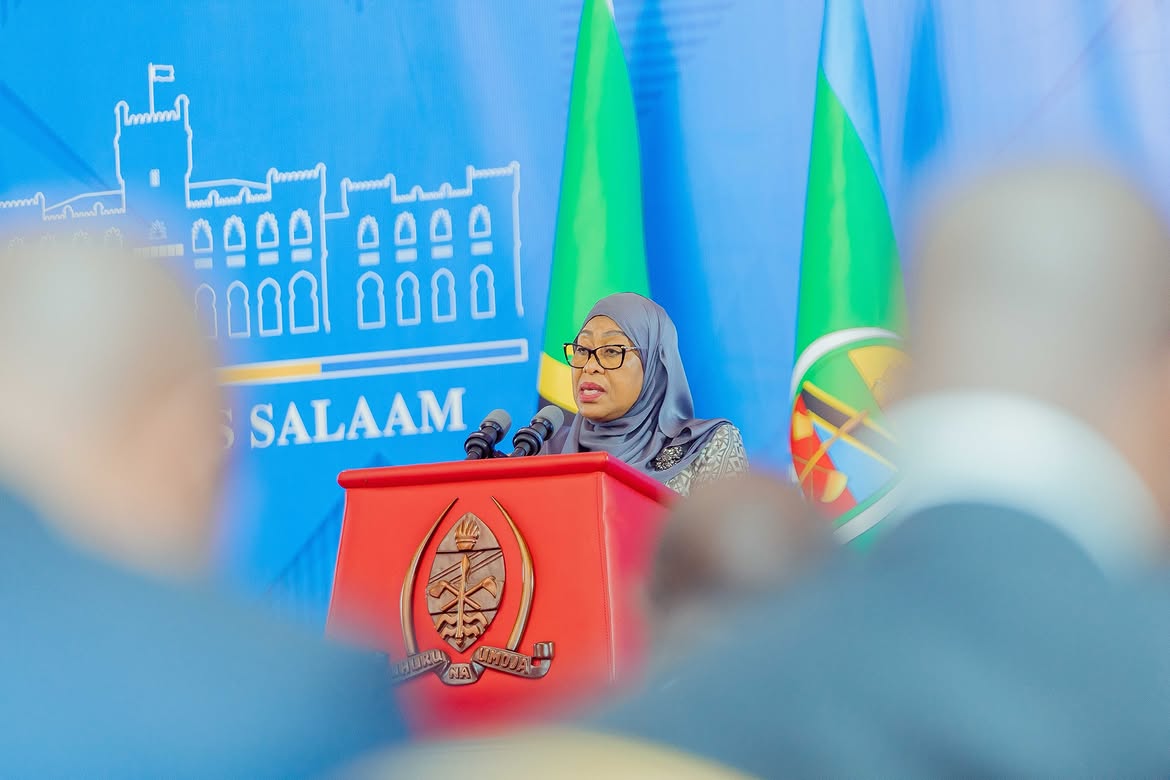
During a joint press conference at the State House in Dar es Salaam on Saturday, President Dr Samia Suluhu Hassan said Tanzania and Egypt had agreed to deepen cooperation in irrigation farming through technology transfer and joint agricultural projects.
She said Egypt’s success in harnessing the Nile River for irrigated agriculture offers valuable lessons for Tanzania, which has abundant water resources and vast arable land with even greater potential to expand irrigation farming.
Egypt is widely recognised for its expertise in irrigation technology, desert farming, greenhouse cultivation and water-efficient food production.
Speaking to the Daily News yesterday, Agriculture and Business analyst Dr Sylvester Jotta of the Saint Augustine University of Tanzania (SAUT) said the partnership presents a significant opportunity for Tanzania to transform its agricultural sector through modern irrigation technologies.
He said the successful cooperation between the two countries in implementing the 2,115-megawatt Julius Nyerere Hydropower Project (JNHPP), which involved can be replicated in agriculture to accelerate technology transfer and increase productivity.
“With Egypt’s vast experience in irrigation, the Ruvu Basin can feed East and Central Africa. Through collaboration with Egypt in irrigation farming, we can succeed,” Dr Jotta said.
He commended the government for considering Egypt’s irrigation model, describing it as one of the most efficient systems capable of increasing agricultural output.
Dr Jotta said the proposed Dar es Salaam-Cairo Multimodal Logistics Hub will complement irrigation development by creating reliable markets for increased agricultural production.
He said expanded irrigation will enable farmers and local manufacturers to produce more rice, maize and sugar for growing markets in Central, Eastern and North Africa.
He added that investment in transport infrastructure, particularly ports, should go hand in hand with increased agricultural production to maximise economic gains.
The two countries are in the final stages of establishing the Dar es Salaam-Cairo Multimodal Logistics Hub, a strategic corridor that will connect the Port of Dar es Salaam with Egypt’s Sokhna and Safaga ports through the Indian Ocean, Red Sea and Mediterranean Sea.
The two leaders also agreed to cooperate in developing Bagamoyo Port and linking it to the Standard Gauge Railway (SGR) at Kwala in Coast Region to improve cargo movement and regional logistics.
ALSO READ: Transforming agri in Tanzania: How innovative contract farming initiative is uplifting farmers
According to Dr Jotta, the logistics corridor will strengthen trade between Tanzania, the East African Community (EAC) and other regional markets by capitalising on the country’s strategic location as the main gateway for Zambia, Rwanda, Burundi, Uganda, Malawi and eastern Democratic Republic of the Congo (DRC).
Economist and Investment Banker Dr Hildebrand Shayo said President El-Sisi’s visit signalled a strategic shift towards stronger economic cooperation between North and East Africa, particularly under the African Continental Free Trade Area (AfCFTA).
“Economically, the visit marks a shift from historyfocused diplomacy to one centred on investment, production, infrastructure and regional value chains,” he said.
Dr Shayo noted that the Dar es Salaam-Cairo logistics corridor will reduce transport costs, shorten delivery times and boost regional trade while strengthening continental supply chains under the AfCFTA framework.
“Egypt’s industrial strength in fertilisers, chemicals, pharmaceuticals, electrical equipment, textiles and processed foods complements Tanzania’s abundant agricultural resources, minerals, natural gas reserves and expanding domestic market, creating opportunities to develop regional value chains,” he said.
Dr Shayo added that Egyptian manufacturers can establish production facilities in Tanzania to serve the EAC and SADC markets while taking advantage of the country’s improving investment climate.
Economic diplomacy expert Prof Kitojo Wetengere of the University of Arusha (UoA) shared similar views, saying Tanzania stands to benefit greatly from Egypt’s advanced irrigation technologies.
“By adopting Egypt’s advanced irrigation technologies, Tanzania can increase farming seasons from one to two or even three a year, significantly boosting food production and commercial agriculture,” Prof Wetengere said.