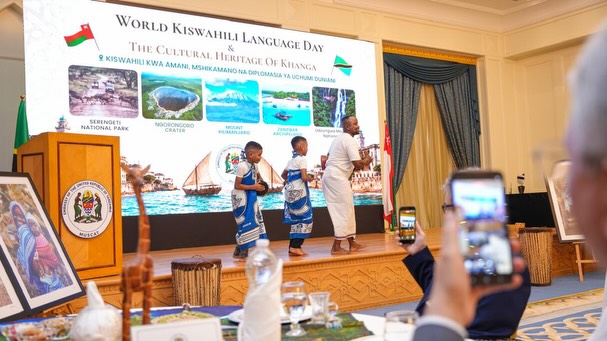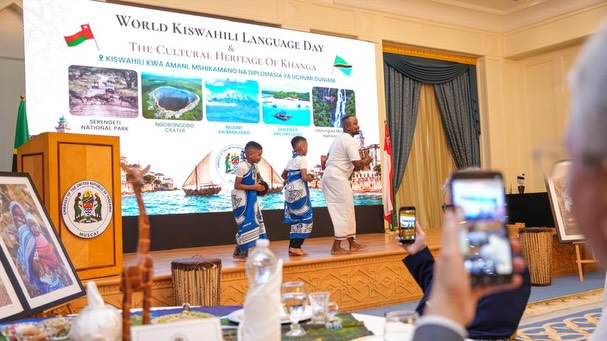
MUSCAT: THE Embassy of the United Republic of Tanzania in Oman has, for the first time, commemorated World Kiswahili Language Day at a special event held in Muscat, marking five years since UNESCO officially designated July 7 as World Kiswahili Language Day.
The celebration was held under the theme “Kiswahili for Peace, Solidarity and Economic Diplomacy” and brought together ambassadors and representatives from more than 22 countries across Europe, the Americas, the Middle East, the Indian subcontinent and Africa. The guest of honour was Dr. Mohammed Al Balushi, Director of the Africa Department at Oman’s Ministry of Foreign Affairs. Representatives from UNESCO, the University of Nizwa and the Russian Cultural Centre also attended the event.
Speaking at the ceremony, Tanzania’s Ambassador to Oman, Maulidah Hassan, said UNESCO’s recognition of Kiswahili affirms the language’s global role as a language of peace, identity and pride, spoken by more than 200 million people worldwide.
Ambassador Maulidah noted that Oman occupies a unique place in the history of Kiswahili due to its long-standing ties with the East African coast. She said the country is home to one of the largest Kiswahili-speaking communities outside Africa, with the language remaining an important part of the historical heritage passed down through generations in many Omani families.
ALSO READ: PM in Paris for UNESCO-backed World Kiswahili Day celebrations
She added that the historical relationship between Tanzania and Oman continues to be reflected in everyday life through shared traditions, cuisine and culture. Pilau, mandazi, chapati, coconut beans, as well as traditional attire such as the baibui and kanzu, were cited as enduring symbols of the shared heritage linking communities on both sides of the Indian Ocean.
Ambassador Maulidah further said that the ancient dhows that crossed the Indian Ocean using the seasonal monsoon winds carried not only goods but also cultures, languages, friendships and family ties that laid the foundation for the longstanding relationship between Tanzania and Oman. She stressed that both countries have a responsibility to preserve and build upon this shared heritage through economic diplomacy, tourism, transport, agriculture and the blue economy.
The celebration featured exhibitions of Kiswahili culture, taarab music performances and traditional Swahili cuisine. The event highlighted Kiswahili’s role as a bridge connecting people and nations, preserving shared heritage, and strengthening the historical, cultural and diplomatic ties between Tanzania and Oman.