
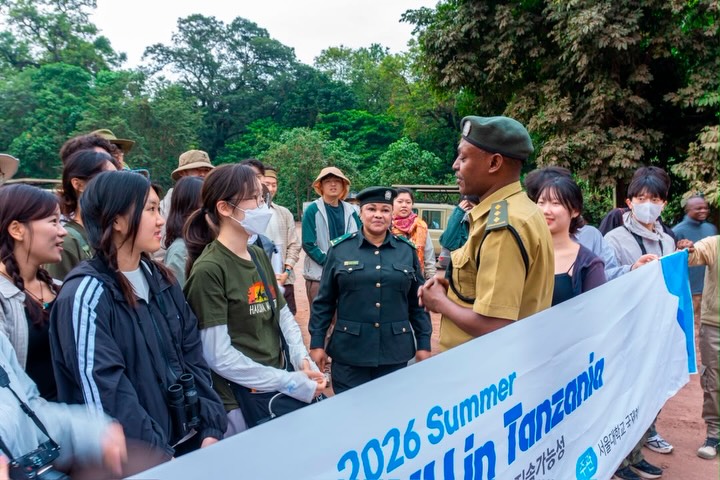

MANYARA: LECTURERS and students from Seoul National University in the Republic of Korea have visited Lake Manyara National Park as part of their field studies on wildlife ecology, vegetation and birdlife. The educational tour aims to deepen their understanding of ecosystems by observing biodiversity and the interdependence of living organisms within protected natural environments.
Speaking during the visit, the head of the delegation, Professor Chang-Yong Choi of Seoul National University, said the park provides a remarkable example of how ecosystems are structured through the interaction of living and non-living components that depend on one another for survival.
“I am truly amazed to see that within such a relatively small area there are several ecosystems functioning together from the mountains and forests to the lake. This area is also connected to Tarangire National Park. I have been particularly impressed by how different species of birds and mammals coexist within such a compact landscape,” said Professor Choi.
ALSO READ: Wildlife, culture, growth, Northern Tanzania’s winning formula
Earlier, welcoming the 37-member delegation on behalf of the Chief Park Warden, Senior Conservation Officer Abdul Sharif said that beyond their ecological studies, the visitors would also gain first-hand experience of Tanzania’s wildlife conservation and tourism practices, enriching their academic field trip.
Sharif noted that Lake Manyara National Park offers an ideal outdoor learning environment where visitors can observe the relationship between biodiversity, ecosystems and conservation management in one of Tanzania’s protected areas.
National parks play a significant role in scientific research and education by providing natural laboratories for scientists, researchers and students to study biodiversity, climate change, wildlife behaviour, vegetation and the complex interactions among living organisms within healthy ecosystems.