
Hasheem Thabeet: Career of the First Tanzanian NBA Player
Few stories in sports are as improbable as the one that began on a dusty street court in Dar es Salaam and wound its way through the hallowed halls of UConn, the unforgiving arenas of the NBA, and finally back home to the presidency of a national basketball federation. His journey defies a single label bust, pioneer, or legend because it is, in truth, all of them at once.
Growing up in the east African nation, basketball was an afterthought in a culture obsessed with soccer and marathon running. At the time, a young Tanzanian dreaming of professional hoops would have seemed utterly absurd, and even the most optimistic best betting sites in Tanzania would have offered astronomical odds against such a prospect. Yet, that absurdity became reality when a 7-foot-3 teenager was spotted on a street court, coaxed into trying the game, and discovered a calling that would eventually reshape the athletic landscape of his entire country.
From Chance Encounter to Collegiate Titan
He didn’t pick up a basketball until the age of 15, an almost impossibly late start for a future NBA player. The story goes that he was merely walking past a local pickup game when the players froze, stunned by his towering frame. They practically begged him to join, even giving him some basic gear to wear. The next day, he showed up again. That simple, spontaneous decision set in motion a chain of events that would take him halfway across the world.
His raw potential was too immense to ignore. A local scout facilitated his move to a prep school in Texas, where he faced a brutal cultural and linguistic shock. He had to learn English from scratch while simultaneously mastering the fundamentals of a game he had barely known existed a few years earlier. But the transition was a testament to his adaptability. By the time he reached the University of Connecticut, he had transformed from a raw project into a bona fide defensive force of nature.
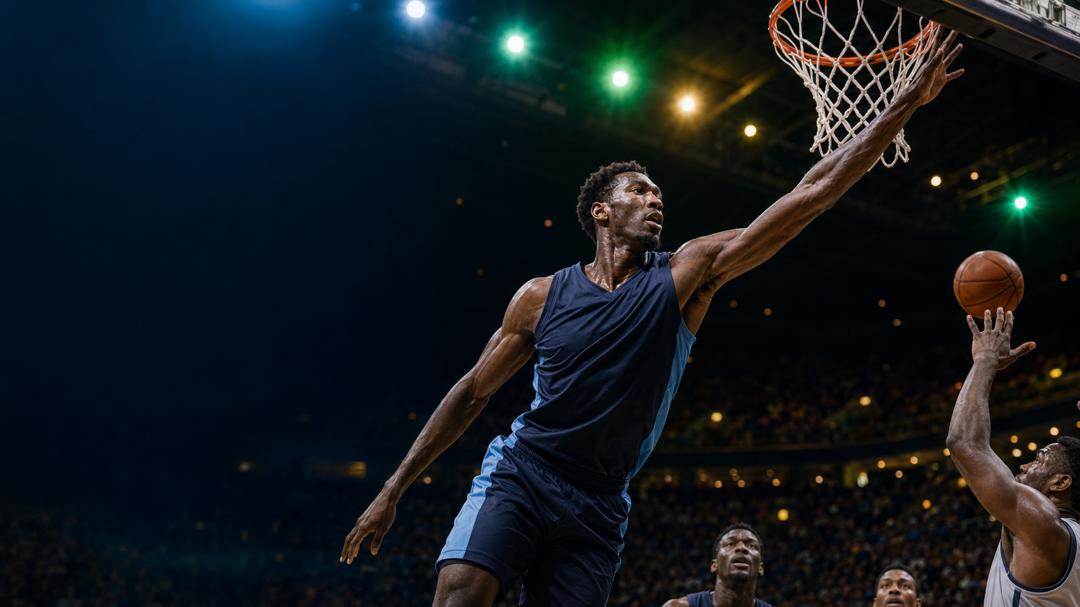
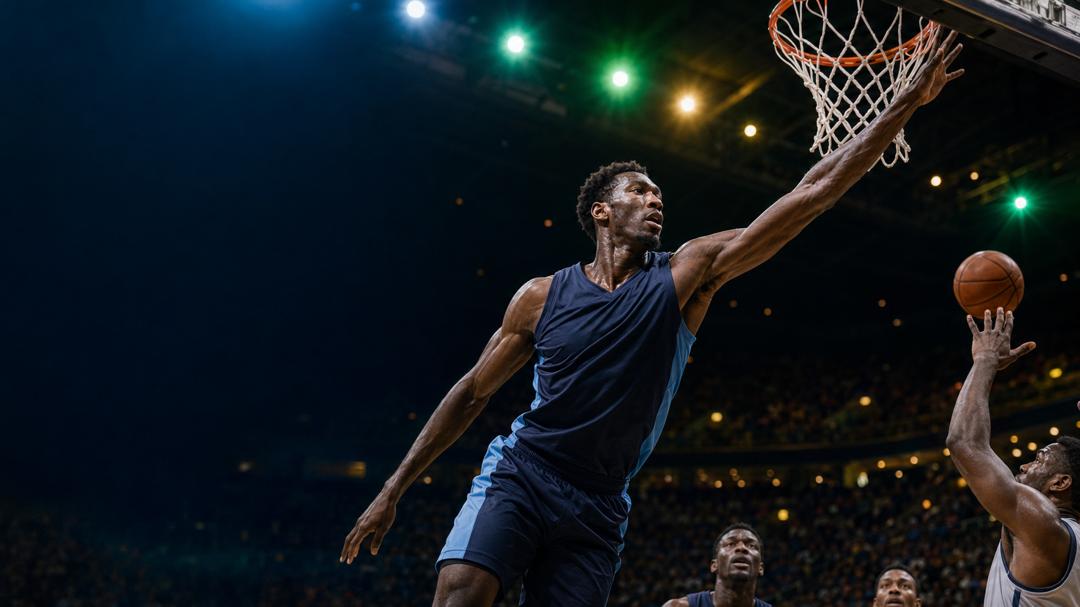
At UConn, he was nothing short of a human eraser. As a junior, he averaged a staggering 13.6 points, 10.8 rebounds, and 4.2 blocks per game. He holds the program record for most blocks in a single contest with 10 rejections—a feat he accomplished three times. His 417 career blocks are second only to Emeka Okafor in Huskies history. He was named the Big East Player of the Year and won the NABC National Defensive Player of the Year award twice. In 2009, he led the Huskies to the Final Four, cementing his status as one of the most intimidating interior presences college basketball had ever seen.
The Cruel Weight of a Number Two Pick
The 2009 NBA Draft represented the absolute peak of his professional prospects. The Memphis Grizzlies selected him with the second overall pick, a decision that placed him ahead of future Hall of Famers James Harden (3rd) and Stephen Curry (7th). The expectations were suffocating, and he was thrown into a franchise that was still navigating its own identity.
His NBA tenure was a brutal, public struggle. He appeared in 224 games over five seasons for the Grizzlies, Houston Rockets, Portland Trail Blazers, and Oklahoma City Thunder, but his career averages stagnated at a meager 2.2 points and 2.7 rebounds per game. In a move that made national headlines, he was assigned to the NBA Development League during his rookie season—a humiliating first for a player selected so high. The media and fans were merciless, labeling him one of the “biggest busts in NBA history.”
Yet, the “bust” narrative ignores the immense contextual pressure. He was a young man from a completely different world, trying to survive in a cutthroat business while learning the nuances of a game he had only played for five years. He later reflected on that turbulent period, admitting he felt fragile and ill-equipped to handle the mental burden of being a high lottery pick. It took time, but he eventually began to understand what it meant to be a professional, crediting veterans like Caron Butler and Derek Fisher during his stint with the Oklahoma City Thunder for teaching him the ropes.
A Prodigal Son Returns to the Court
After his NBA chapter closed in 2014, he refused to fade away. He continued his professional odyssey overseas, playing in the D-League, Japan, and various other international leagues. However, the most profound chapter of his playing career was yet to be written, and it would happen right where it all began.
In 2025 and 2026, he returned to Tanzania to suit up for Dar City in the Tanzanian National Basketball League. At 39 years old, with knees that had seen better days but a heart still full of passion, he captained the team to an unprecedented qualification for the 2026 Basketball Africa League (BAL). It was the first time a Tanzanian club had ever reached the prestigious pan-African competition. The sight of the former No. 2 pick leading his hometown team onto the court in Pretoria, South Africa, was a powerful symbol of homecoming—a living monument proving that dreams born on dusty streets could echo across an entire continent.
Architect of a Basketball Nation
March 2026 brought the ultimate validation of his off-court ambitions. He was elected President of the Tanzania Basketball Federation (TBF), defeating Leonard Benedict Haule to succeed outgoing president Michael Millias Kadebe. The transition from player to executive was now complete.
His vision for Tanzanian basketball is as grand as his stature. He doesn’t just want to win games; he wants to build a sustainable ecosystem. His primary focus is on grassroots development, specifically targeting players under 13 and under 18. He believes that by establishing a strong foundation in schools and communities, Tanzania can produce a pipeline of talent that will prevent him from being the nation’s only NBA representative. Weeks before his election, he received another prestigious honor: induction into UConn’s “Huskies of Honor” on February 14, 2026, a formal recognition that his collegiate contributions were monumental, regardless of his professional trials.
Redefining Success and Financial Legacy
When evaluating the financial scoreboard of this extraordinary journey, the estimated $8 million attributed to Hasheem Thabeet net worth paints a picture of fiscal stability. This wealth, accumulated through professional contracts, endorsements, and subsequent ventures, is significant. More importantly, it symbolizes the economic gateway he has opened for Tanzanian athletes, proving that a career in basketball can be a viable path to prosperity.
Ultimately, the career of Hasheem Thabeet is a masterclass in rewriting one’s own narrative. In the stat sheets of the NBA, the numbers might whisper the word “failure.” His draft position will forever be juxtaposed against the legendary careers of the players selected after him. But in Tanzania, they shout a very different word: “hero.”
A Legacy That Transcends Box Scores
He is not just the first Tanzanian NBA player; he is the architect of Tanzanian basketball’s future. He took the crushing weight of being an NBA draft bust and transformed it into the driving force needed to lift an entire nation’s sporting infrastructure. He showed that a kid from Dar es Salaam could not only make it to the world’s biggest stage but could also return home to build the stage for others.
His story is a powerful reminder that success in sports is rarely linear. It is defined not by the peaks one reaches, but by the resilience one shows in the valleys. Today, as he oversees the development of young Tanzanian players, his legacy is no longer tied to the number of blocks he recorded in Memphis, but to the number of dreams he is now enabling in his homeland. He is determined to ensure that he will not be the last Tanzanian to hear his name called in the NBA Draft, ensuring that his most significant contribution to the game is still being written one grassroots clinic, one young prospect, and one reformed federation at a time.